
Cognitave Inc.'s Electronics Design Automation
(CAED)
Cognitave Inc.'s Electronics Design Automation (CAED)
Micro-Electronics Design Automation (CAED)
A Cognitave Inc. Course | Department of Electronics
Micro-Electronics Design Automation (CAED) is a practical course by Cognitave Inc. designed to equip students and professionals with modern electronic design automation skills—from numerical modeling and simulation to system-level electronics development. The course integrates industry workflows with advanced stability and optimization concepts using EDFS™ technology.
Part I — Simulation, Modeling, and Design Flow
Foundational topics include numerical mathematics, EDA principles, market ecosystems, design flows and co-simulation, circuit simulation, electromagnetic (EM) analysis, post-processing, and system-level electronic design.
Part II — Practical EDA Tools
A) Open-Source / Free Tools
KiCad — Schematic & PCB: https://www.kicad.org/download/
FreeCAD — 3D modeling & Gerber: https://www.freecad.org/
OpenEMS — EM solver: https://www.openems.de/
LTspice (Analog Devices) — Circuit simulation:
https://www.analog.com/en/resources/design-tools-and-calculators/ltspice-simulator.htmlQSpice (Qorvo, Windows) — https://www.qorvo.com/design-hub/design-tools/qspice
QucsStudio — http://qucsstudio.de/
B) Commercial Tools
MATLAB / Simulink — https://www.mathworks.com/
Keysight ADS & SystemVue — https://www.keysight.com/
Ansys HFSS — https://www.ansys.com/products/electronics
Cadence AWR / OrCAD / Allegro X — https://www.cadence.com/
EMA-EDA — https://www.ema-eda.com/
Altium Designer — https://www.altium.com/
EDFS™ Integration
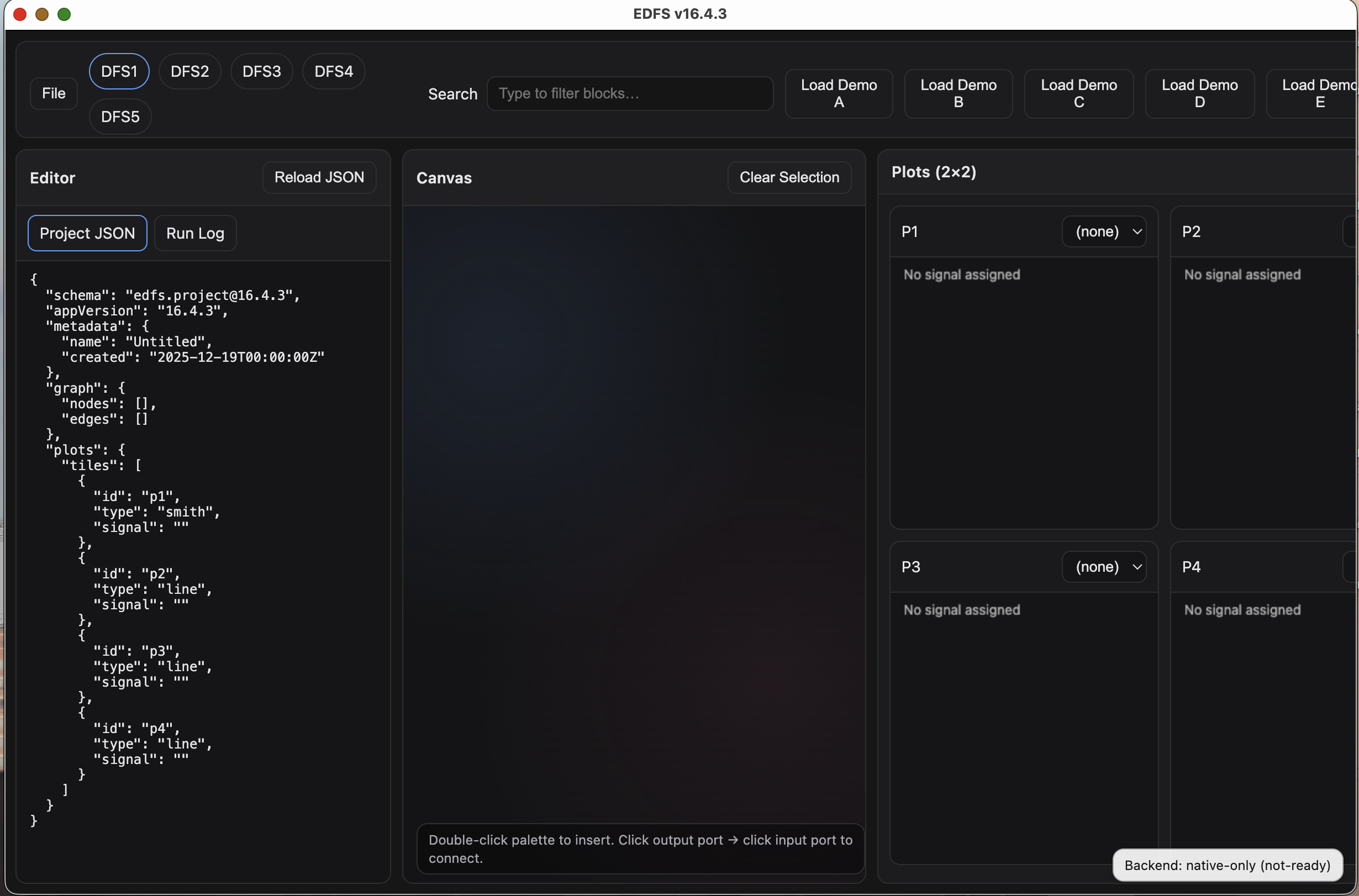
CAED introduces EDFS™ (Emergent Deformation Field System) for graph-native stability analysis, early-warning diagnostics, system and control optimization, NxS margins, and MXD Disk evaluation via the EDFS Viewer.
Resources: https://www.cognitave.com/cogn-tex4
Who Should Enroll
ECE undergraduates and graduates, practicing engineers, designers, and organizations seeking modern, scalable EDA workflows.
© 2024 Cognitave Inc.
ChatGPT can make mistakes. Che
Department of Electronics at Cognitave Inc Presents.
-
-
Maxdi CEO Mahdi Haghzadeh EDA OPENSOuRCE IEEE 2024: https://www.youtube.com/watch?v=TT8LmqN2Ckw
-
-
-
Keysight/EEsof ADS: https://www.keysight.com/us/en/products/software/pathwave-design-software/pathwave-advanced-design-system.html
NI AWR: https://www.cadence.com/en_US/home/tools/system-analysis/rf-microwave-design.html
OPEN SOurCE: LTSPICE; https://www.analog.com/en/resources/design-tools-and-calculators/ltspice-simulator.html%20
OPEN SOurCE: QSPICE; https://www.qorvo.com/design-hub/design-tools/interactive/qspice%20
Open Source Circuit SImulator SPICE: KiCAD; https://www.kicad.org/download/
using the circuit simulation engine SPICE, specifically the open-source ngspice program, https://www.kicad.org/discover/spice/
hospice webpage» https://ngspice.sourceforge.io
-
SYSTEM VUE from Keysight Technologies: https://www.keysight.com/us/en/products/software/pathwave-design-software/pathwave-system-design-software.html
OPEN SourCE: QucsStudio; http://qucsstudio.de/
AWR from CADENCE: https://www.ema-eda.com/
-






⊗∴⊛⊛⊡⊡ ⨥⨠⨻⩒⩒
The Department of Electronics at Cognitave Inc presents.
“The Birth and Death of the Cell Phone"
Dr. Martin Cooper
Father of the Cell Phone
{The IEEE MTT International Microwave Symposium (IMS)
the premier annual international meeting for technologists
involved in all aspects of microwave theory and practice}.
[Monday, 23 May 2016]
Abstract: The handheld cell phone was introduced 42 years ago but the modern smart phone is less than 10 years old. Marty Cooper maintains that, although the phone contains amazing semiconductor and other technologies, the phone itself is still in its infancy. Personal wireless connectivity has the potential to revolutionize health care and education; the health care revolution has already begun. But the biggest contribution pf wireless with be in improving the very concept of collaboration. Marty points out the irony that the ability to solve the many problems associated with these revolutions may well be enhanced by collaborative tools that use wireless technology to improve itself.

Electronics Engineering (Cognitave Inc)
-

RF/MW Engineering
Electronics Design \& Fabrication and RF/MW Application Engineer}: Electronics design, simulation \& modeling, semiconductor fabrication and RF testing.
Application focus areas: automotive Radar systems, telecommunication [5G, mmW, Low Earth Orbit (LEO), MIMO, MANET], digital \& analog sensing and computation, quantum inspired computing systems. Technology focus areas: front end modules, power amplifiers, mixers, phase shifters, antenna arrays, Radar systems [electronically scanned phased arrays].
Additive Manufacturing (AM), printed and flexible electronics.
-

Quantum/Analog Computing
Industry focus areas: customized software programs, coding and web based application development, consumable electronics \& accessories, cell phones sales \& repair, security cameras, solar cells, RF/MW testing \& prototyping equipment, optical \& electronic imaging and inspection systems.
Licensed \& open source Electronics Design Automation (EDA) software tools and design-flow implementation, PCB board development, module designs and components integration. Skilled in microelectronic device design \& fabrication, nanotechnology, microwave hybrid material innovation \& characterization,
Modern Applied Quantum Mechanics
(MAQM)
Modern Applied Quantum Mechanics (MAQM)

Modern Applied Quantum Mechanics (MAQM)
A Cognitave Inc. Course Presented by the Department of ElectronicsWelcome, and thank you for your interest in Modern Applied Quantum Mechanics (MAQM), a comprehensive course offered by Cognitave Inc. Quantum mechanics is often perceived as abstract and mathematically demanding, yet it underpins many of today’s most transformative technologies—from semiconductors and nanoscale devices to cryptography and advanced sensing. This course is designed to demystify quantum mechanics by focusing on its foundational principles and showing how those principles are applied in modern engineering and technology. Whether your background is academic or industrial, MAQM provides a clear, structured pathway from theory to application. Chapter 0 – Introduction to Quantum Mechanics: We begin with a broad introduction to quantum mechanics, including its historical development and its distinction from classical mechanics. While classical physics governs the behavior of everyday objects, quantum mechanics describes the microscopic world of particles and fields. This chapter also highlights how quantum theory has moved from a purely theoretical framework into a practical foundation for modern technology. Chapter 1 – Hilbert Space and the Algebra of Operators: This chapter introduces the mathematical framework of quantum mechanics. Students are guided through Hilbert space and operator algebra—the formal language used to describe quantum states and their evolution. The material is presented in a clear and accessible manner, making it approachable even for those without extensive prior exposure to advanced mathematics. Chapter 2 – Fundamental Principles of Quantum Mechanics: Here we explore the core concepts that define quantum behavior, including wave–particle duality, superposition, and the uncertainty principle. These ideas form the conceptual backbone of quantum theory and explain why quantum systems behave in ways that differ fundamentally from classical intuition. Chapters 3 & 4 – The Schrödinger Equation and the Quantum Wave: These chapters focus on the Schrödinger equation and the quantum wave function, which together describe how quantum systems evolve and how probabilities emerge in measurement. Topics include wave behavior, interference, and the probabilistic interpretation of quantum states. Chapter 5 – Special Topics in Quantum Mechanics: This chapter examines key quantum phenomena such as tunneling and entanglement. These effects are not only central to quantum theory but also enable practical innovations including quantum computing, secure communication, and nanoscale electronic devices. Chapter 6 – Advanced Topics: Building on the foundational material, this chapter introduces more advanced quantum systems and mathematical techniques. Students gain insight into how quantum theory is extended to address increasingly complex and realistic problems. Chapter 7 – Multi-Dimensional Quantum Systems: Quantum mechanics in higher dimensions is explored in this chapter, with applications to materials science, solid-state physics, and particle physics. Understanding multi-dimensional systems is essential for analyzing real-world quantum devices and structures. Chapter 8 – Perturbation Methods: The course concludes with perturbation theory, a powerful approximation technique used when exact solutions are not available. This method is essential for practical quantum analysis and is widely used in both research and industry. Why MAQM? This course offers a rigorous yet practical introduction to quantum mechanics, with a strong emphasis on real-world relevance. Participants will gain both conceptual clarity and applied insight, making MAQM suitable for students, engineers, and professionals seeking to deepen their understanding of the quantum foundations behind modern technology. We look forward to guiding you through the principles and applications of Modern Applied Quantum Mechanics. © 2024 Cognitave Inc.Department of Electronics at Cognitave Inc Presents.






Cognitave Inc Projects and Industries.
-
![]()
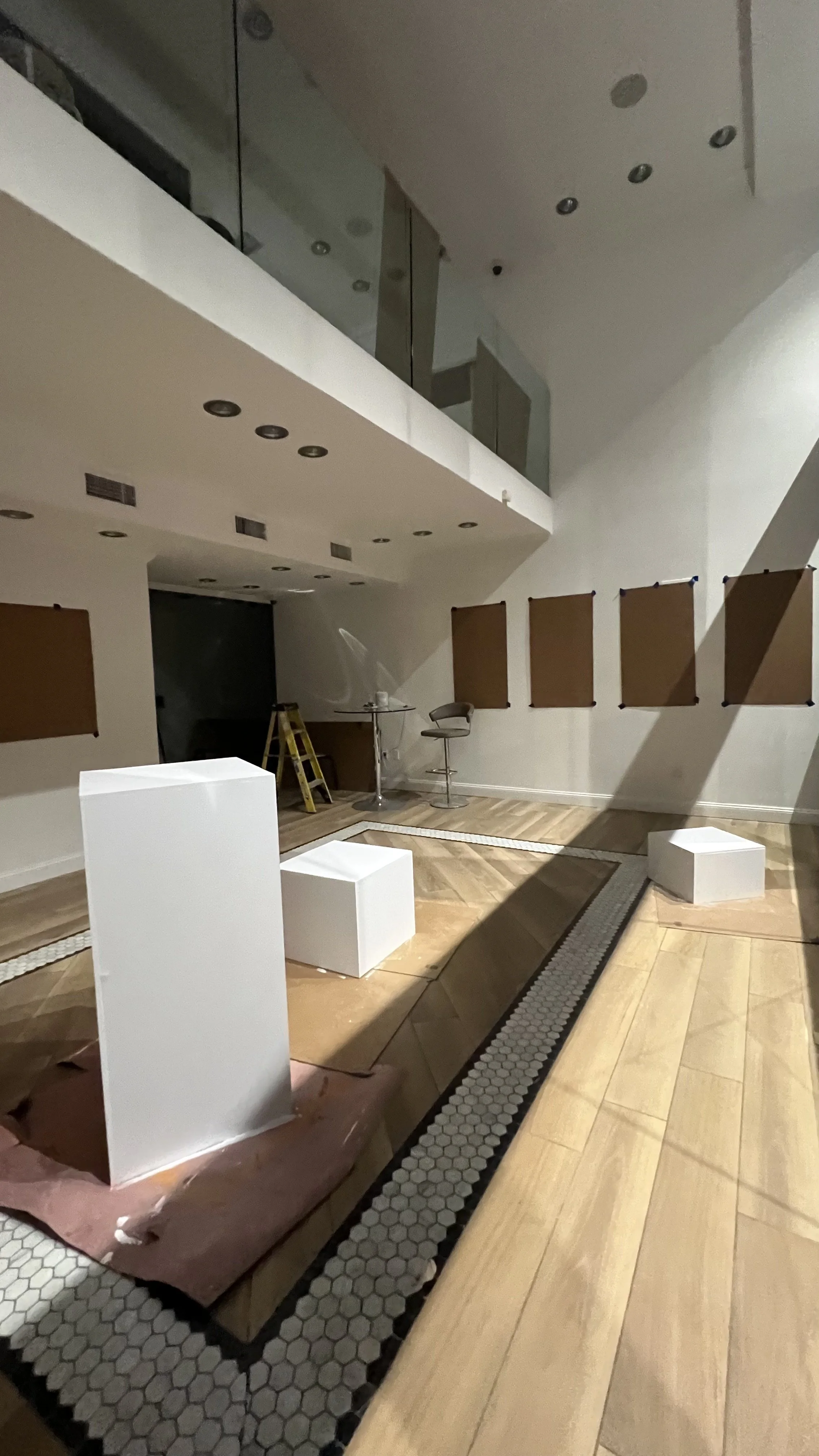
Project 412 WB, SoHo, NYC
This project 412 Wb, SoHo, NYC that was developed by Maxdi Inc under Maxdi Gallery contracts and operations with 412 WB LLC and Chase Contemporary Galleries (Chase SDNY LLC) and other local small businesses since Dec 2020.
-
![]()
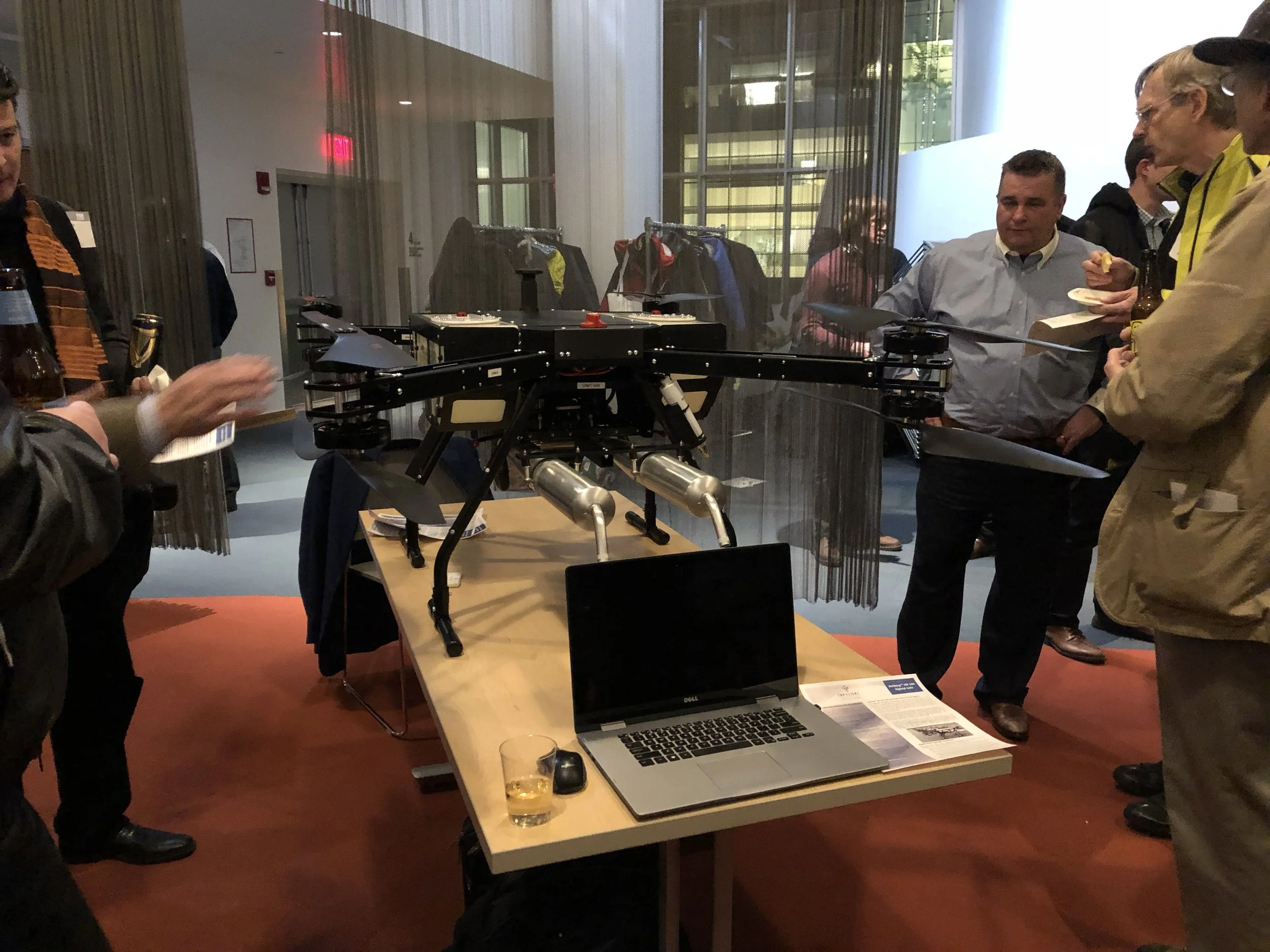
Project ETIC CRF UML
Investments from generous aerospace & defense companies in Massachusetts, officially the Commonwealth of Massachusetts, were directed to building world-class research and laboratory space in ETIC Building built on generous donations from SAAB family. Clcik Explore and learn more about this success story and advanced technological services offered in Shared Laboratories & Services at UML, Core Research Facilities.
-
![]()
EDFS™ Integration
CAED introduces EDFS™ (Emergent Deformation Field System) for graph-native stability analysis, early-warning diagnostics, system and control optimization, NxS margins, and MXD Disk evaluation via the EDFS Viewer.
Resources: https://www.cognitave.com/cogn-tex4 -
![]()
Project CIC, Cambridge MA
under development..
copyright 2024.
cognitave Inc.
-
![]()
Project CHC SoHo NY
under development.
copyright 2023.
Maxdi Inc.


Radar for Autonomous Driving
(ARAD)
Radar for Autonomous Driving (ARAD)

Welcome everyone, and thank you for your interest in Cognitave Inc.'s course on Radar for Advanced Autonomous Driving (ARAD), presented by our Department of Electronics.
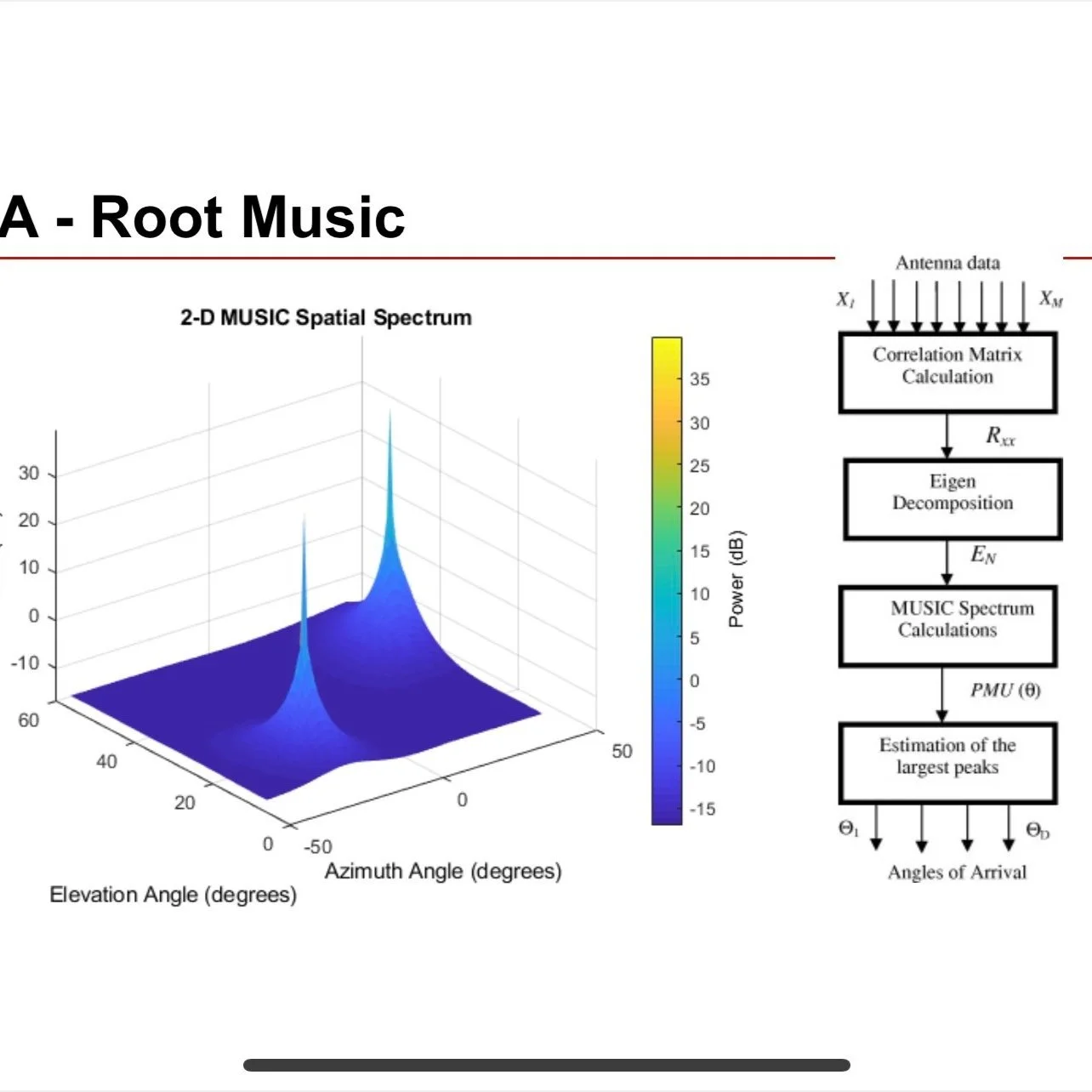
Radar technology discussed in this course includes a system level overview of the most common architecture for automotive Radars, and a review of key components and their roles. A typical technological and cost analysis should cover Integrated Circuits (ICs) and fabrication technologies for millimeter-wave Radars. Radar Signal Processing (RSP) is a central and paramount R&D focus across the globe among Tier-1 companies that design, develop, manufacture, validate and verify the sensing modules for OEMs (Original Equipment Manufacturers). Various steps of signal processing for Radar include signal conditioning, signal analysis, detection and tracking. Key functions and theories in RSP include Fast Fourier Transform (FFT), Constant False Alarm Rate (CFAR), and Direction of Arrival (DOA).
Modern automobiles are equipped with other sensing modules including cameras, Lidar, and ultrasound. In order to effectively and safely maintain the control of a vehicle, there are a unique set of requirements that need to be met for all such utilized perception sensors. Advancing the sensing modality by adding more features and functionalities leada to a higher price tag for each sensor. On the other hand, costs of such advanced sensors need to be reduced below a treshold to justify their deployment in mass produced vehicles.
In summary, this course offers a comprehensive look at Radar Technology with a clear focus on practical applications. Whether you’re aiming to deepen your knowledge for academic or industrial purposes, you’ll gain valuable insights into how advanced radar shapes the technologies of tomorrow. Thank you again for joining us, and we look forward to exploring the fascinating world of advanced radar for autonomous driving with you!
Copyright 2024. Cognitave Inc. Department of Electronics at Cognitave Inc Presents.



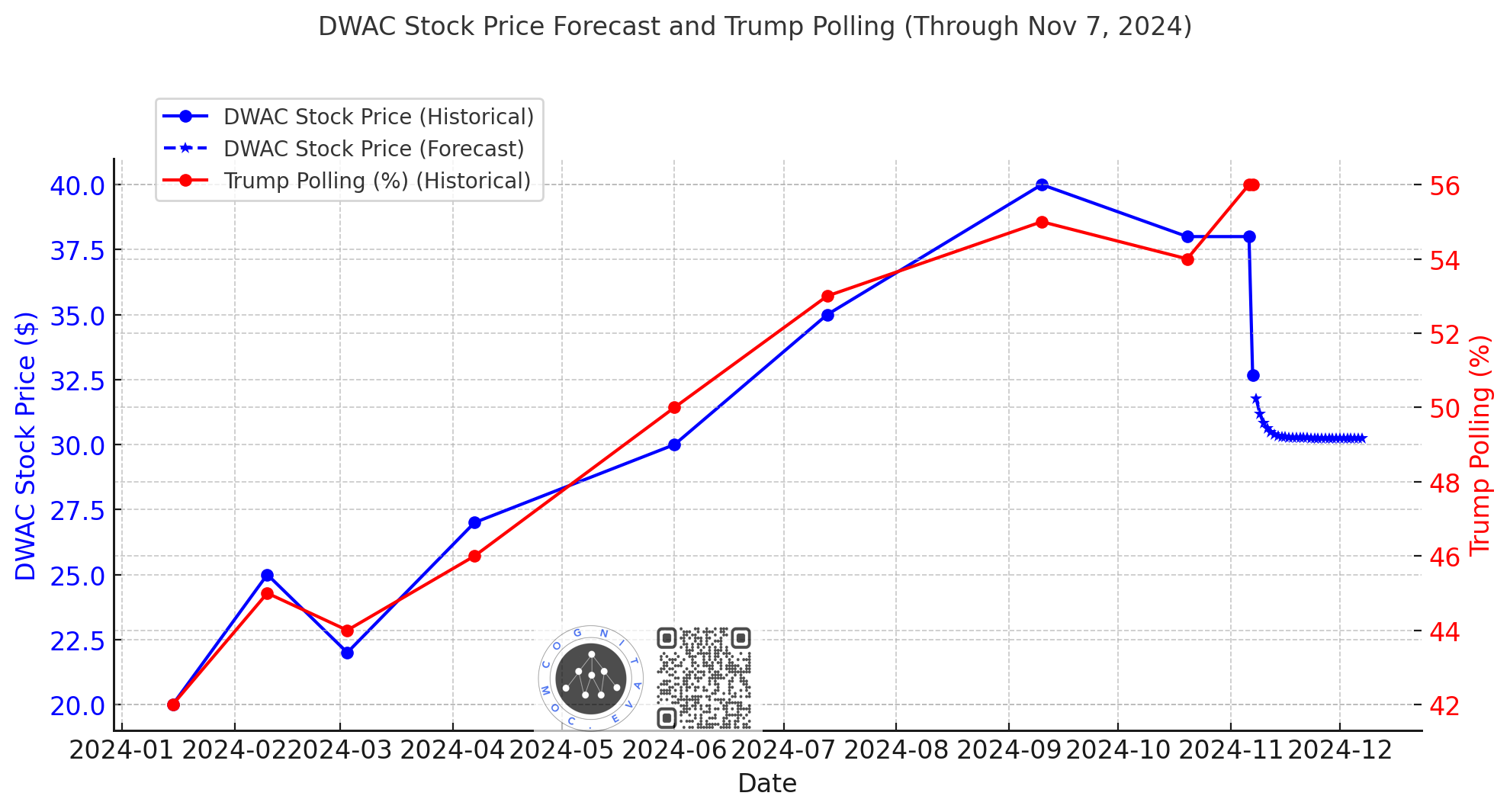
Stock market price projections -powered by GPT 4o. Copyright 2024.

Adoption of Communication Devices -powered by GPT 4o. Copyright 2024.
A question was asked by audience whether a startup could approach potential VC investors with results from such open source EDA tools. The answer is Yes, the tools presented are advanced over decades to handle any level of complexity in integrated electronics system design and supported by tens of thousands of engineers and programmers. The tools allow validation in software environment and the prototypes that are built as part of R&D validate the simulation results. Dr. Haghzadeh's extended answer as follows: Consider the following scenarios for three start-ups A, B, and C. Startup A has limited funding to purchase commercial EDA (eg. Matlab, ADS + systemVue tools that could cost up to 30-$40K per seat depending on the configuration); Startup B has abundant funding ($10+ M in 2 Yrs) and aiming to lunch a trending product within 2 years; Startup C has overly abundant funding ($10B in 10 Yrs) and will lunch the next revolutionary consumer electronics device in 5 years. Should any of these startups go with open-source or license-based EDA? Startup A has little to no option but to take advantage of open source EDA (GNU Octave8, LTSpice, KiCAD etc.) and develop its design and model of prototype in software environment to analyze and send to foundry for fabrication. Startup B can build its in-house and customizable electronics design flow using either open-source or license-based EDA options. Former open-source option will require some extra time and effort from startup employees due to steeper learning curve. Latter option with commercial EDA (Matlab, ADS, AWR etc) will give a head start to Startup B with the help of Application Engineers and experience available through partnerships created while acquiring a new software in this space (Mathwork, Keysight, Cadence in this example). Startup C also has abundant capital to invest in commercial EDA software. One could also argue that over years and decades the licensing fees could add up to millions of dollars (eg $200 M for 1000 employees for 10 year enterprise contract). In this imaginary scenario the executive at Startup C might decide to invest (eg $40M in 10 years) and build their own integrated, customized electronics design flow software to handle future design, development and simulation (eg $160M saving in licensing fees). Most these open source tools are python based and allow forking. Once a complete design flow is created and technology stack-ups are available, future designer could use unlimited copies of in-house EDA software without waiting for a license or token. Moreover they can use a copy of software on their Laptops or local computer without need to access the design environment on a remote server. For any inquiry, questions and comments please email us at >> tex@cognitave.com Mahdi Haghzadeh, PhD Cognitave Inc Apr 13, 2024

Cognitave Inc recently presented a talk at IEEE Orlando FL Conference & Expo entitled, Solving Linear ODEs by Differential Transfer Matrix Method (DTMM). Check out the presentation on YouTube via link below: https://lnkd.in/eQtS_gEd hashtag#NumericalComputing, hashtag#Circuits hashtag#EM hashtag#Simulations, hashtag#RFMW hashtag#IntegratedSystems, hashtag#Design hashtag#simulation hashtag#detection hashtag#tracking hashtag#rsp hashtag#radar hashtag#signalprocessing List of references: Paper A - Sina Khorasani and Khashayar Mehrany, "Differential transfer-matrix method for solution of one-dimensional linear nonhomogeneous optical structures," J. Opt. Soc. Am. B 20, 91-96 (2003)[https://lnkd.in/erHV9QXe] Paper B - Mehrany, Khashayar, and Sina Khorasani. "Analytical solution of non-homogeneous anisotropic wave equations based on differential transfer matrices." Journal of Optics A: Pure and Applied Optics 4.6 (2002): 624.[https://lnkd.in/eW_qZtZ3] or [https://lnkd.in/ej4eJUW5] Paper C - Khorasani, Sina, and Ali Adibi. "New analytical approach for computation of band structure in one-dimensional periodic media." Optics communications 216.4-6 (2003): 439-451. [https://lnkd.in/egRd-YGP] Paper D - Khorasani, Sina, and Ali Adibi. "Analytical solution of linear ordinary differential equations by differential transfer matrix method." arXiv preprint math-ph/0301010 (2003). [https://lnkd.in/einUxMCN] Paper E - Khorasani, Sina. "Differential transfer matrix solution of generalized eigenvalue problems." arXiv preprint arXiv:0909.3017 (2009). [https://lnkd.in/emzV2kE5]
Markets & Partner Clients
-
RF/MW Engineering, Electronics, Neuro-analog (Neuromorphic) Computing, Automotive Radar, Radar sensing and monitoring, quantum computing, mathematical modeling
-
Design flow software and techniques, Simulation baed modeling and analysis, optimizations and predictions, validation and verification work-flows
-
Aerospace & Defense, Automotive Sensing (Radar, Lidar, Vision, Ultrasonic), Software Design, Finance, Legal
-
Matlab (Mathworks Inc), Mathematica (Wolfram), Octave8, SPICE (LT-Spice, Q-Spice), HFSS (Ansoft), ADS (Keysight), Simulink (Mathworks), AWR (Cadence), Pyton
-
Course lessons under development. Course start date 4/12/2024. For inquiries email >> tex@cognitave.com