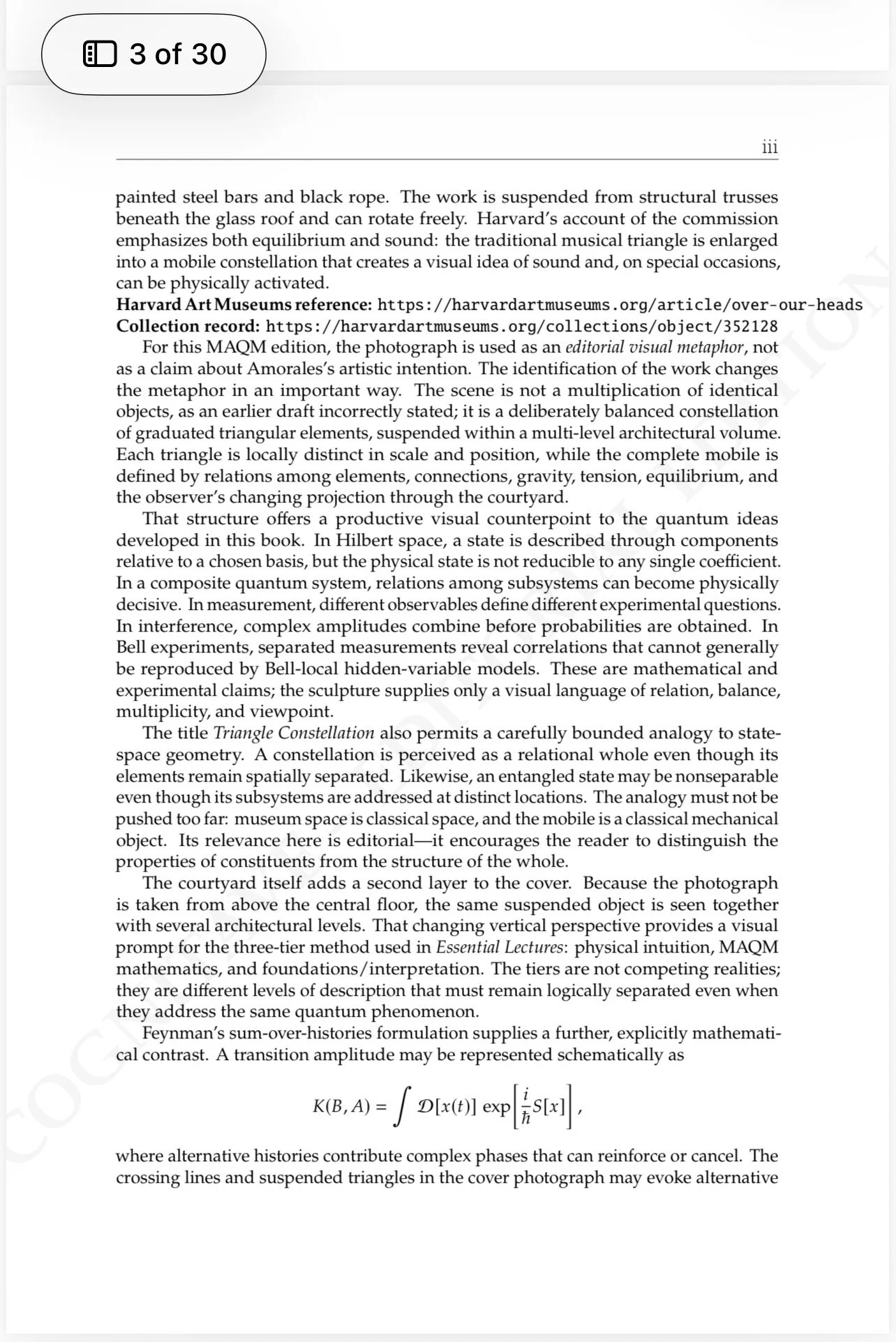
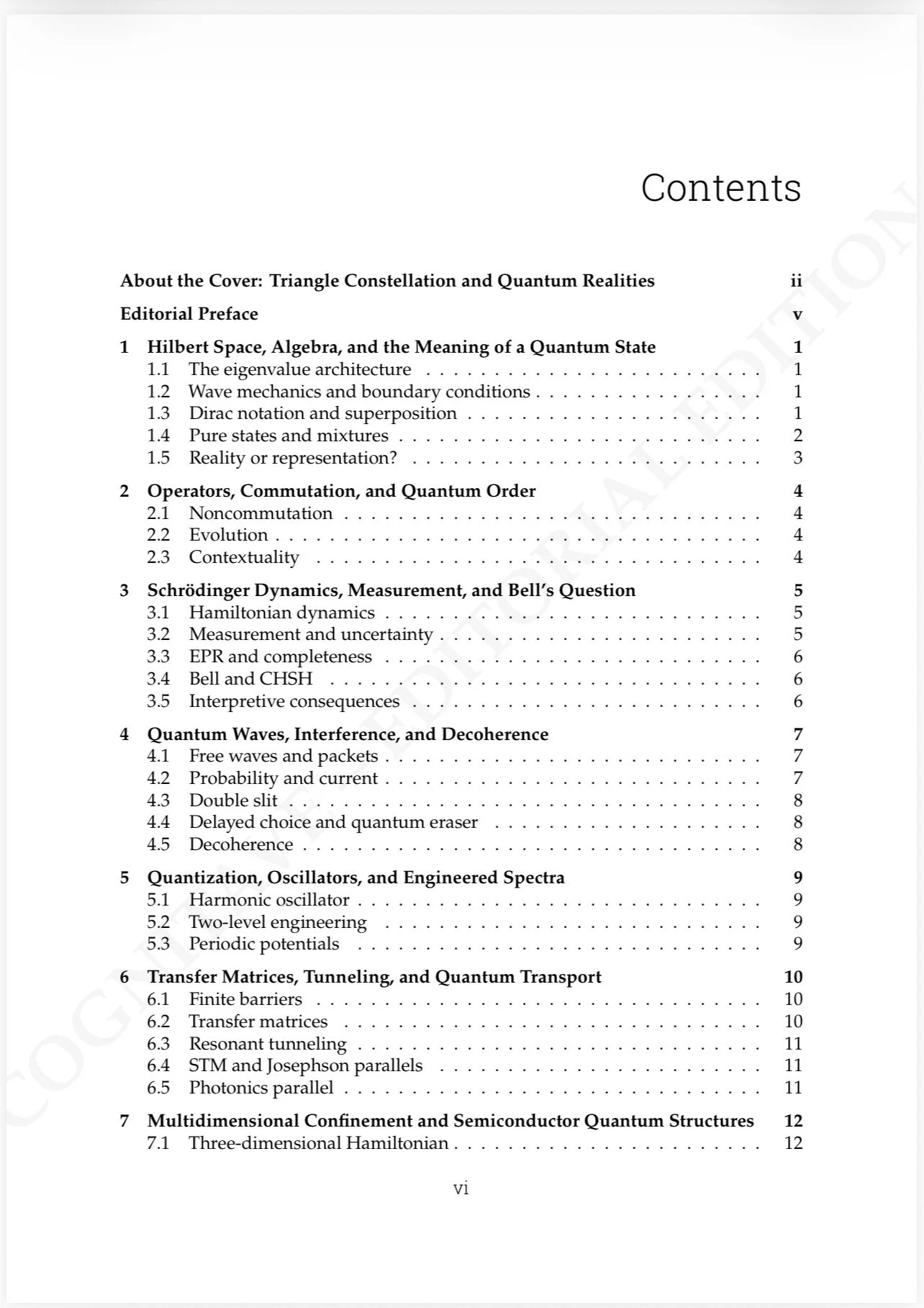
 Image 1 of 2
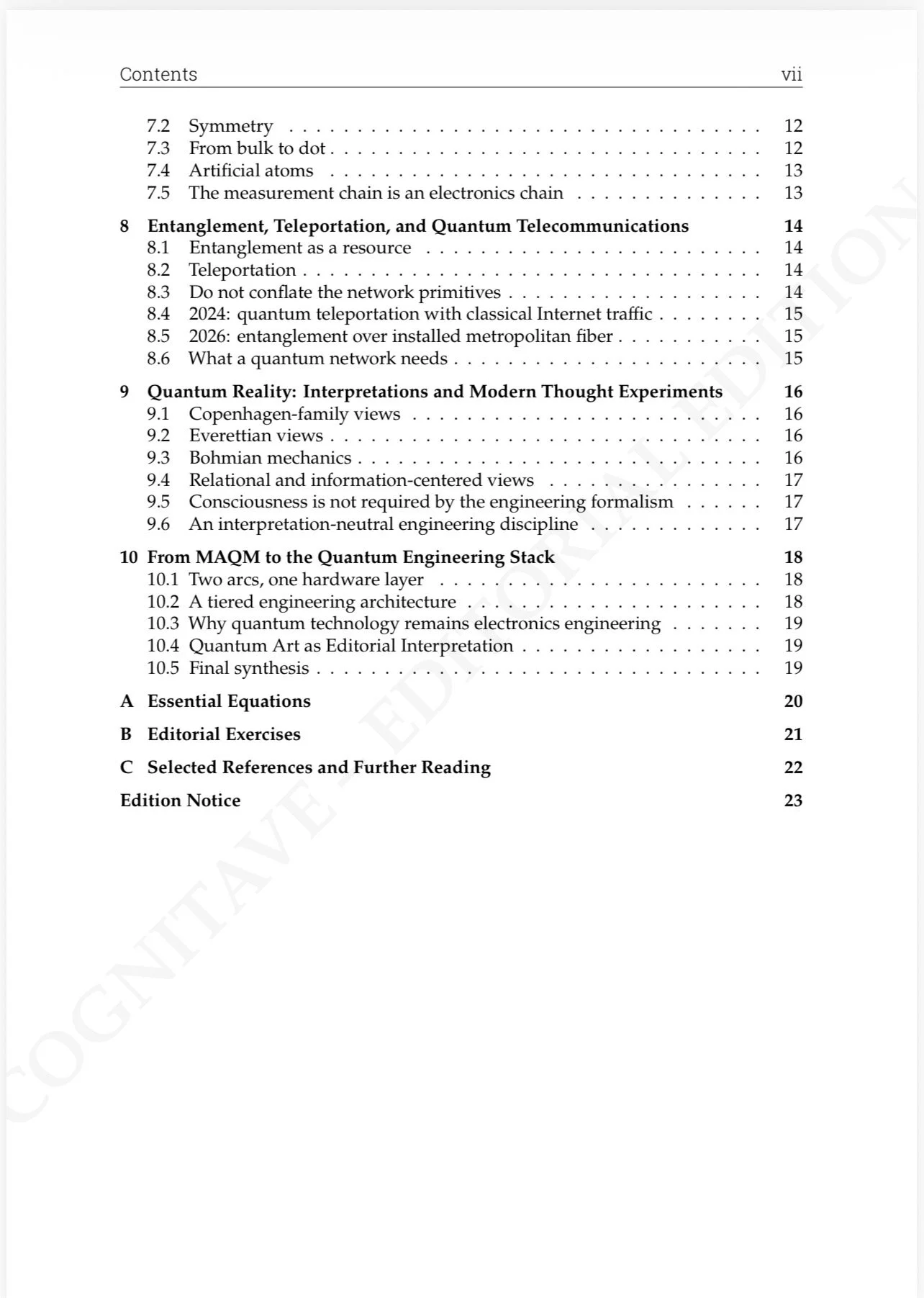
 Image 2 of 2
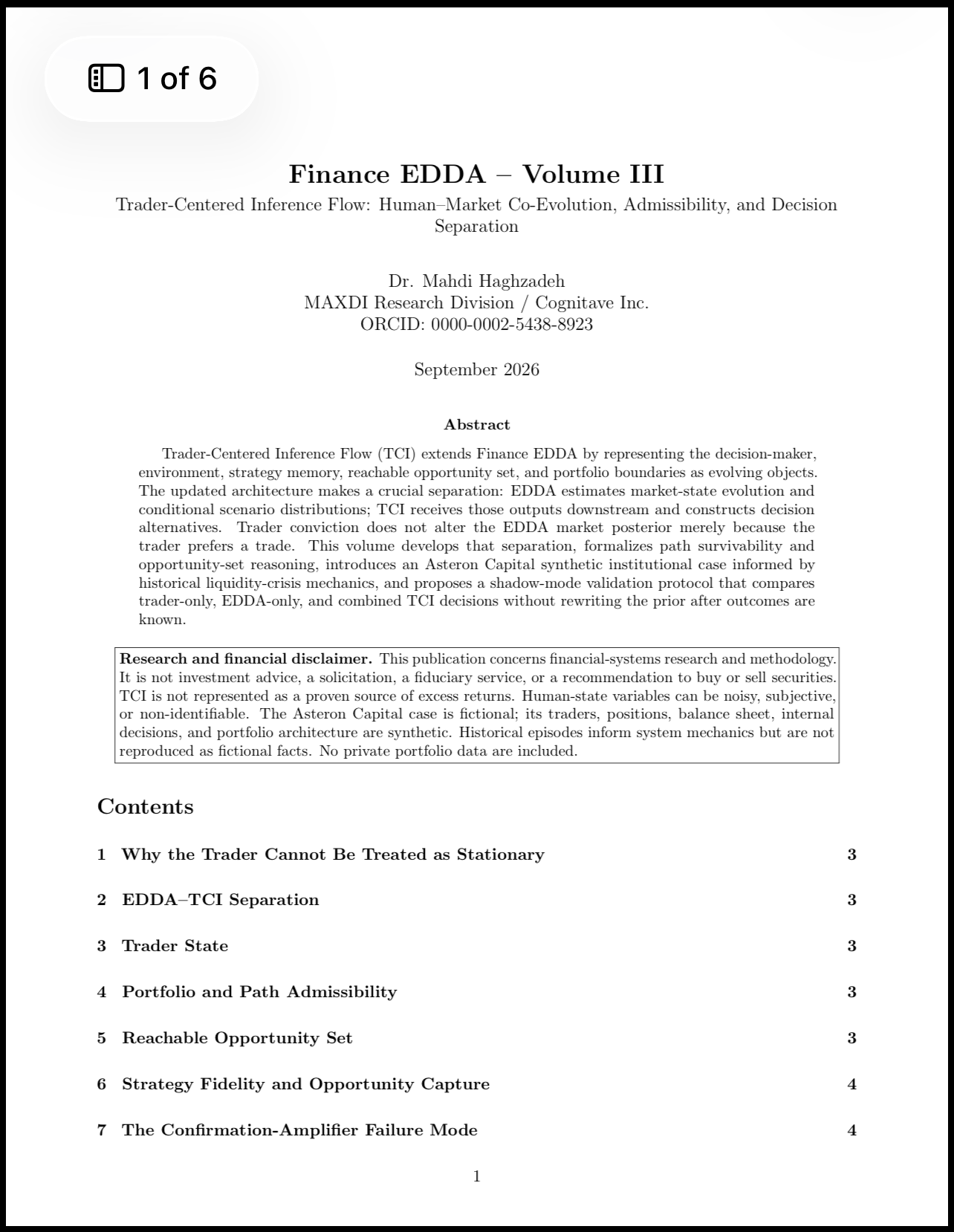
Most quantitative financial models place the decision-maker outside the system being modeled. Trader-Centered Inference Flow (TCI) investigates what changes when the trader is instead represented as an evolving participant embedded within the same information environment.
The trader carries strategy memory, conviction, uncertainty, timing sensitivity, opportunity awareness, operational constraints, and accumulated experience. Market events alter this state, while the trader’s resulting actions alter exposure to subsequent events.
TCI therefore studies the coupled relationship among market state, opportunity state, portfolio state, environment, and human decision state.
The updated formulation makes an important architectural distinction: TCI does not modify the Finance EDDA market posterior merely because a trader holds a strong belief. Finance EDDA first constructs the conditional market-state distribution. Trader state then enters a downstream decision layer in which reachable alternatives can be compared.
This separation is intended to preserve human trading information without turning conviction into a confirmation mechanism.
Most quantitative financial models place the decision-maker outside the system being modeled. Trader-Centered Inference Flow (TCI) investigates what changes when the trader is instead represented as an evolving participant embedded within the same information environment.
The trader carries strategy memory, conviction, uncertainty, timing sensitivity, opportunity awareness, operational constraints, and accumulated experience. Market events alter this state, while the trader’s resulting actions alter exposure to subsequent events.
TCI therefore studies the coupled relationship among market state, opportunity state, portfolio state, environment, and human decision state.
The updated formulation makes an important architectural distinction: TCI does not modify the Finance EDDA market posterior merely because a trader holds a strong belief. Finance EDDA first constructs the conditional market-state distribution. Trader state then enters a downstream decision layer in which reachable alternatives can be compared.
This separation is intended to preserve human trading information without turning conviction into a confirmation mechanism.