
 Image 1 of 5
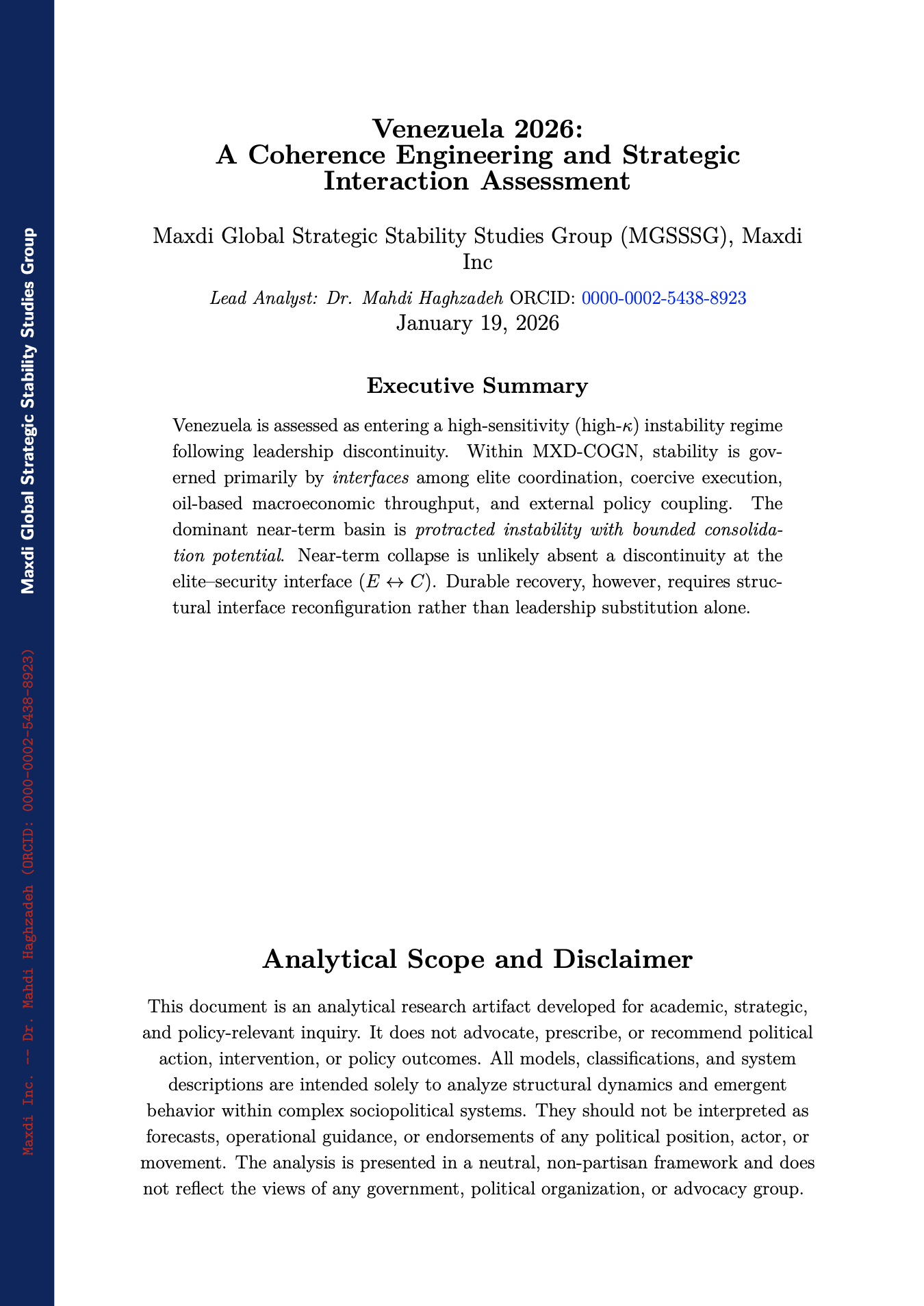 Image 2 of 5
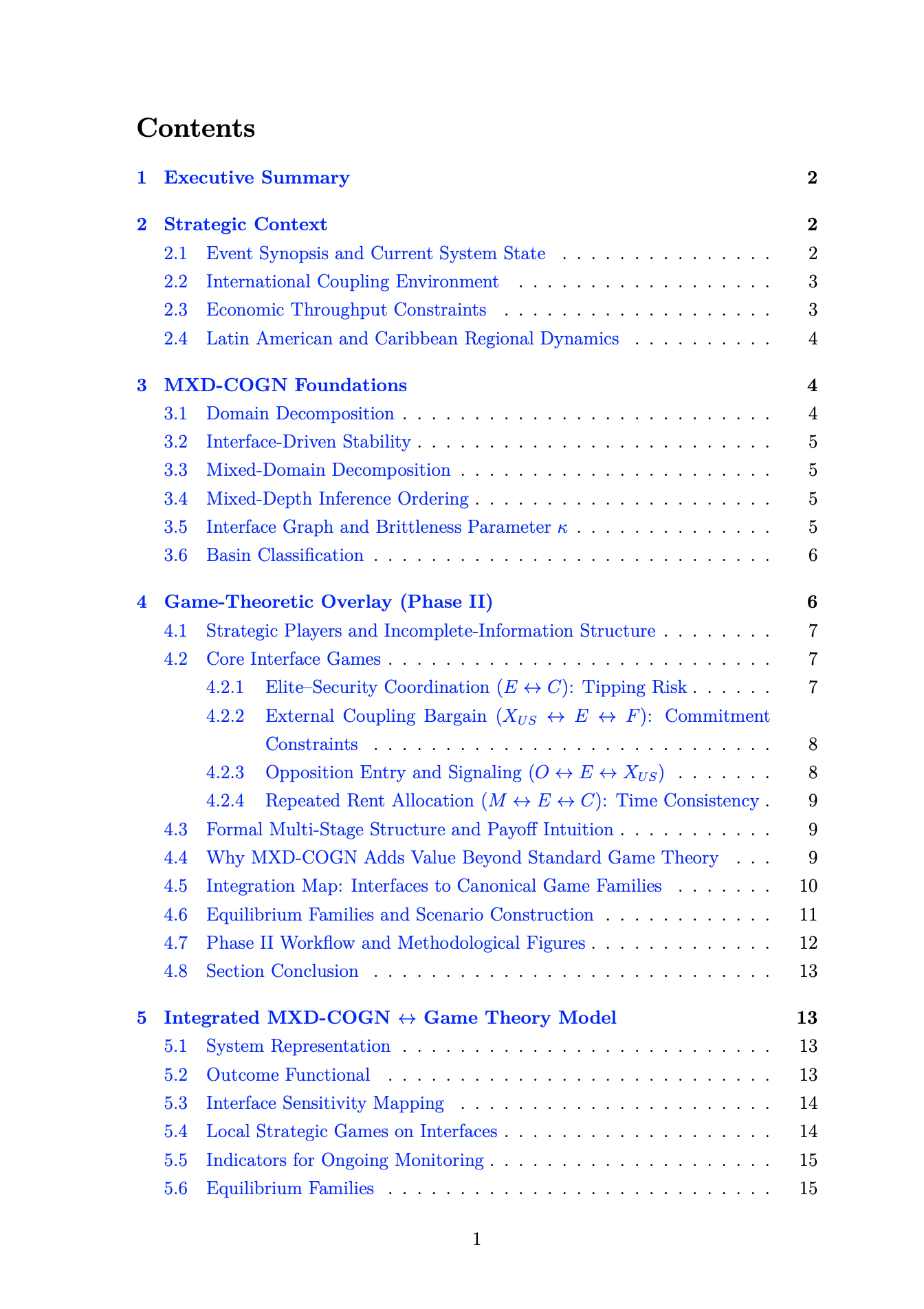 Image 3 of 5
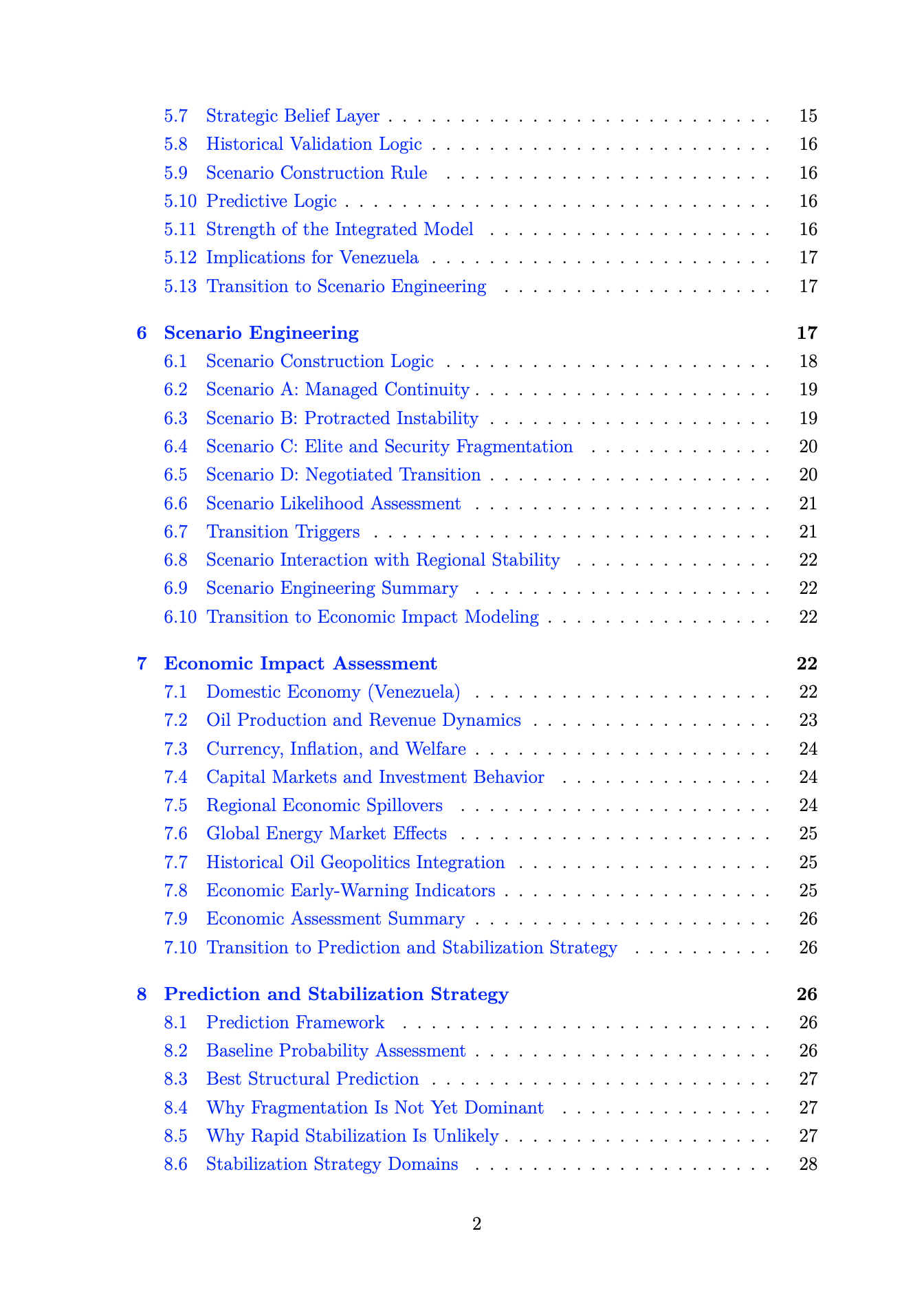 Image 4 of 5
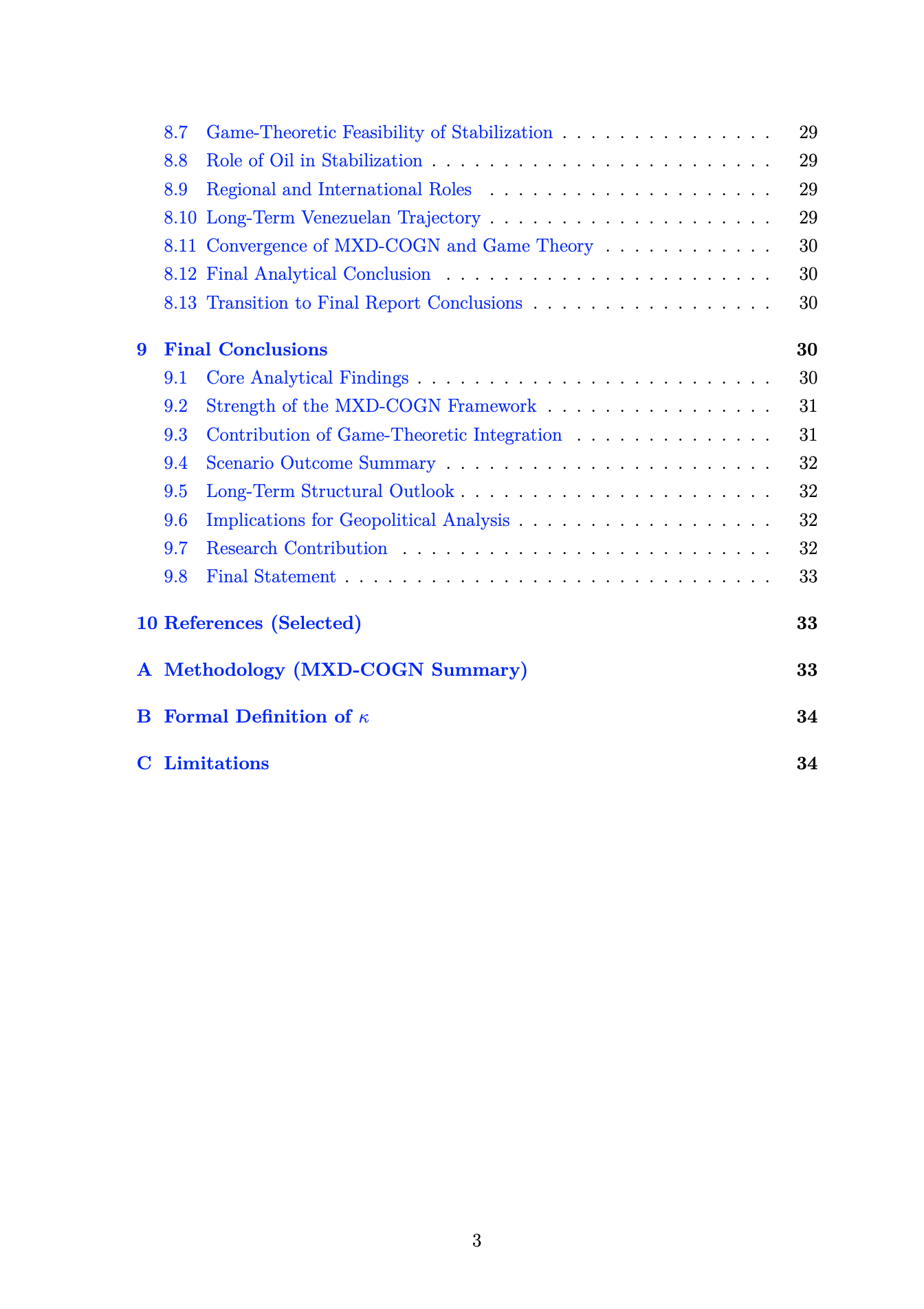 Image 5 of 5
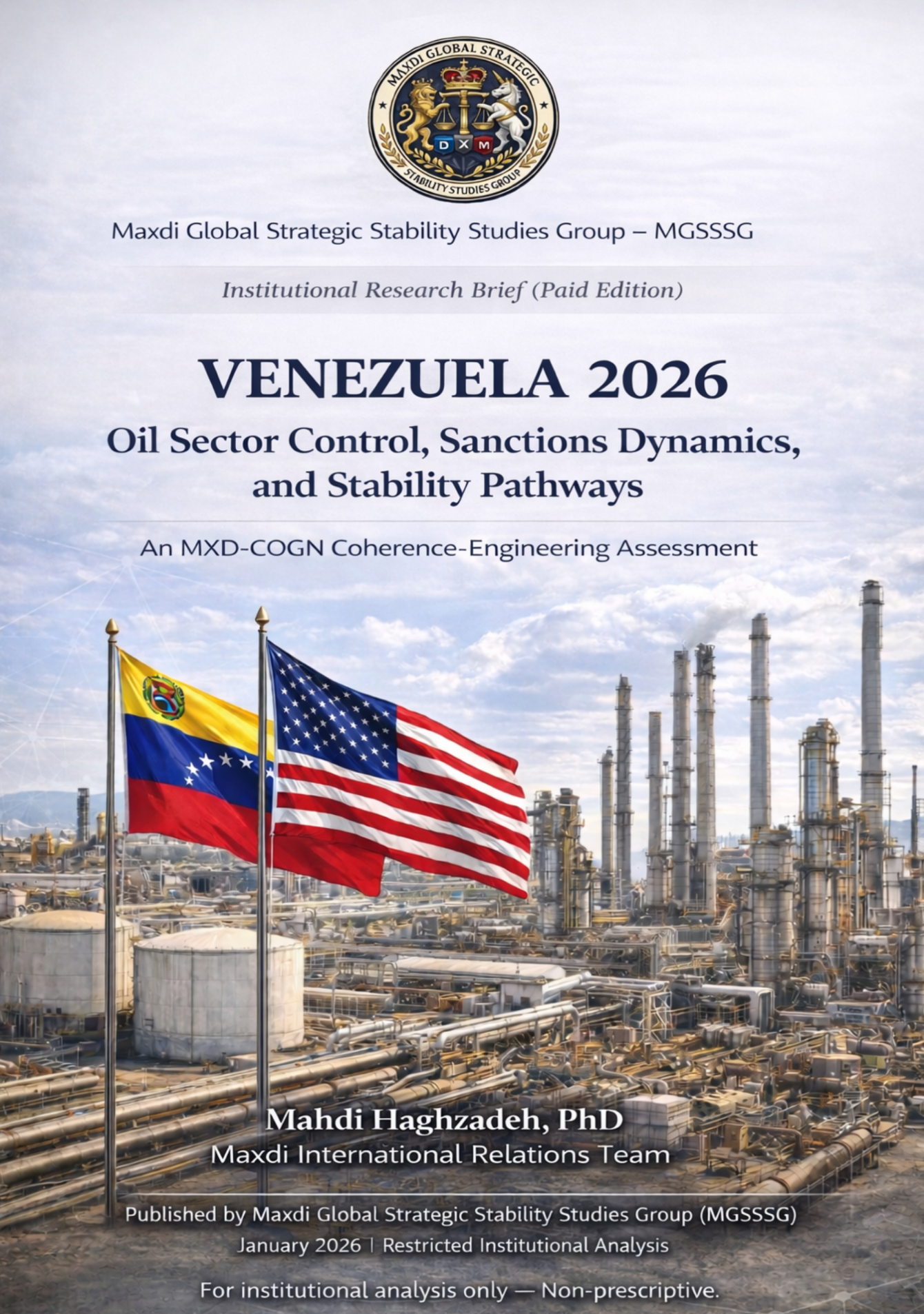
Venezuela 2026 is a paid institutional research report published by the Maxdi Global Strategic Stability Studies Group (MGSSSG). The report applies the MXD-COGN coherence-engineering framework, integrated with a formal game-theoretic overlay, to analyze Venezuela’s instability environment following leadership discontinuity and intensified external intervention dynamics.
Rather than offering narrative forecasts or policy prescriptions, the assessment models Venezuela as a high-sensitivity (high-κ) system, where outcomes are governed by interactions across elite coordination, coercive execution, oil-based macroeconomic throughput, legitimacy formation, and external policy coupling. The report identifies structural instability basins, interface brittleness, and equilibrium families that define Venezuela’s near- and medium-term trajectories.
Core analytical focus areas include oil sector control and revenue governance, sanctions and licensing dynamics, elite–security coordination risk, opposition signaling constraints, civilian welfare implications, and regional spillover pathways. Scenario engineering is conducted as a function of interface sensitivity and belief dynamics, not leadership symbolism or event-driven speculation.
This report is intended for institutional analysts, policy professionals, investors, and research organizations requiring disciplined, non-prescriptive structural analysis under conditions of contested information and political volatility.
Format: Institutional PDF
Length: ~50 pages
Classification: Restricted institutional analysis (non-prescriptive)
Venezuela 2026 is a paid institutional research report published by the Maxdi Global Strategic Stability Studies Group (MGSSSG). The report applies the MXD-COGN coherence-engineering framework, integrated with a formal game-theoretic overlay, to analyze Venezuela’s instability environment following leadership discontinuity and intensified external intervention dynamics.
Rather than offering narrative forecasts or policy prescriptions, the assessment models Venezuela as a high-sensitivity (high-κ) system, where outcomes are governed by interactions across elite coordination, coercive execution, oil-based macroeconomic throughput, legitimacy formation, and external policy coupling. The report identifies structural instability basins, interface brittleness, and equilibrium families that define Venezuela’s near- and medium-term trajectories.
Core analytical focus areas include oil sector control and revenue governance, sanctions and licensing dynamics, elite–security coordination risk, opposition signaling constraints, civilian welfare implications, and regional spillover pathways. Scenario engineering is conducted as a function of interface sensitivity and belief dynamics, not leadership symbolism or event-driven speculation.
This report is intended for institutional analysts, policy professionals, investors, and research organizations requiring disciplined, non-prescriptive structural analysis under conditions of contested information and political volatility.
Format: Institutional PDF
Length: ~50 pages
Classification: Restricted institutional analysis (non-prescriptive)