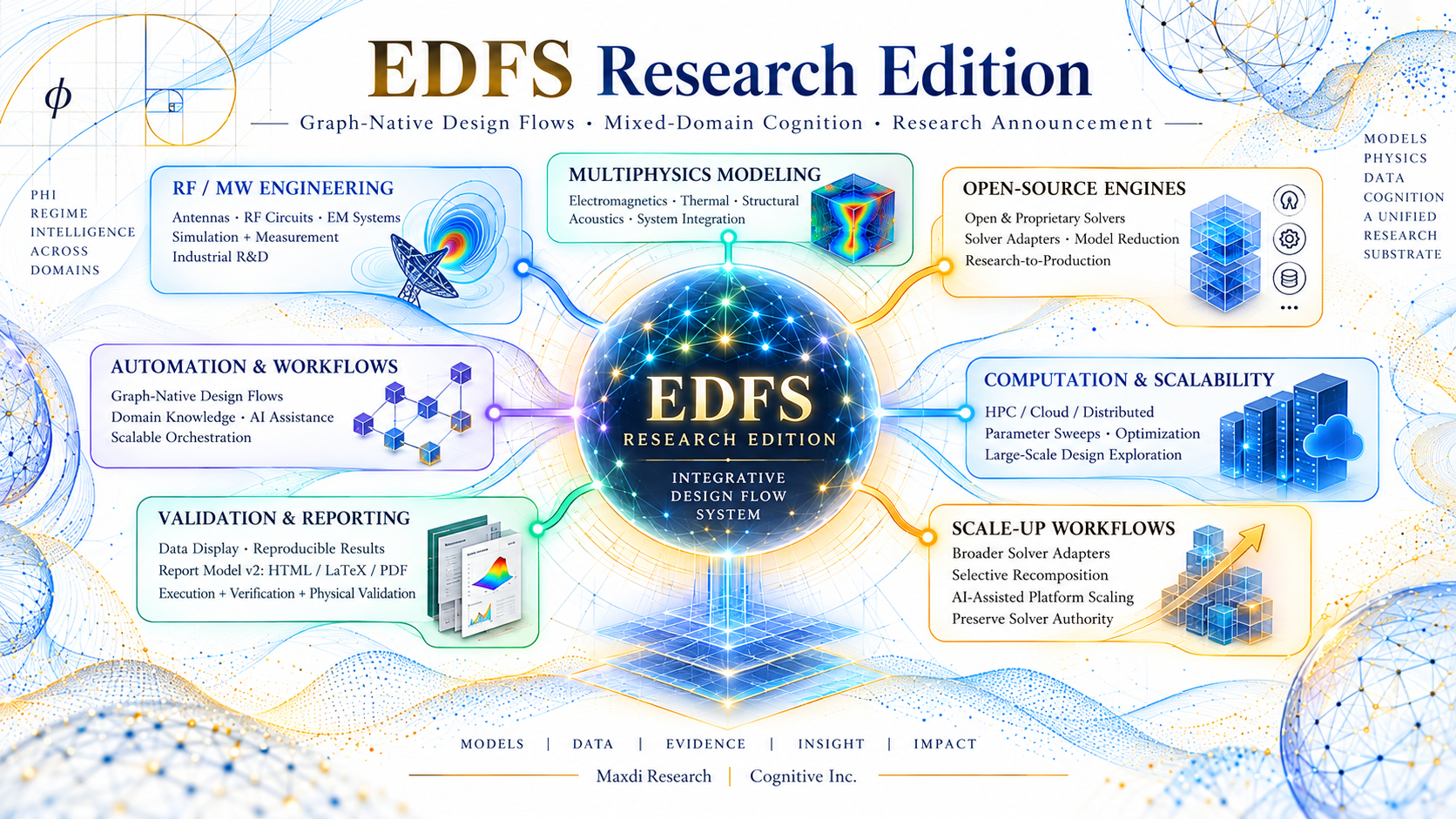
 Image 1 of 2
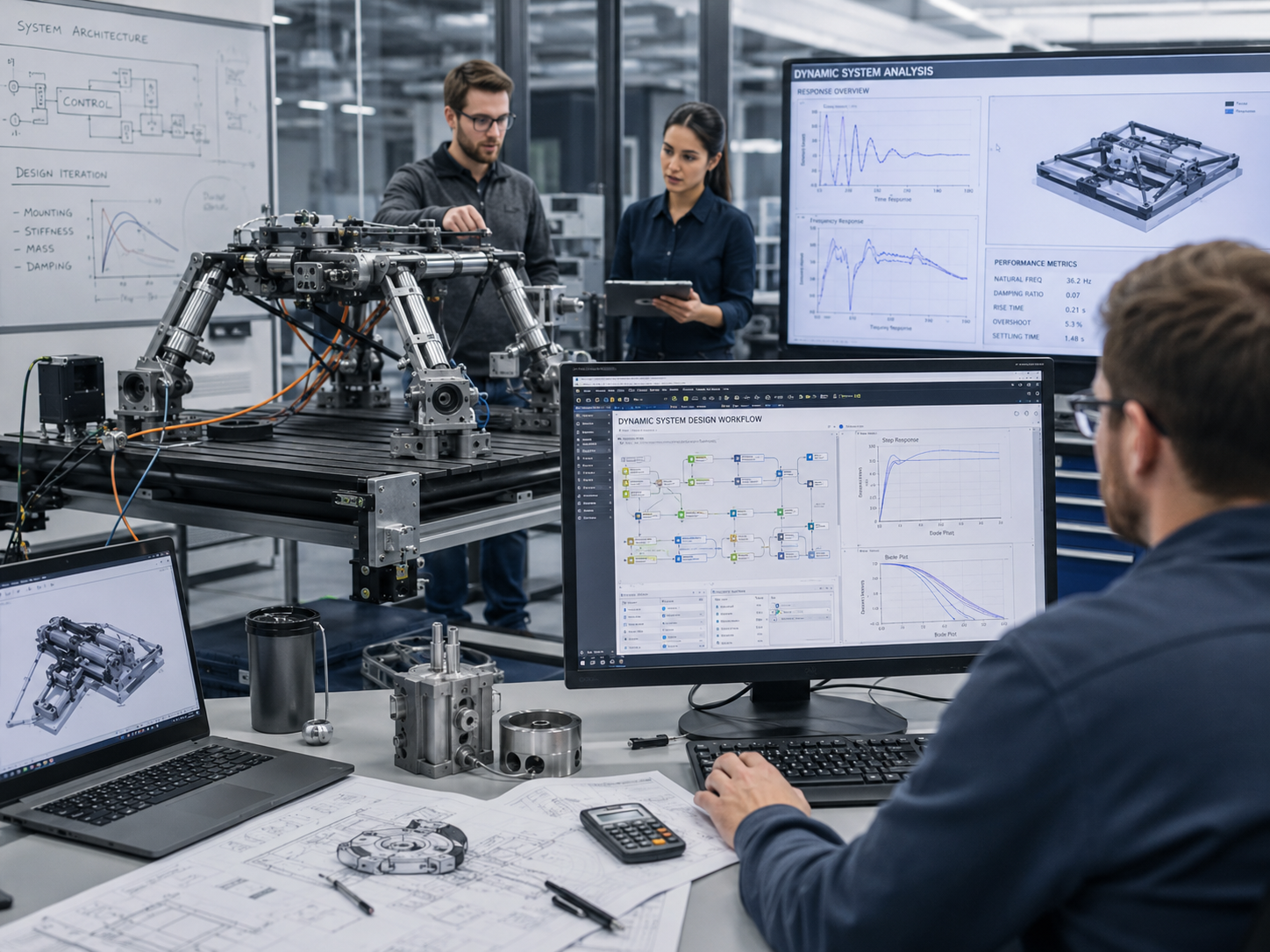 Image 2 of 2
EDFS Research 2026 R1
Graph-Native Computational Engineering EDA
Research · Advanced R&D · Engineering Automation
2026 R1 First-Mover Perpetual License
USD $9,950 / seat — one-time
Current Download: macOS Intel x86_64 .dmg
License: Perpetual software-use license for the licensed EDFS Research 2026 R1 seat
Included: 12 months of EDFS Research 2026 R1 maintenance updates
Engineering Intelligence for Connected Design Flows
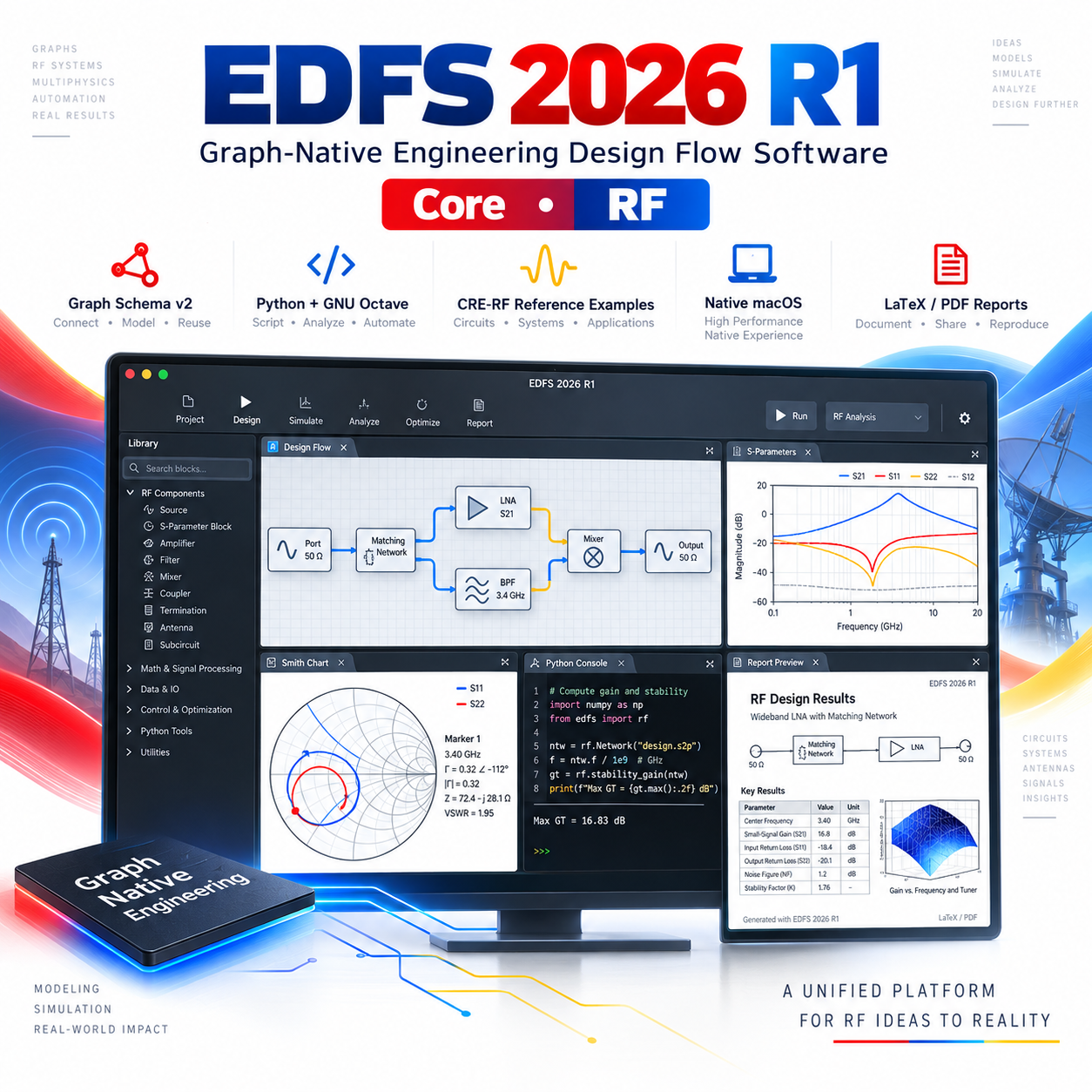
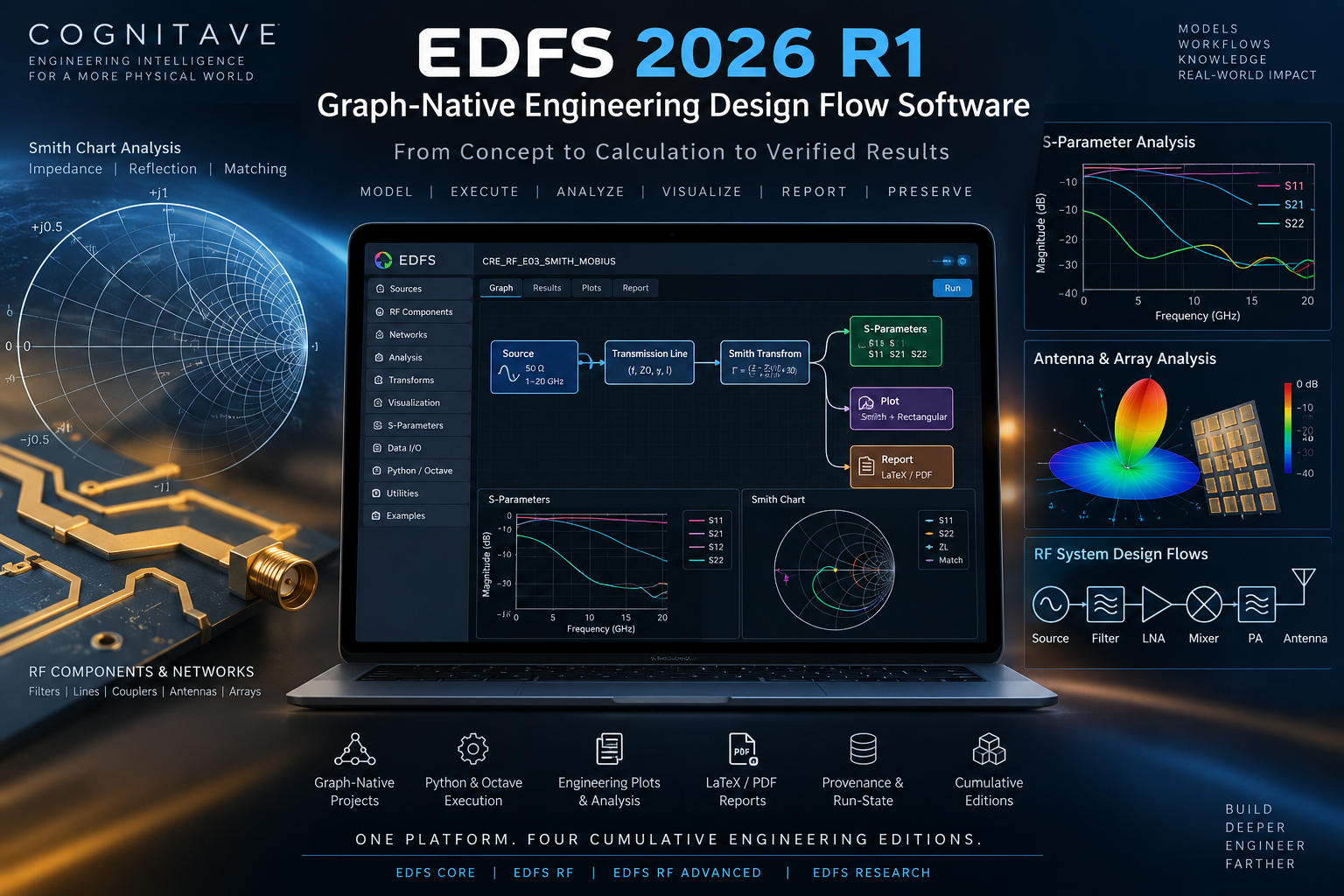
EDFS Research 2026 R1 is the advanced computational engineering and research edition of EDFS — Electronics Design Flow Studio.
It brings programmable engineering, numerical execution, RF and microwave methods, solver evidence, reduced-model workflows, circuit simulation, computational intelligence, provenance, project history, and technical reporting into one persistent graph-native engineering environment.
EDFS Research is designed for engineering programs in which the real design process extends across multiple models, scripts, numerical engines, measurements, solver outputs, reduced representations, and technical decisions.
The platform provides the computational structure that keeps those elements connected.
EDFS Core + DFS-RF / RF Advanced + DFS-Editor + CRE-RF + governed GNU Octave execution + ngspice workflows + protected XiRA integration + typed engineering datasets + solver evidence + project history + Report Model v2
operate within a common EDFS project architecture.
The result is a programmable EDA environment built around the design flow itself.
From Solvers to Evidence
Modern engineering programs rarely remain inside one software environment.
A research or product-development workflow may move through electromagnetic simulation, network analysis, circuit simulation, numerical algorithms, measurements, equivalent models, optimization, parameter studies, technical plots, reports, and design revisions.
EDFS Research provides a persistent engineering layer across that process.
A project can retain:
project and graph identity
design revision
numerical authority
source-code identity
SHA-256 hashes
input datasets
solver outputs
generated artifacts
plots
runtime information
evidence
qualification state
technical reports
historical project relationships
This creates a computational record in which engineering results remain connected to the processes that produced them.
EDFS Core — The Research Backbone
EDFS Core provides the shared architecture beneath the Research edition.
It coordinates:
project identity and revisions
Graph Schema v2
typed engineering objects
dataset registry
job and execution state
artifact registry
SHA-256 identity
evidence storage
project history
Report Model v2
report indexing
specialist DFS workspaces
inter-workspace communication
Specialized environments communicate through typed jobs, datasets, and artifacts.
Representative artifact classes include:
XIRA_RESULT_BUNDLE
USER_OCTAVE_RESULT
CIRCUIT_SIM_RESULT
EM_DATASET
REPORT_MODEL_V2
This architecture allows numerical methods and specialist engineering environments to evolve while preserving a common EDFS project record.
DFS-Editor — A Programmable Engineering Workspace
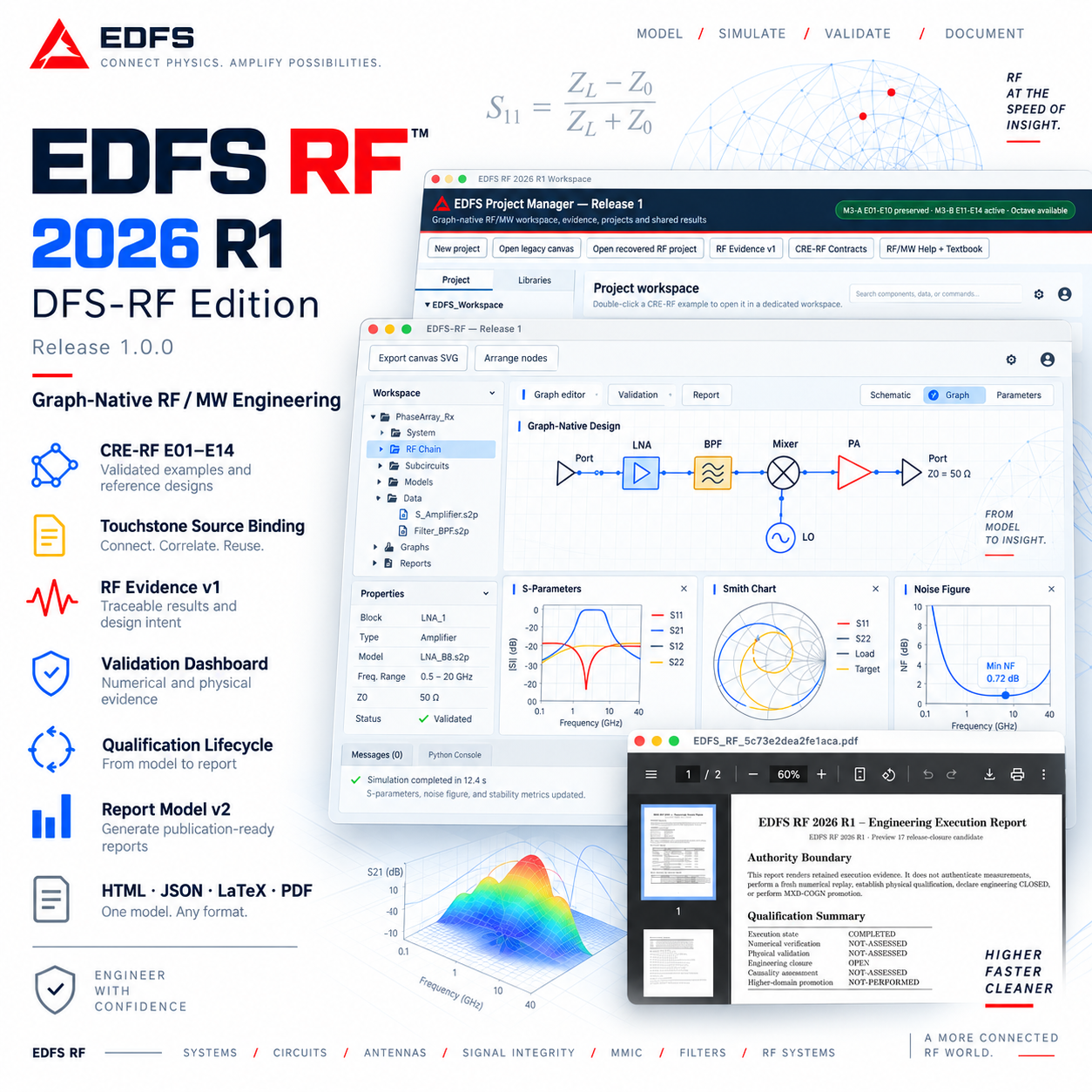
At the center of EDFS Research is DFS-Editor, a programmable engineering workspace integrated with the EDFS project architecture.
DFS-Editor supports engineering development around GNU Octave and retained EDFS project state, including:
project and file workspaces
.m file development
persistent GNU Octave sessions
command execution
Run File
Run Selection
Send Selection to Command Window
command history
working-directory management
variable inspection
CSV and numerical data
plots
retained output artifacts
CRE-RF functions
engineering help
source hashing
evidence receipts
Where GNU Octave is the declared numerical authority, accepted engineering mathematics execute through GNU Octave while EDFS manages orchestration, identity, evidence, artifacts, and reporting.
This creates a controlled environment in which numerical exploration can remain connected to the engineering project around it.
CRE-RF — Interactive RF/Microwave Engineering
EDFS Research makes admitted CRE-RF — Cognitave RF Engineering methods available within an interactive computational environment.
Research workflows can include operations involving:
impedance and admittance
reflection coefficient
S/Z/Y/ABCD transformations
two-port cascade
reference-plane transport
transmission-line calculations
return loss and mismatch
RF network comparison
closure diagnostics
admitted deformation operators
robustness and sensitivity methods
An engineer can move through:
governing relation → interactive execution → parameter modification → visualization → retained code → evidence → validation → reusable engineering method
inside the same project architecture.
From Research Code to Governed Engineering Capability
EDFS Research provides an explicit development path for user-created numerical methods.
A research method can progress through:
DFS-Editor Experiment
↓
User Octave Script / Function
↓
Extension Manifest
↓
Typed Inputs & Outputs
↓
Validation & Evidence
↓
Governed EDFS / XiRA Graph-v2 Capability
This gives research groups and advanced engineering teams a structured path from exploratory computational work toward reusable engineering capability.
Experimental methods retain their own maturity state while accepted methods can be promoted through explicit validation.
DFS-XiRA — Governed Computational Intelligence
EDFS Research provides the host architecture for governed DFS-XiRA workflows.
XiRA is organized as a layered computational engineering system that can connect high-fidelity evidence, reduced models, topology, circuit representations, search, optimization, and retained engineering results.
Representative layers include:
1. Intake & Authority
Governed source packages, private runtime handling, dataset identity, and declared numerical authority.
2. Dataset & Feature Intake
HFSS exports, numerical tables, measurement data, CSV, Touchstone, and other typed engineering datasets.
3. Equivalent-Circuit Model Extraction
Parameterized ECM extraction and associated diagnostics.
4. Topology & Netlist Construction
Declared topology families, model instantiation, and netlist generation.
5. Surrogate Modeling
Model fitting, validation, selection, and candidate scoring.
6. Governed Search & Optimization
Bounded continuous and mixed-variable engineering search with retained provenance.
7. Circuit-vs-EM Closure
Magnitude, phase, resonance, bandwidth, and selected frequency-window comparison.
8. Active Learning
Next-simulation recommendations, exclusion, diversity, and uncertainty-proxy analysis.
9. Graph, Evidence & Reporting
EDFS graph registration, retained results, project persistence, evidence, and Report Model v2.
This architecture creates a pathway for reducing expensive design-space exploration by using existing engineering evidence to identify potentially valuable next calculations.
Typed Engineering Datasets
EDFS Research treats datasets as engineering objects rather than anonymous files.
Supported and targeted dataset classes include:
Touchstone .s1p, .s2p, and .sNp
HFSS exported data
CST exported data
EMPro exported data
VNA measurements
complex S-parameter tables
CSV
MAT
JSON
numerical matrices
retained EDFS result bundles
Dataset metadata can preserve:
physical ports
units
reference impedance
source
frequency axis
design variables
state variables
provenance
SHA-256 identity
Methods can therefore consume datasets with explicit engineering semantics and provenance.
Heterogeneous Solver Authority
EDFS Research is designed around explicit computational authority.
Electromagnetic Evidence
High-fidelity EM results from designated sources such as HFSS, CST, EMPro, or measurement systems can enter EDFS as typed engineering evidence.
EDFS can organize, compare, reduce, fit, qualify, relate, and report those results while retaining their original authority.
Circuit Simulation
Circuit-domain execution can be performed through ngspice using governed netlist workflows.
Numerical Engineering
Accepted CRE-RF and XiRA numerical workflows execute through GNU Octave where Octave is the declared numerical authority.
Orchestration
EDFS coordinates jobs, artifacts, project identity, validation state, provenance, and reporting across these computational domains.
This creates a heterogeneous engineering environment in which each engine performs the work for which it is authoritative while EDFS preserves the design-flow relationship among them.
EM → Circuit → Closure
One of the strongest EDFS Research workflows is the relationship between high-fidelity electromagnetic evidence and reduced circuit representations.
A project can organize:
EM Dataset
↓
Feature Extraction
↓
Equivalent-Circuit Model
↓
Topology Selection
↓
Netlist
↓
Circuit Simulation
↓
EM-vs-Circuit Comparison
↓
Closure Metrics
↓
Model Acceptance / Next Simulation
This workflow is relevant to engineering research involving:
microwave structures
filters
resonators
antennas
frequency-selective surfaces
metamaterial structures
tunable RF devices
arrays
reconfigurable hardware
compact and reduced-order models
The original electromagnetic evidence remains associated with the model derived from it.
Evidence-Preserving Computation
EDFS Research retains the computational context around an engineering result.
A governed run can preserve:
source SHA
command
runtime identity
working directory
input identity
output identity
generated artifacts
timestamps
stdout / stderr
project association
graph association
evidence association
reports
Plots and numerical artifacts can remain associated with the run that generated them.
This turns reproducibility into part of the project architecture rather than an after-the-fact documentation exercise.
Qualification States
EDFS Research distinguishes the maturity and authority of engineering results.
A computational object can progress through states such as:
Executed
Numerically Verified
Physically Validated
Engineering Closed
Causality Assessed
Promoted / Governed
This allows exploratory algorithms, numerical implementations, measurements, external solver evidence, and qualified engineering models to coexist without losing their individual status.
Research Project History
Long-duration engineering programs accumulate models, datasets, code, solver outputs, and revisions.
EDFS Research can retain:
verified project identity
project SHA-256
Graph-v2 identity
evidence references
historical relationships
qualification state
rerun requirements
A retained project can be inspected as historical engineering evidence without automatically being treated as a current numerical execution.
This provides a persistent computational record as projects, software environments, and engineering teams evolve.
Protected Computational Methods
EDFS Research supports workflows in which protected numerical methods remain isolated while engineering results remain inspectable.
Protected computational engines such as XiRA can expose:
execution identity
accepted artifacts
results
evidence
provenance
reports
without requiring protected implementation source to become part of the normal user-facing project record.
This enables proprietary computational methods to participate in auditable engineering workflows.
Designed for Advanced Engineering R&D
EDFS Research is particularly suited to:
RF & Microwave R&D
Graph-native RF analysis, network methods, CRE-RF, S-parameters, transformations, robustness, and model development.
Electromagnetic Model Reduction
Transform high-cost electromagnetic evidence into governed reduced models while preserving source identity.
Surrogate & Reduced-Order Modeling
Develop and compare computationally efficient representations against retained high-fidelity evidence.
Adaptive Simulation
Use existing evidence to prioritize potentially valuable future solver evaluations.
EM-to-Circuit Closure
Build equivalent models and evaluate circuit behavior against electromagnetic evidence.
Reconfigurable & Tunable Systems
Study parameterized hardware, design states, model families, and candidate configurations.
Research Algorithm Development
Develop numerical methods in DFS-Editor and move successful methods toward explicit extension and validation stages.
Solver Integration
Coordinate commercial solvers, open computational engines, numerical methods, measurements, and internal engineering algorithms within one project architecture.
Built for Research Organizations
EDFS Research is designed for:
industrial advanced R&D
RF and microwave engineering groups
communications and sensing research
antenna and array engineering
semiconductor and electronics R&D
national laboratories
university laboratories
graduate research groups
organizations developing proprietary numerical methods
teams combining simulation and measurement
engineering groups operating across multiple computational tools
The common requirement is a design flow whose engineering information must remain connected beyond a single solver or application.
EDFS Edition Position
EDFS Core
Graph-native project, execution, provenance, and reporting foundation.
EDFS RF
Professional RF/microwave engineering with DFS-RF and CRE-RF workflows.
EDFS RF Advanced
Advanced governed RF engineering, physical contracts, circuit, radar, and mixed-engine workflows.
EDFS Research
The programmable computational engineering environment combining specialist DFS workspaces, DFS-Editor, typed datasets, retained project history, protected-engine workflows, extension development, solver evidence, computational provenance, engineering qualification, and governed method promotion.
2026 R1 First-Mover Perpetual License
USD $9,950 per seat
One-time software license.
The 2026 R1 First-Mover License provides a perpetual right to use the licensed EDFS Research 2026 R1 software, subject to the applicable Cognitave software license agreement.
There is no mandatory recurring subscription fee merely to continue using the licensed 2026 R1 software.
Included with Purchase
one EDFS Research 2026 R1 licensed seat
current qualified downloadable build
12 months of EDFS Research 2026 R1 maintenance updates
access to applicable 2026 R1 documentation
access to additional supported EDFS Research 2026 R1 platform packages if released by Cognitave during the included maintenance period
perpetual continued use of the licensed 2026 R1 software after the included maintenance period
Optional Services
The following can be contracted separately according to project requirements:
technical support
deployment assistance
training
workflow migration
solver integration
custom adapters
custom DFS extensions
research-method integration
validation support
XiRA or protected-engine programs
application engineering
institution-specific development
Future major EDFS releases and separately licensed products are not automatically included unless expressly stated in the applicable license agreement.
All EDFS technology, source code, architecture, trademarks, patents and other intellectual-property and product-development rights remain with Cognitave Inc. and the applicable rights holders.
The First-Mover price is a limited commercial launch offer and may be withdrawn or repriced for future purchases.
Download & Platform Availability
Available Now
macOS — Intel x86_64
Distribution: Apple macOS .dmg
This is the current downloadable EDFS Research 2026 R1 platform build.
Additional Platforms in Development / Qualification
Apple Silicon — arm64
Native Apple Silicon packaging is planned as part of EDFS platform expansion.
Microsoft Windows — x64
Windows packaging is planned for a future qualified EDFS Research build.
Linux — x64
Linux distribution is part of the platform-expansion roadmap.
Additional-platform availability is announced only after the applicable build has completed Cognitave packaging and qualification.
A purchase of the current license should therefore be made on the basis of the currently available macOS Intel build. Future platform availability is not implied until the corresponding build is formally released.
Runtime Environment
Depending on the workflow, EDFS Research 2026 R1 can operate with designated external numerical authorities including:
GNU Octave
Python runtime components used for EDFS orchestration
ngspice
TeX / LaTeX
local EDFS project and artifact storage
External engineering environments—including commercial EM, circuit, PCB, system, or measurement tools—remain separately installed and licensed by their respective providers.
Product Information
Product: Cognitave EDFS Research
Full Name: Electronics Design Flow Studio — Research Edition
Release: 2026 R1
Category: Computational Engineering / EDA / Advanced R&D
Architecture: Graph-native modular DFS environment
Project Model: Graph Schema v2
Programmable Workspace: DFS-Editor
Numerical Research Authority: GNU Octave where declared
Circuit Authority: ngspice where declared
External EM Authority: Designated solver or measurement evidence
Computational Intelligence: CRE-RF / governed XiRA architecture
Reporting: RF Evidence / Report Model v2 / HTML / LaTeX / retained engineering outputs
Current Platform: macOS Intel x86_64
Distribution: .dmg
License: Perpetual single-seat 2026 R1 software-use license
First-Mover Price: USD $9,950
Included Maintenance: 12 months of 2026 R1 maintenance updates
Purchase EDFS Research 2026 R1
USD $9,950
Perpetual Single-Seat License
Purchase EDFS Research 2026 R1 and download the current qualified macOS Intel build.
[ADD TO CART / BUY NOW]
For multi-seat deployment, institutional procurement, purchase orders, specialized integration, or engineering services:
Cognitave Inc.
EDFS Editions
https://www.cognitave.com/edfs-editions
Technical Inquiries
Maxdi Research
Graph-Native Computational Engineering EDA
Research · Advanced R&D · Engineering Automation
2026 R1 First-Mover Perpetual License
USD $9,950 / seat — one-time
Current Download: macOS Intel x86_64 .dmg
License: Perpetual software-use license for the licensed EDFS Research 2026 R1 seat
Included: 12 months of EDFS Research 2026 R1 maintenance updates
Engineering Intelligence for Connected Design Flows
EDFS Research 2026 R1 is the advanced computational engineering and research edition of EDFS — Electronics Design Flow Studio.
It brings programmable engineering, numerical execution, RF and microwave methods, solver evidence, reduced-model workflows, circuit simulation, computational intelligence, provenance, project history, and technical reporting into one persistent graph-native engineering environment.
EDFS Research is designed for engineering programs in which the real design process extends across multiple models, scripts, numerical engines, measurements, solver outputs, reduced representations, and technical decisions.
The platform provides the computational structure that keeps those elements connected.
EDFS Core + DFS-RF / RF Advanced + DFS-Editor + CRE-RF + governed GNU Octave execution + ngspice workflows + protected XiRA integration + typed engineering datasets + solver evidence + project history + Report Model v2
operate within a common EDFS project architecture.
The result is a programmable EDA environment built around the design flow itself.
From Solvers to Evidence
Modern engineering programs rarely remain inside one software environment.
A research or product-development workflow may move through electromagnetic simulation, network analysis, circuit simulation, numerical algorithms, measurements, equivalent models, optimization, parameter studies, technical plots, reports, and design revisions.
EDFS Research provides a persistent engineering layer across that process.
A project can retain:
project and graph identity
design revision
numerical authority
source-code identity
SHA-256 hashes
input datasets
solver outputs
generated artifacts
plots
runtime information
evidence
qualification state
technical reports
historical project relationships
This creates a computational record in which engineering results remain connected to the processes that produced them.
EDFS Core — The Research Backbone
EDFS Core provides the shared architecture beneath the Research edition.
It coordinates:
project identity and revisions
Graph Schema v2
typed engineering objects
dataset registry
job and execution state
artifact registry
SHA-256 identity
evidence storage
project history
Report Model v2
report indexing
specialist DFS workspaces
inter-workspace communication
Specialized environments communicate through typed jobs, datasets, and artifacts.
Representative artifact classes include:
XIRA_RESULT_BUNDLE
USER_OCTAVE_RESULT
CIRCUIT_SIM_RESULT
EM_DATASET
REPORT_MODEL_V2
This architecture allows numerical methods and specialist engineering environments to evolve while preserving a common EDFS project record.
DFS-Editor — A Programmable Engineering Workspace
At the center of EDFS Research is DFS-Editor, a programmable engineering workspace integrated with the EDFS project architecture.
DFS-Editor supports engineering development around GNU Octave and retained EDFS project state, including:
project and file workspaces
.m file development
persistent GNU Octave sessions
command execution
Run File
Run Selection
Send Selection to Command Window
command history
working-directory management
variable inspection
CSV and numerical data
plots
retained output artifacts
CRE-RF functions
engineering help
source hashing
evidence receipts
Where GNU Octave is the declared numerical authority, accepted engineering mathematics execute through GNU Octave while EDFS manages orchestration, identity, evidence, artifacts, and reporting.
This creates a controlled environment in which numerical exploration can remain connected to the engineering project around it.
CRE-RF — Interactive RF/Microwave Engineering
EDFS Research makes admitted CRE-RF — Cognitave RF Engineering methods available within an interactive computational environment.
Research workflows can include operations involving:
impedance and admittance
reflection coefficient
S/Z/Y/ABCD transformations
two-port cascade
reference-plane transport
transmission-line calculations
return loss and mismatch
RF network comparison
closure diagnostics
admitted deformation operators
robustness and sensitivity methods
An engineer can move through:
governing relation → interactive execution → parameter modification → visualization → retained code → evidence → validation → reusable engineering method
inside the same project architecture.
From Research Code to Governed Engineering Capability
EDFS Research provides an explicit development path for user-created numerical methods.
A research method can progress through:
DFS-Editor Experiment
↓
User Octave Script / Function
↓
Extension Manifest
↓
Typed Inputs & Outputs
↓
Validation & Evidence
↓
Governed EDFS / XiRA Graph-v2 Capability
This gives research groups and advanced engineering teams a structured path from exploratory computational work toward reusable engineering capability.
Experimental methods retain their own maturity state while accepted methods can be promoted through explicit validation.
DFS-XiRA — Governed Computational Intelligence
EDFS Research provides the host architecture for governed DFS-XiRA workflows.
XiRA is organized as a layered computational engineering system that can connect high-fidelity evidence, reduced models, topology, circuit representations, search, optimization, and retained engineering results.
Representative layers include:
1. Intake & Authority
Governed source packages, private runtime handling, dataset identity, and declared numerical authority.
2. Dataset & Feature Intake
HFSS exports, numerical tables, measurement data, CSV, Touchstone, and other typed engineering datasets.
3. Equivalent-Circuit Model Extraction
Parameterized ECM extraction and associated diagnostics.
4. Topology & Netlist Construction
Declared topology families, model instantiation, and netlist generation.
5. Surrogate Modeling
Model fitting, validation, selection, and candidate scoring.
6. Governed Search & Optimization
Bounded continuous and mixed-variable engineering search with retained provenance.
7. Circuit-vs-EM Closure
Magnitude, phase, resonance, bandwidth, and selected frequency-window comparison.
8. Active Learning
Next-simulation recommendations, exclusion, diversity, and uncertainty-proxy analysis.
9. Graph, Evidence & Reporting
EDFS graph registration, retained results, project persistence, evidence, and Report Model v2.
This architecture creates a pathway for reducing expensive design-space exploration by using existing engineering evidence to identify potentially valuable next calculations.
Typed Engineering Datasets
EDFS Research treats datasets as engineering objects rather than anonymous files.
Supported and targeted dataset classes include:
Touchstone .s1p, .s2p, and .sNp
HFSS exported data
CST exported data
EMPro exported data
VNA measurements
complex S-parameter tables
CSV
MAT
JSON
numerical matrices
retained EDFS result bundles
Dataset metadata can preserve:
physical ports
units
reference impedance
source
frequency axis
design variables
state variables
provenance
SHA-256 identity
Methods can therefore consume datasets with explicit engineering semantics and provenance.
Heterogeneous Solver Authority
EDFS Research is designed around explicit computational authority.
Electromagnetic Evidence
High-fidelity EM results from designated sources such as HFSS, CST, EMPro, or measurement systems can enter EDFS as typed engineering evidence.
EDFS can organize, compare, reduce, fit, qualify, relate, and report those results while retaining their original authority.
Circuit Simulation
Circuit-domain execution can be performed through ngspice using governed netlist workflows.
Numerical Engineering
Accepted CRE-RF and XiRA numerical workflows execute through GNU Octave where Octave is the declared numerical authority.
Orchestration
EDFS coordinates jobs, artifacts, project identity, validation state, provenance, and reporting across these computational domains.
This creates a heterogeneous engineering environment in which each engine performs the work for which it is authoritative while EDFS preserves the design-flow relationship among them.
EM → Circuit → Closure
One of the strongest EDFS Research workflows is the relationship between high-fidelity electromagnetic evidence and reduced circuit representations.
A project can organize:
EM Dataset
↓
Feature Extraction
↓
Equivalent-Circuit Model
↓
Topology Selection
↓
Netlist
↓
Circuit Simulation
↓
EM-vs-Circuit Comparison
↓
Closure Metrics
↓
Model Acceptance / Next Simulation
This workflow is relevant to engineering research involving:
microwave structures
filters
resonators
antennas
frequency-selective surfaces
metamaterial structures
tunable RF devices
arrays
reconfigurable hardware
compact and reduced-order models
The original electromagnetic evidence remains associated with the model derived from it.
Evidence-Preserving Computation
EDFS Research retains the computational context around an engineering result.
A governed run can preserve:
source SHA
command
runtime identity
working directory
input identity
output identity
generated artifacts
timestamps
stdout / stderr
project association
graph association
evidence association
reports
Plots and numerical artifacts can remain associated with the run that generated them.
This turns reproducibility into part of the project architecture rather than an after-the-fact documentation exercise.
Qualification States
EDFS Research distinguishes the maturity and authority of engineering results.
A computational object can progress through states such as:
Executed
Numerically Verified
Physically Validated
Engineering Closed
Causality Assessed
Promoted / Governed
This allows exploratory algorithms, numerical implementations, measurements, external solver evidence, and qualified engineering models to coexist without losing their individual status.
Research Project History
Long-duration engineering programs accumulate models, datasets, code, solver outputs, and revisions.
EDFS Research can retain:
verified project identity
project SHA-256
Graph-v2 identity
evidence references
historical relationships
qualification state
rerun requirements
A retained project can be inspected as historical engineering evidence without automatically being treated as a current numerical execution.
This provides a persistent computational record as projects, software environments, and engineering teams evolve.
Protected Computational Methods
EDFS Research supports workflows in which protected numerical methods remain isolated while engineering results remain inspectable.
Protected computational engines such as XiRA can expose:
execution identity
accepted artifacts
results
evidence
provenance
reports
without requiring protected implementation source to become part of the normal user-facing project record.
This enables proprietary computational methods to participate in auditable engineering workflows.
Designed for Advanced Engineering R&D
EDFS Research is particularly suited to:
RF & Microwave R&D
Graph-native RF analysis, network methods, CRE-RF, S-parameters, transformations, robustness, and model development.
Electromagnetic Model Reduction
Transform high-cost electromagnetic evidence into governed reduced models while preserving source identity.
Surrogate & Reduced-Order Modeling
Develop and compare computationally efficient representations against retained high-fidelity evidence.
Adaptive Simulation
Use existing evidence to prioritize potentially valuable future solver evaluations.
EM-to-Circuit Closure
Build equivalent models and evaluate circuit behavior against electromagnetic evidence.
Reconfigurable & Tunable Systems
Study parameterized hardware, design states, model families, and candidate configurations.
Research Algorithm Development
Develop numerical methods in DFS-Editor and move successful methods toward explicit extension and validation stages.
Solver Integration
Coordinate commercial solvers, open computational engines, numerical methods, measurements, and internal engineering algorithms within one project architecture.
Built for Research Organizations
EDFS Research is designed for:
industrial advanced R&D
RF and microwave engineering groups
communications and sensing research
antenna and array engineering
semiconductor and electronics R&D
national laboratories
university laboratories
graduate research groups
organizations developing proprietary numerical methods
teams combining simulation and measurement
engineering groups operating across multiple computational tools
The common requirement is a design flow whose engineering information must remain connected beyond a single solver or application.
EDFS Edition Position
EDFS Core
Graph-native project, execution, provenance, and reporting foundation.
EDFS RF
Professional RF/microwave engineering with DFS-RF and CRE-RF workflows.
EDFS RF Advanced
Advanced governed RF engineering, physical contracts, circuit, radar, and mixed-engine workflows.
EDFS Research
The programmable computational engineering environment combining specialist DFS workspaces, DFS-Editor, typed datasets, retained project history, protected-engine workflows, extension development, solver evidence, computational provenance, engineering qualification, and governed method promotion.
2026 R1 First-Mover Perpetual License
USD $9,950 per seat
One-time software license.
The 2026 R1 First-Mover License provides a perpetual right to use the licensed EDFS Research 2026 R1 software, subject to the applicable Cognitave software license agreement.
There is no mandatory recurring subscription fee merely to continue using the licensed 2026 R1 software.
Included with Purchase
one EDFS Research 2026 R1 licensed seat
current qualified downloadable build
12 months of EDFS Research 2026 R1 maintenance updates
access to applicable 2026 R1 documentation
access to additional supported EDFS Research 2026 R1 platform packages if released by Cognitave during the included maintenance period
perpetual continued use of the licensed 2026 R1 software after the included maintenance period
Optional Services
The following can be contracted separately according to project requirements:
technical support
deployment assistance
training
workflow migration
solver integration
custom adapters
custom DFS extensions
research-method integration
validation support
XiRA or protected-engine programs
application engineering
institution-specific development
Future major EDFS releases and separately licensed products are not automatically included unless expressly stated in the applicable license agreement.
All EDFS technology, source code, architecture, trademarks, patents and other intellectual-property and product-development rights remain with Cognitave Inc. and the applicable rights holders.
The First-Mover price is a limited commercial launch offer and may be withdrawn or repriced for future purchases.
Download & Platform Availability
Available Now
macOS — Intel x86_64
Distribution: Apple macOS .dmg
This is the current downloadable EDFS Research 2026 R1 platform build.
Additional Platforms in Development / Qualification
Apple Silicon — arm64
Native Apple Silicon packaging is planned as part of EDFS platform expansion.
Microsoft Windows — x64
Windows packaging is planned for a future qualified EDFS Research build.
Linux — x64
Linux distribution is part of the platform-expansion roadmap.
Additional-platform availability is announced only after the applicable build has completed Cognitave packaging and qualification.
A purchase of the current license should therefore be made on the basis of the currently available macOS Intel build. Future platform availability is not implied until the corresponding build is formally released.
Runtime Environment
Depending on the workflow, EDFS Research 2026 R1 can operate with designated external numerical authorities including:
GNU Octave
Python runtime components used for EDFS orchestration
ngspice
TeX / LaTeX
local EDFS project and artifact storage
External engineering environments—including commercial EM, circuit, PCB, system, or measurement tools—remain separately installed and licensed by their respective providers.
Product Information
Product: Cognitave EDFS Research
Full Name: Electronics Design Flow Studio — Research Edition
Release: 2026 R1
Category: Computational Engineering / EDA / Advanced R&D
Architecture: Graph-native modular DFS environment
Project Model: Graph Schema v2
Programmable Workspace: DFS-Editor
Numerical Research Authority: GNU Octave where declared
Circuit Authority: ngspice where declared
External EM Authority: Designated solver or measurement evidence
Computational Intelligence: CRE-RF / governed XiRA architecture
Reporting: RF Evidence / Report Model v2 / HTML / LaTeX / retained engineering outputs
Current Platform: macOS Intel x86_64
Distribution: .dmg
License: Perpetual single-seat 2026 R1 software-use license
First-Mover Price: USD $9,950
Included Maintenance: 12 months of 2026 R1 maintenance updates
Purchase EDFS Research 2026 R1
USD $9,950
Perpetual Single-Seat License
Purchase EDFS Research 2026 R1 and download the current qualified macOS Intel build.
[ADD TO CART / BUY NOW]
For multi-seat deployment, institutional procurement, purchase orders, specialized integration, or engineering services:
Cognitave Inc.
EDFS Editions
https://www.cognitave.com/edfs-editions
Technical Inquiries
Maxdi Research