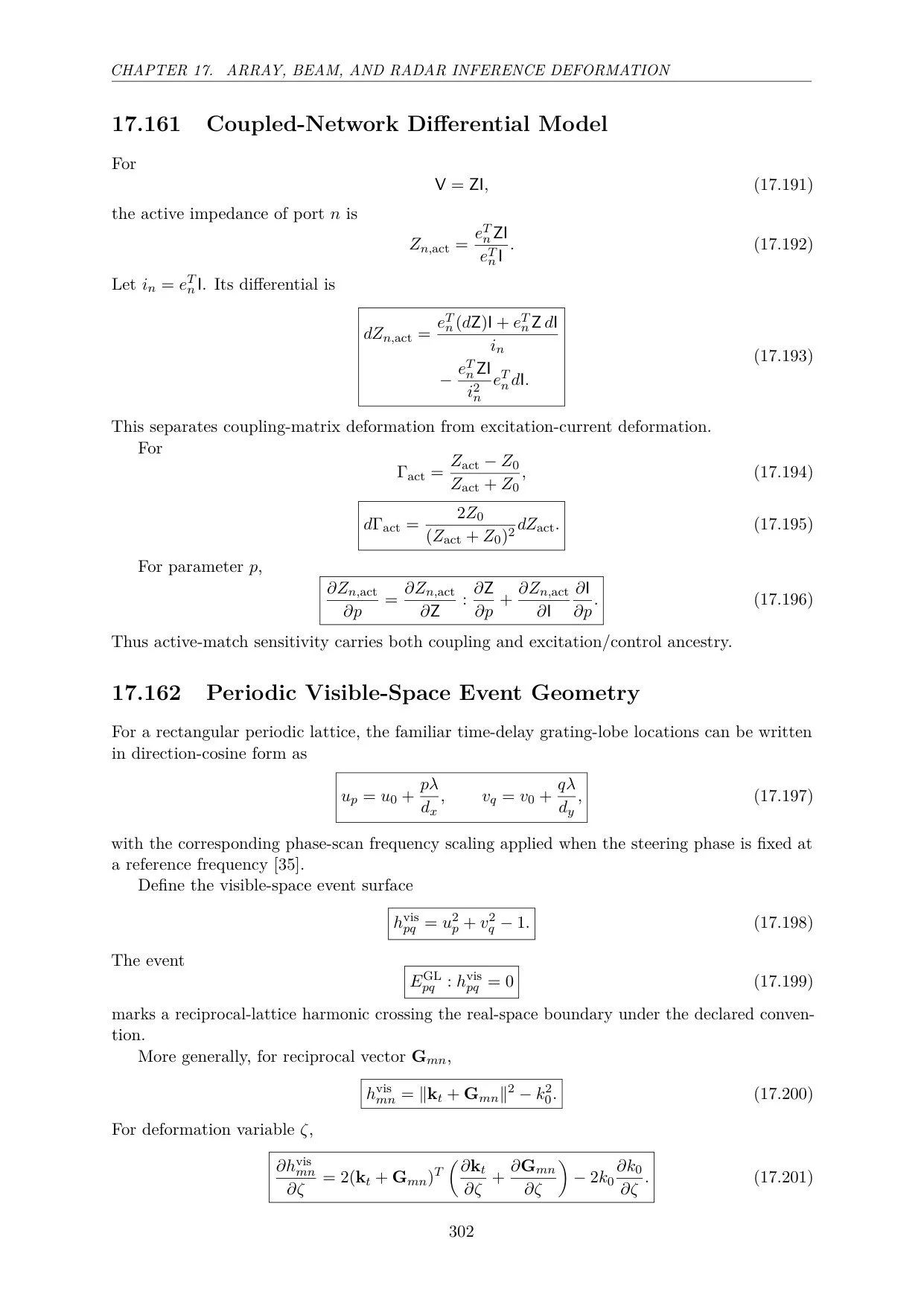
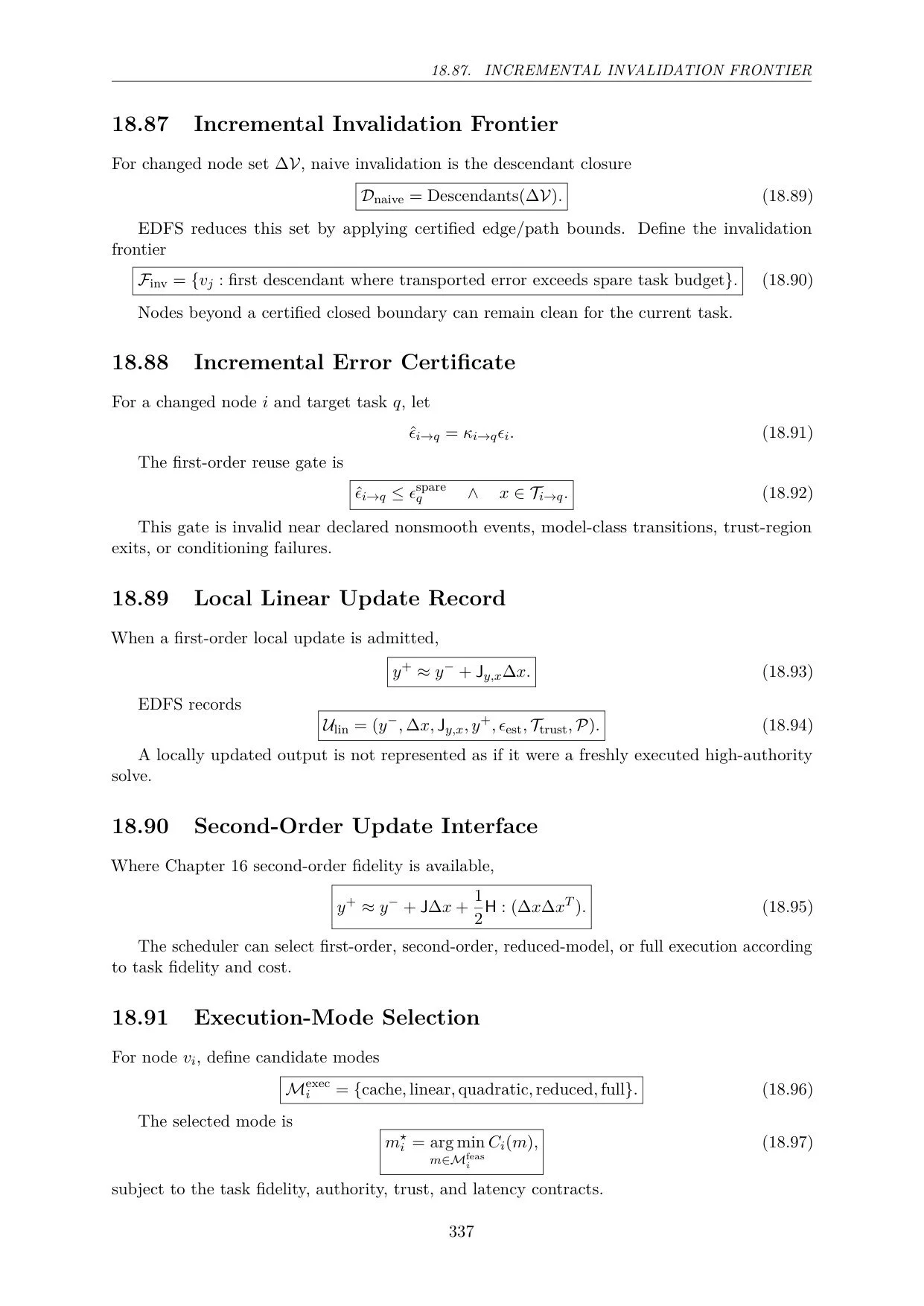
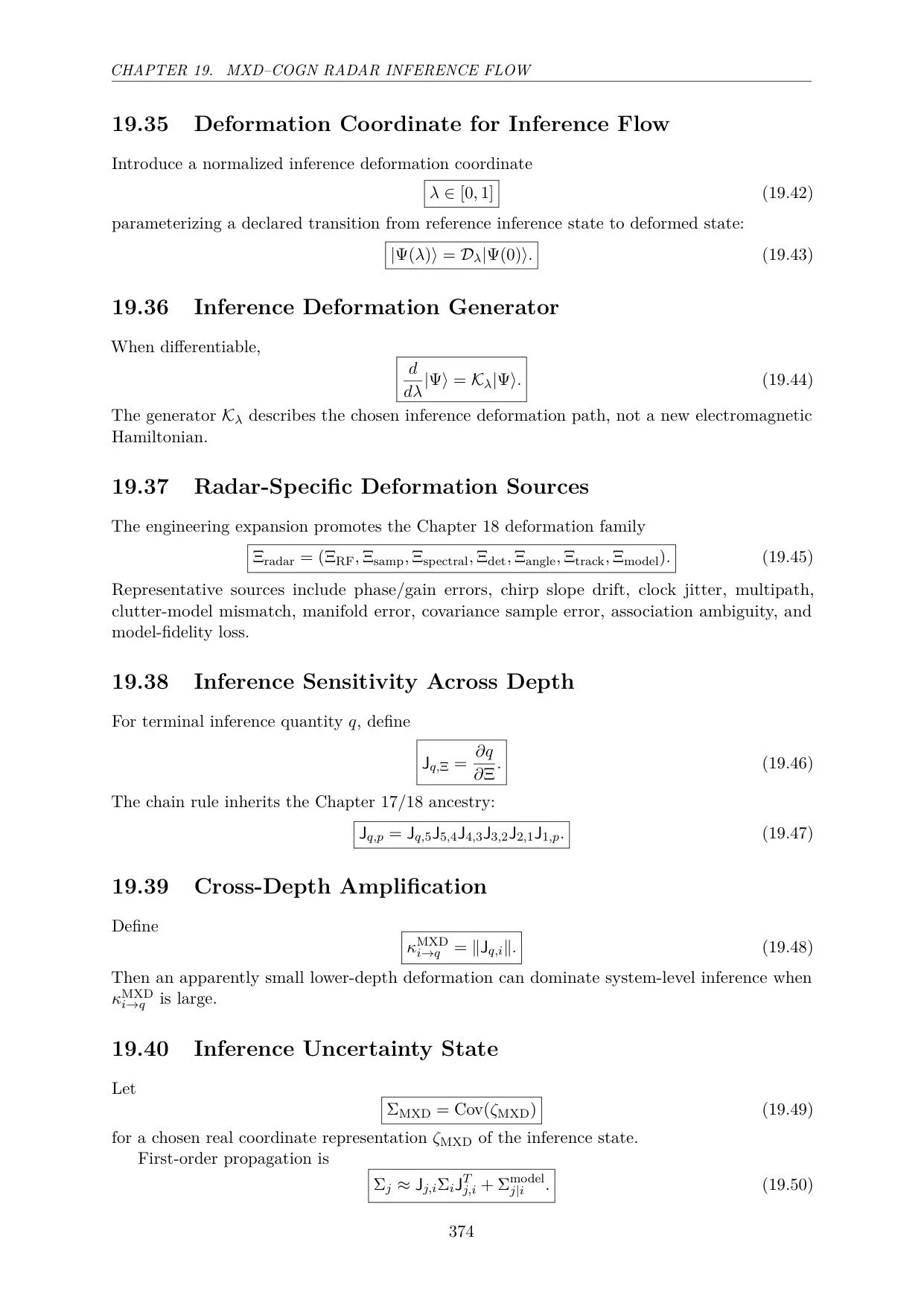
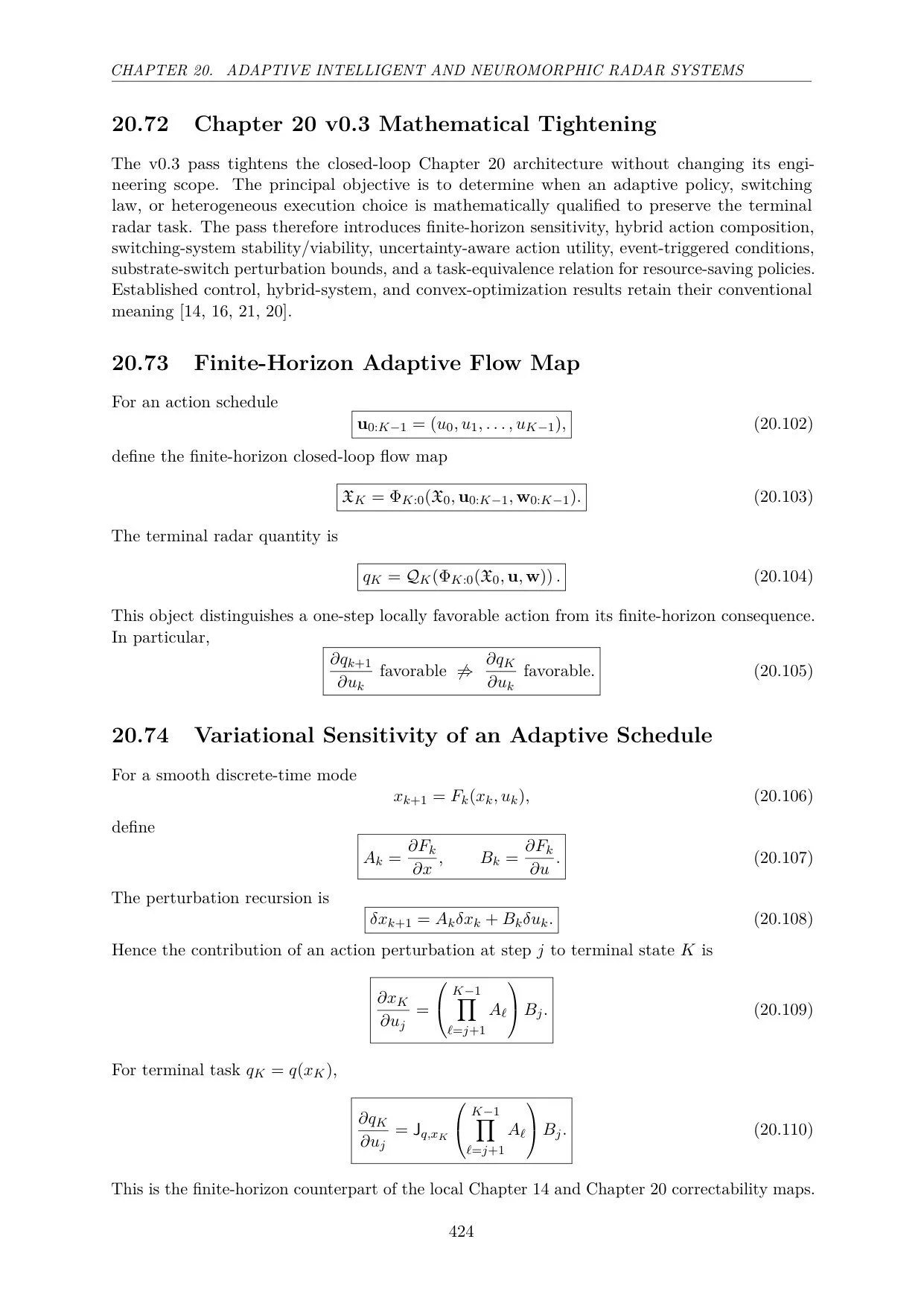
CRE-RF-I develops a rigorous graduate-level foundation for RF and microwave engineering from electromagnetic fields, waves, power, impedance and distributed systems through typed ports, scattering operators, RF fiber geometry and the deformed RF object. It provides the mathematical RF foundation underlying the RF engineering layer of EDFS 2026 R1.
COGNITAVE RF ENGINEERING I — CRE-RF-I
Representational Foundations and the Deformed RF Object
Publication Release v1.1 · Cognitave Inc. / Maxdi Research
Cognitave RF Engineering I develops RF and microwave engineering as a structured progression from the physical RF artifact to the mathematical and computational representations used to analyze, simulate, measure and ultimately deform that artifact.
The volume begins from a familiar engineering observation: the same RF system may appear as electromagnetic geometry, electric and magnetic fields, complex phasors, transmission-line quantities, ports, scattering parameters, equivalent circuits, numerical solver states and measurement data. These objects may all describe aspects of the same engineering system, but they are not interchangeable.
CRE-RF-I therefore develops a typed representational architecture in which RF quantities retain their physical meaning, reference conditions and transformation contracts as the engineer moves between domains.
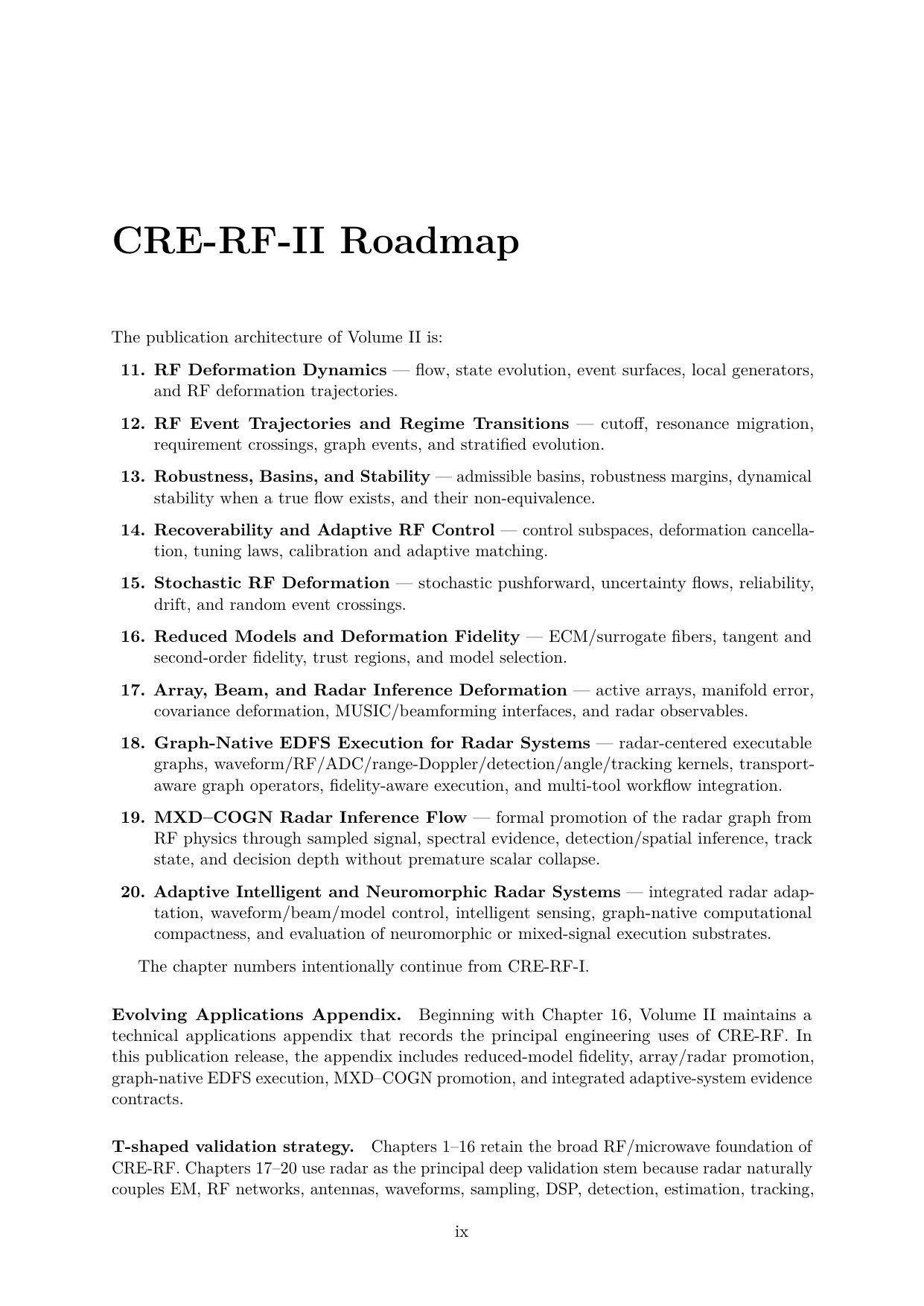
The ten chapters establish the sequence:
RF engineering object → complex representation → electromagnetic field fibers → wave transformations → power and impedance → distributed RF systems → typed ports → scattering operators → RF fiber geometry → deformed RF object
Chapters
Chapter 1 — The RF Engineering Object
Introduces the RF artifact as a mixed-representation engineering object and establishes the distinction between the physical system and its mathematical, numerical and measured representations.
Chapter 2 — Complex Representation as the First RF Fiber Geometry
Develops complex numbers, phasors, rotations, impedance/admittance and Möbius transformations as the first explicit RF representation geometry.
Chapter 3 — Electromagnetic Field Fibers
Places Maxwell-field solutions, materials, boundaries, sources and numerical discretization inside a typed electromagnetic representation.
Chapter 4 — Wave Transformations
Develops propagation, forward/backward waves, reference-plane transformations, modes, polarization, cutoff and dispersion.
Chapter 5 — Power and Impedance
Separates complex power, delivered power, impedance, admittance, mismatch, passivity and associated RF engineering metrics.
Chapter 6 — Distributed RF Systems
Develops transmission-line and distributed-system representations through RLGC parameters, propagation constants, characteristic impedance and spatial transport.
Chapter 7 — Ports as Typed Boundary Operators
Treats ports as engineering boundary contractions carrying orientation, mode basis, normalization, reference impedance and reference-plane information.
Chapter 8 — Scattering Operator
Develops S-parameters as typed multiport boundary operators with explicit passivity, losslessness, reciprocity, normalization and interconnection contracts.
Chapter 9 — RF Fiber Geometry
Introduces transport-aware comparison, sections, covariant differences, metrics and path-dependent representation changes.
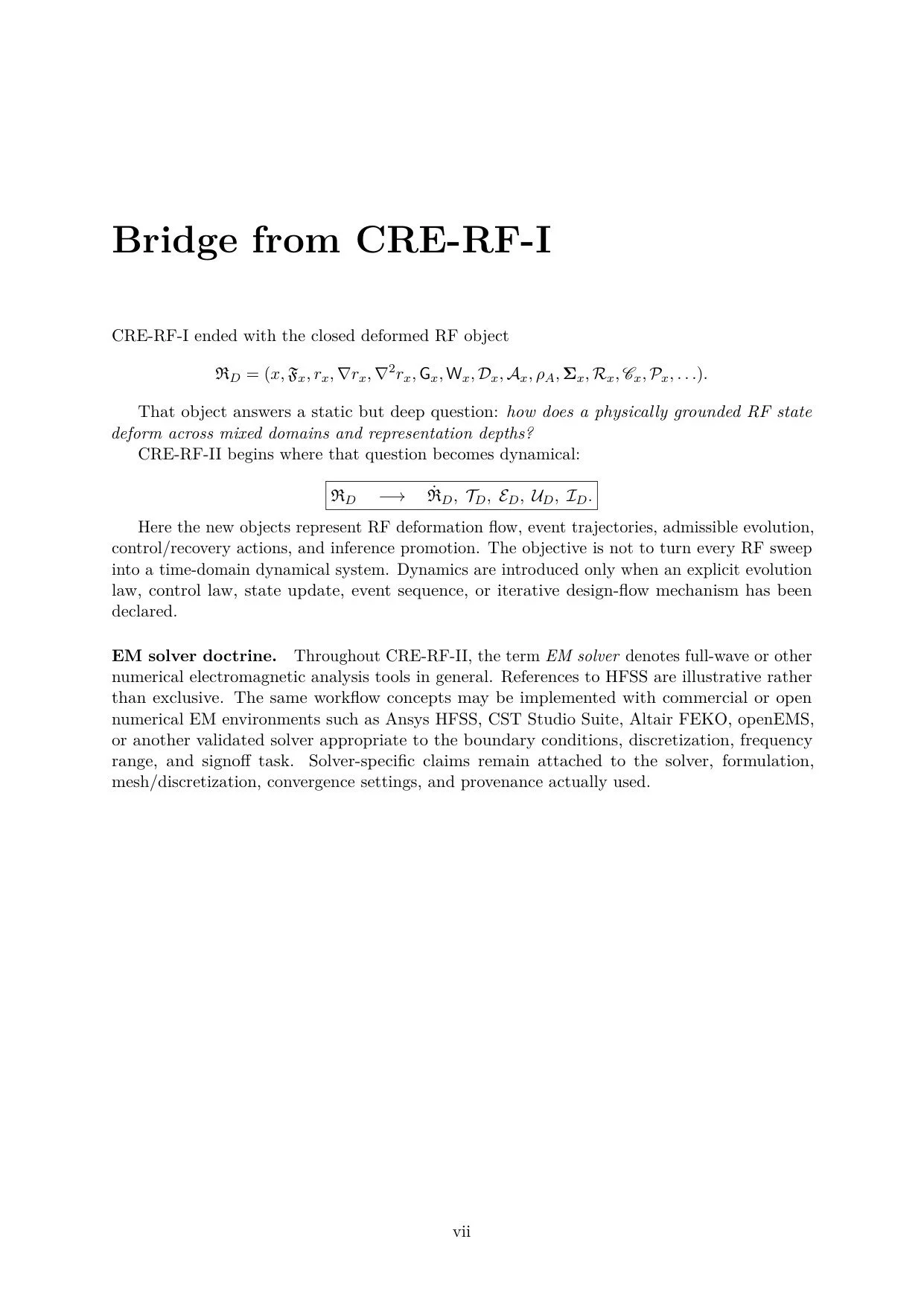
Chapter 10 — The Deformed RF Object
Integrates the preceding framework into a deformation-aware RF engineering object incorporating sensitivities, uncertainty, admissibility, robustness, closure and recoverability interfaces.
Why CRE-RF-I is different
CRE-RF-I does not replace Maxwell equations, transmission-line theory, microwave network theory or conventional S-parameter engineering. Instead, it connects these established theories through an explicit representational framework designed to prevent common ambiguities between:
representation and physical state
coordinate transformation and physical deformation
nominal equivalence and deformation equivalence
engineering admissibility and representational closure
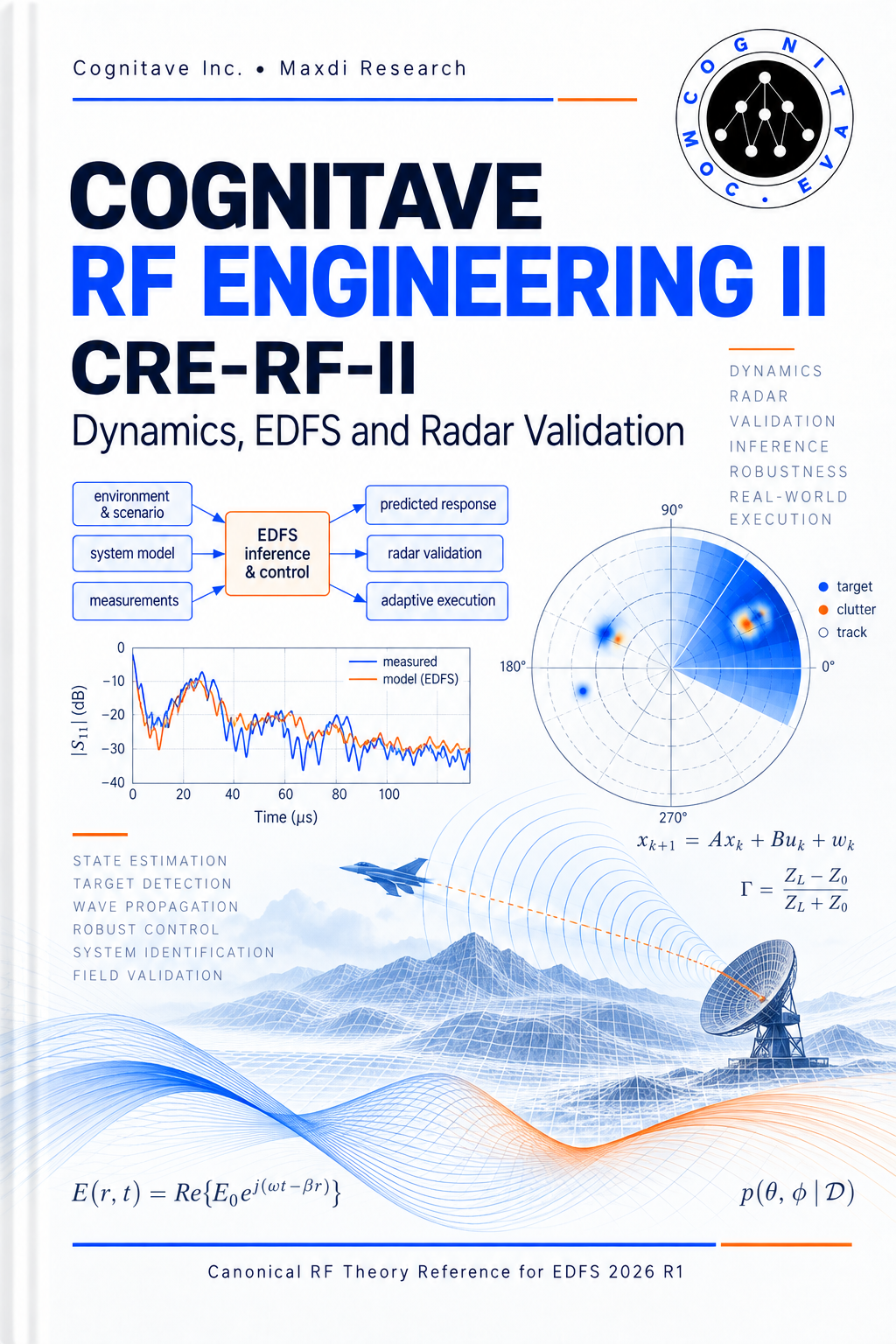
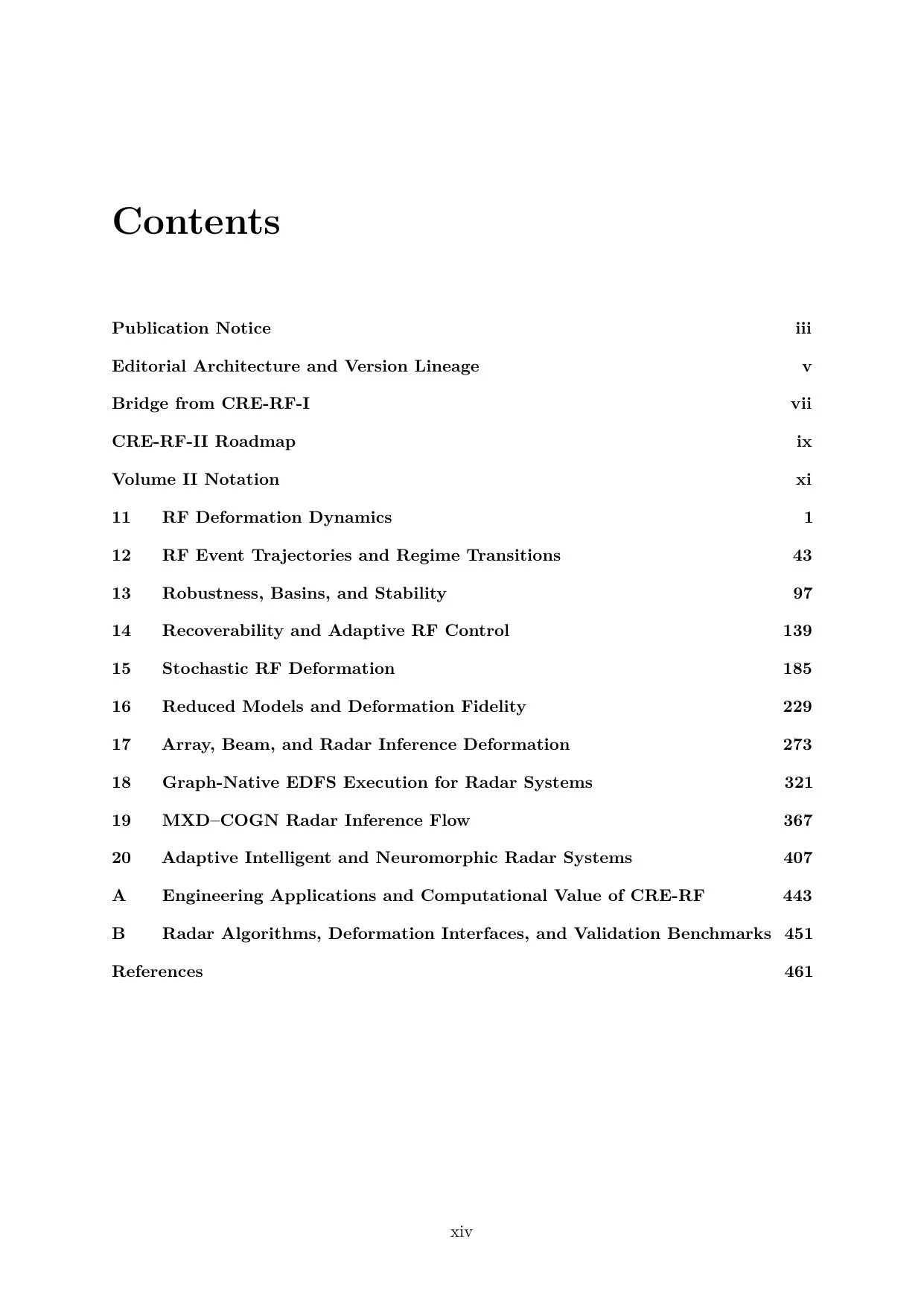
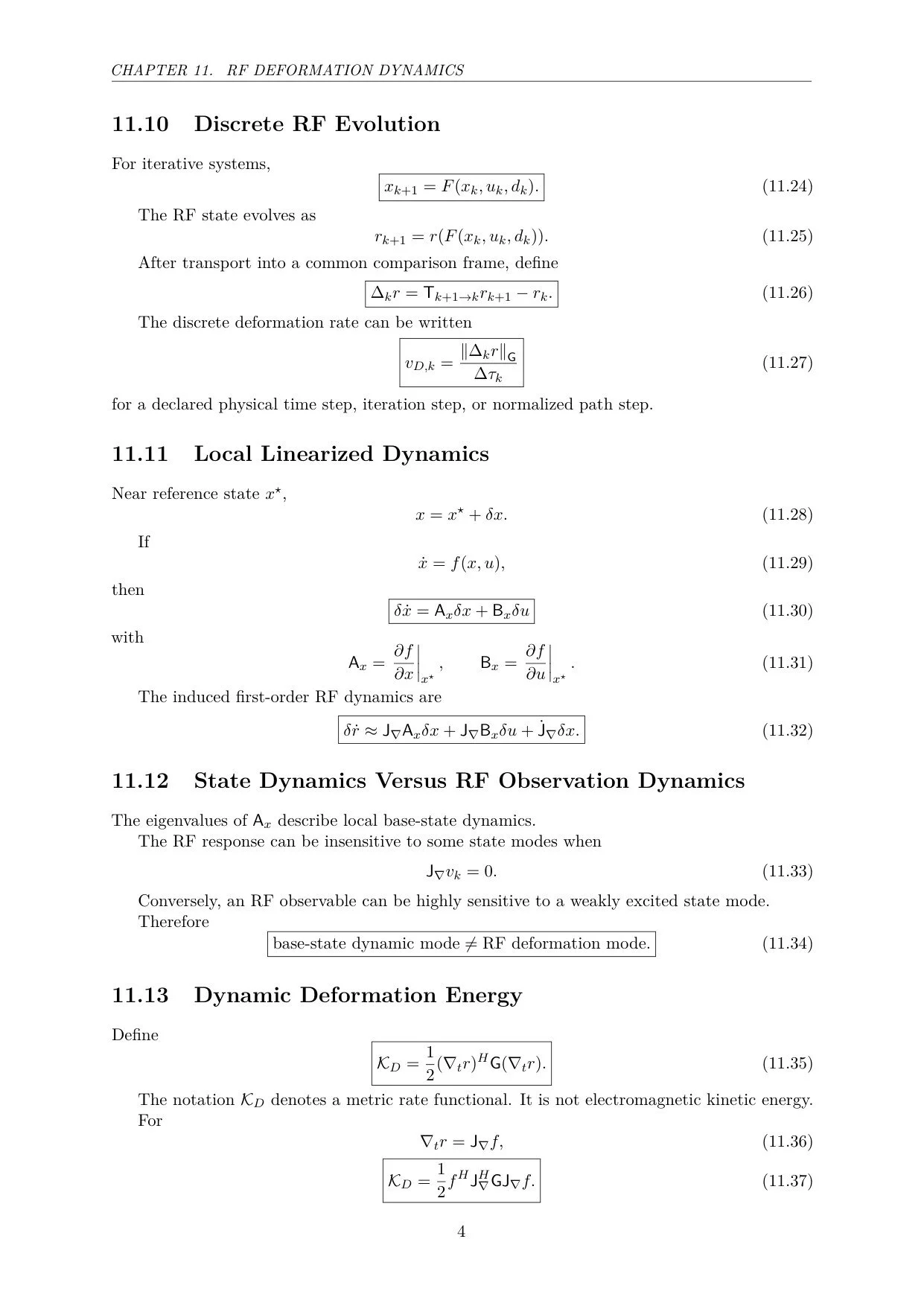
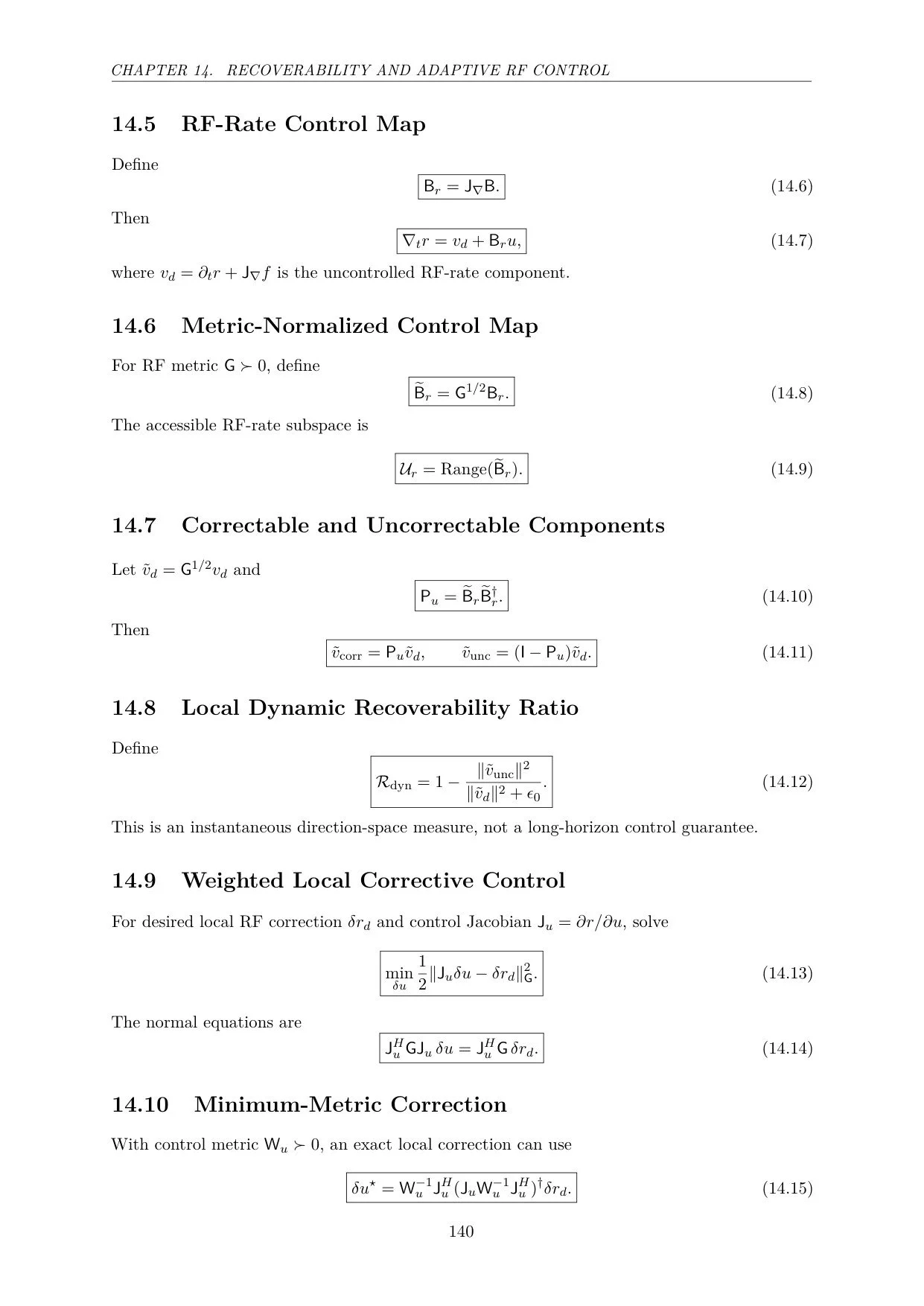
This structure provides the mathematical RF foundation for later deformation dynamics, robustness, stochastic evolution, array/radar inference and graph-native engineering execution.
Relationship to EDFS 2026 R1
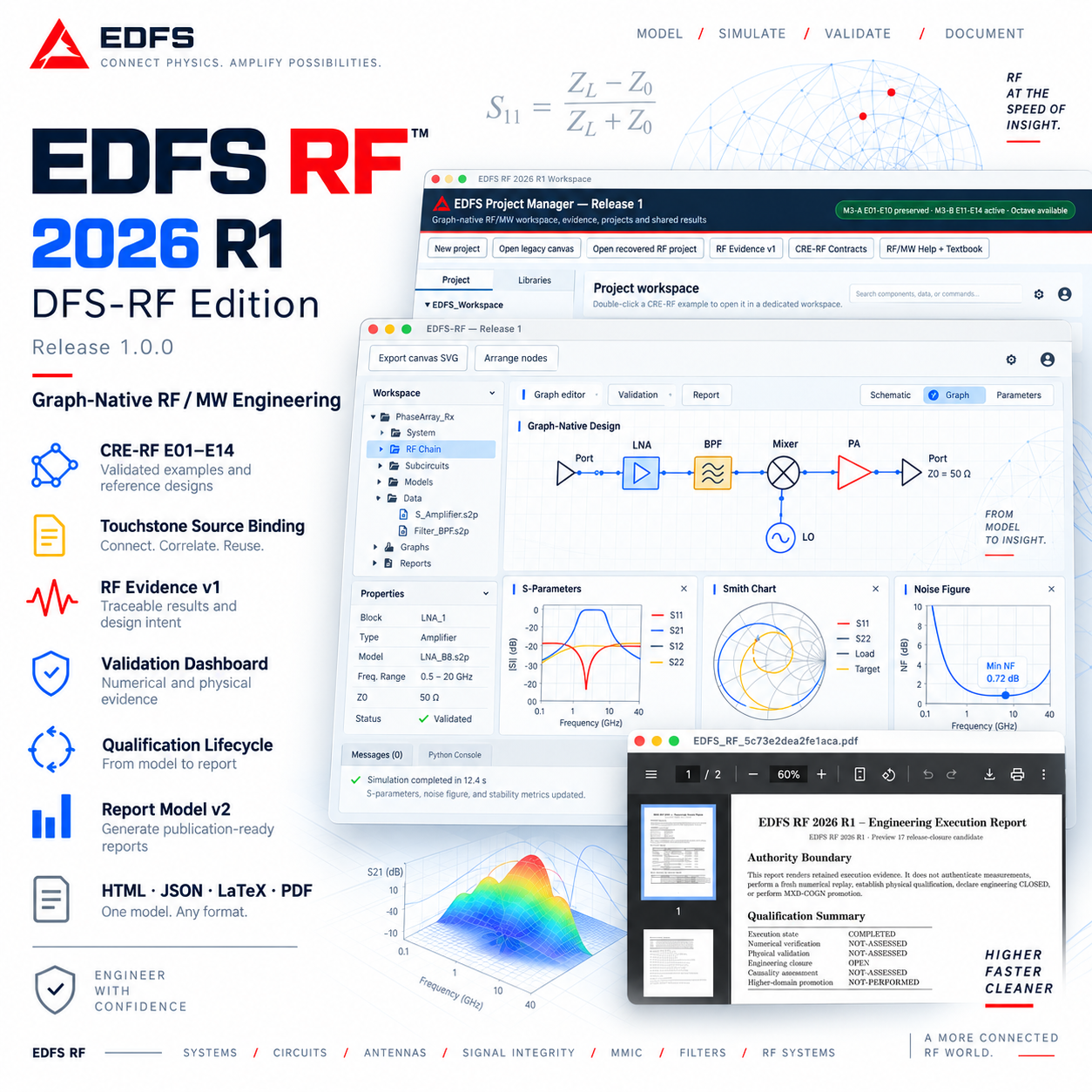
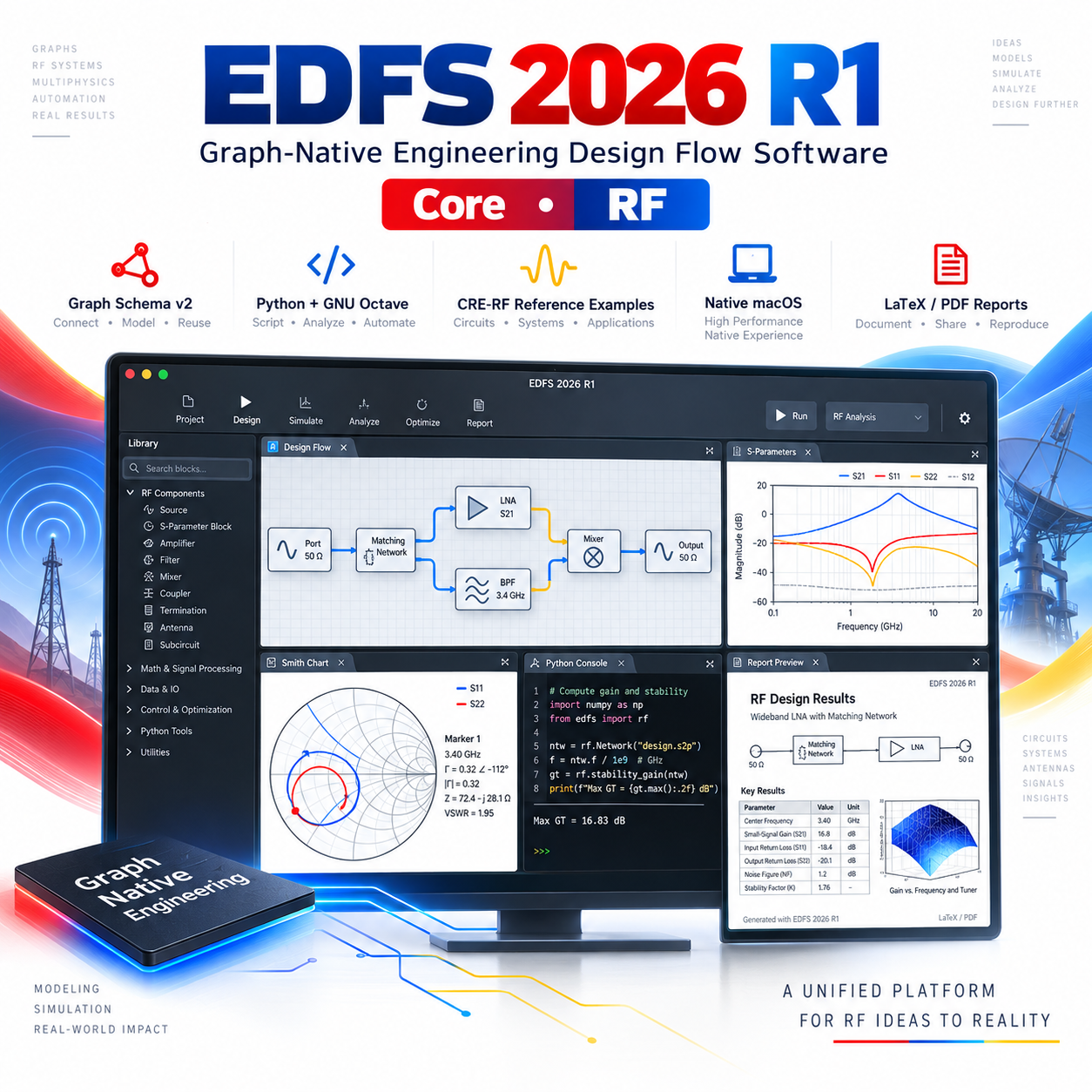
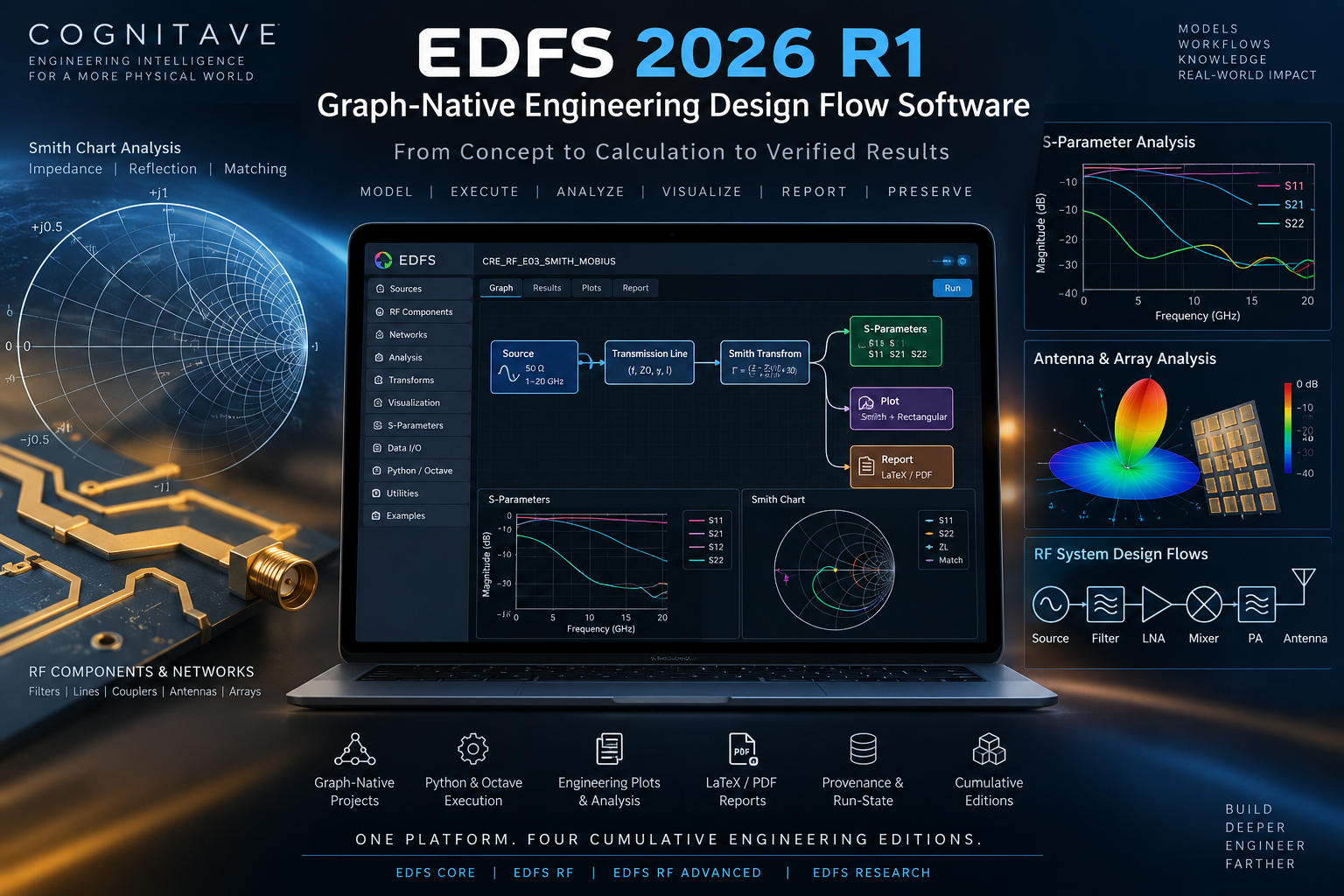
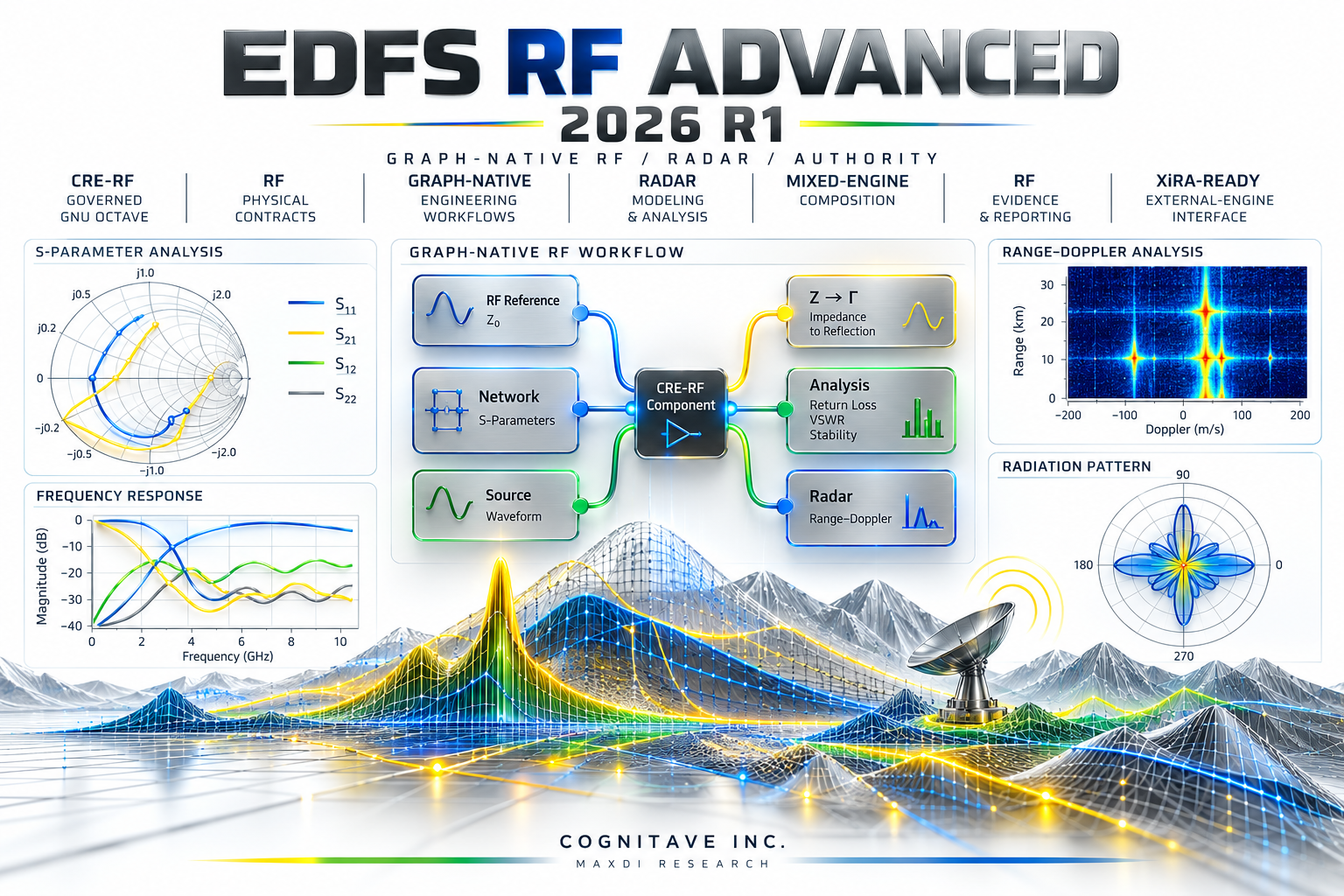
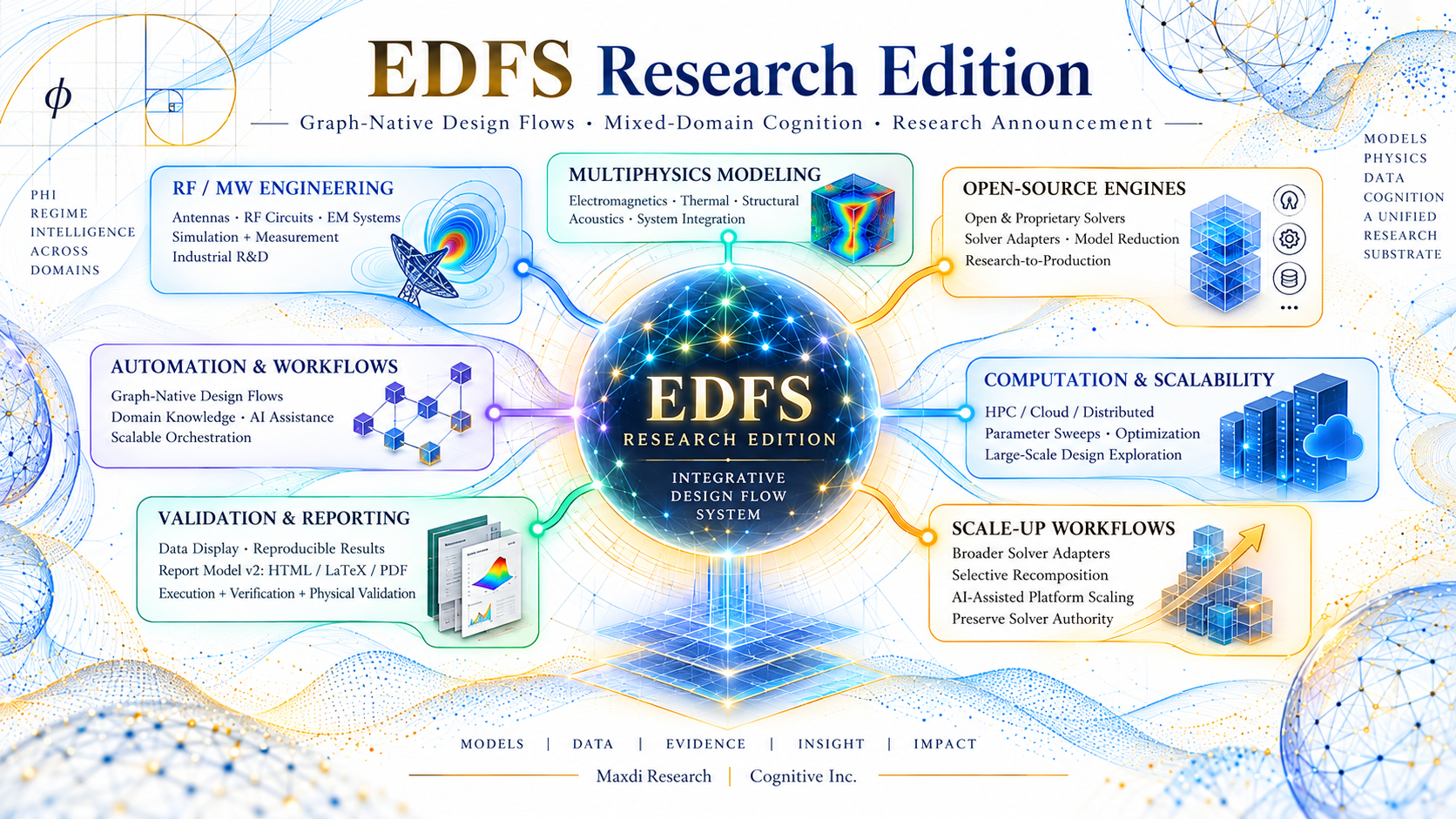
CRE-RF-I provides the canonical RF mathematical foundation underlying portions of the RF engineering layer of Electronics Design Flow Studio — EDFS 2026 R1.
EDFS operationalizes selected CRE-RF representations, network objects, deformation operators and engineering evidence contracts inside a graph-native execution environment.
The textbook remains the theory and training reference; EDFS is the corresponding execution environment.
Graduate course and webinars
CRE-RF-I is accompanied by the Cognitave graduate RF engineering course covering Chapters 1–10 with chapter-by-chapter technical lecture decks.
Course:
cognitave.com/cognee-cre-rf(recommended new landing page)
Purchase and Download
Digital publication — PDF download For individual academic, engineering and professional study.
Technical inquiries:
tex@cognitave.com
Enterprise, institutional and engineering-program engagements may include:
Pricing for institutional engagements is determined by scope and intended application.
CRE-RF-I develops a rigorous graduate-level foundation for RF and microwave engineering from electromagnetic fields, waves, power, impedance and distributed systems through typed ports, scattering operators, RF fiber geometry and the deformed RF object. It provides the mathematical RF foundation underlying the RF engineering layer of EDFS 2026 R1.
COGNITAVE RF ENGINEERING I — CRE-RF-I
Representational Foundations and the Deformed RF Object
Publication Release v1.1 · Cognitave Inc. / Maxdi Research
Cognitave RF Engineering I develops RF and microwave engineering as a structured progression from the physical RF artifact to the mathematical and computational representations used to analyze, simulate, measure and ultimately deform that artifact.
The volume begins from a familiar engineering observation: the same RF system may appear as electromagnetic geometry, electric and magnetic fields, complex phasors, transmission-line quantities, ports, scattering parameters, equivalent circuits, numerical solver states and measurement data. These objects may all describe aspects of the same engineering system, but they are not interchangeable.
CRE-RF-I therefore develops a typed representational architecture in which RF quantities retain their physical meaning, reference conditions and transformation contracts as the engineer moves between domains.
The ten chapters establish the sequence:
RF engineering object → complex representation → electromagnetic field fibers → wave transformations → power and impedance → distributed RF systems → typed ports → scattering operators → RF fiber geometry → deformed RF object
Chapters
Chapter 1 — The RF Engineering Object
Introduces the RF artifact as a mixed-representation engineering object and establishes the distinction between the physical system and its mathematical, numerical and measured representations.
Chapter 2 — Complex Representation as the First RF Fiber Geometry
Develops complex numbers, phasors, rotations, impedance/admittance and Möbius transformations as the first explicit RF representation geometry.
Chapter 3 — Electromagnetic Field Fibers
Places Maxwell-field solutions, materials, boundaries, sources and numerical discretization inside a typed electromagnetic representation.
Chapter 4 — Wave Transformations
Develops propagation, forward/backward waves, reference-plane transformations, modes, polarization, cutoff and dispersion.
Chapter 5 — Power and Impedance
Separates complex power, delivered power, impedance, admittance, mismatch, passivity and associated RF engineering metrics.
Chapter 6 — Distributed RF Systems
Develops transmission-line and distributed-system representations through RLGC parameters, propagation constants, characteristic impedance and spatial transport.
Chapter 7 — Ports as Typed Boundary Operators
Treats ports as engineering boundary contractions carrying orientation, mode basis, normalization, reference impedance and reference-plane information.
Chapter 8 — Scattering Operator
Develops S-parameters as typed multiport boundary operators with explicit passivity, losslessness, reciprocity, normalization and interconnection contracts.
Chapter 9 — RF Fiber Geometry
Introduces transport-aware comparison, sections, covariant differences, metrics and path-dependent representation changes.
Chapter 10 — The Deformed RF Object
Integrates the preceding framework into a deformation-aware RF engineering object incorporating sensitivities, uncertainty, admissibility, robustness, closure and recoverability interfaces.
Why CRE-RF-I is different
CRE-RF-I does not replace Maxwell equations, transmission-line theory, microwave network theory or conventional S-parameter engineering. Instead, it connects these established theories through an explicit representational framework designed to prevent common ambiguities between:
representation and physical state
coordinate transformation and physical deformation
nominal equivalence and deformation equivalence
engineering admissibility and representational closure
This structure provides the mathematical RF foundation for later deformation dynamics, robustness, stochastic evolution, array/radar inference and graph-native engineering execution.
Relationship to EDFS 2026 R1
CRE-RF-I provides the canonical RF mathematical foundation underlying portions of the RF engineering layer of Electronics Design Flow Studio — EDFS 2026 R1.
EDFS operationalizes selected CRE-RF representations, network objects, deformation operators and engineering evidence contracts inside a graph-native execution environment.
The textbook remains the theory and training reference; EDFS is the corresponding execution environment.
Graduate course and webinars
CRE-RF-I is accompanied by the Cognitave graduate RF engineering course covering Chapters 1–10 with chapter-by-chapter technical lecture decks.
Course:
cognitave.com/cognee-cre-rf(recommended new landing page)
Purchase and Download
Digital publication — PDF download For individual academic, engineering and professional study.
Technical inquiries:
tex@cognitave.com
Enterprise, institutional and engineering-program engagements may include:
Pricing for institutional engagements is determined by scope and intended application.

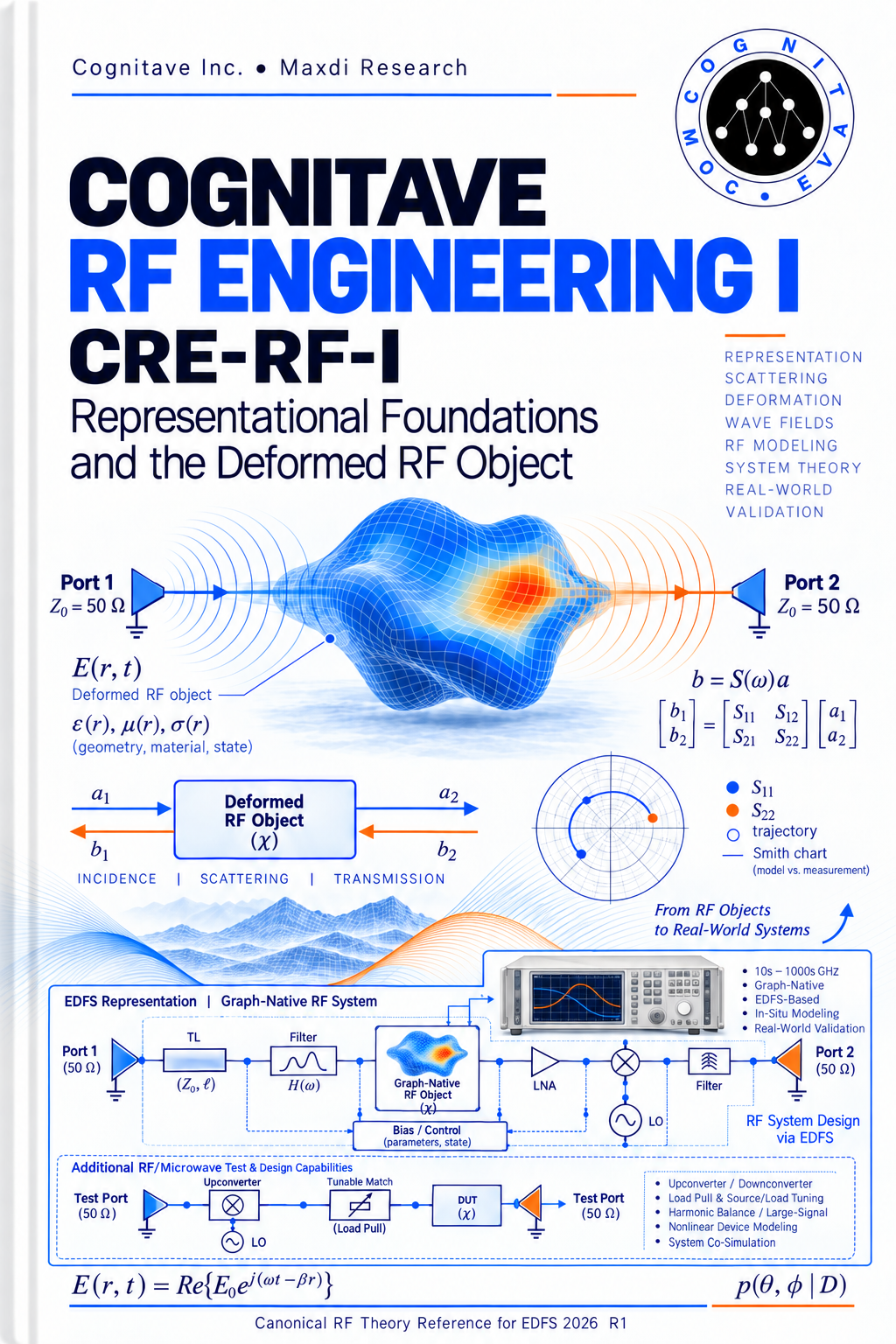 Image 1 of 10
 Image 2 of 10
 Image 3 of 10
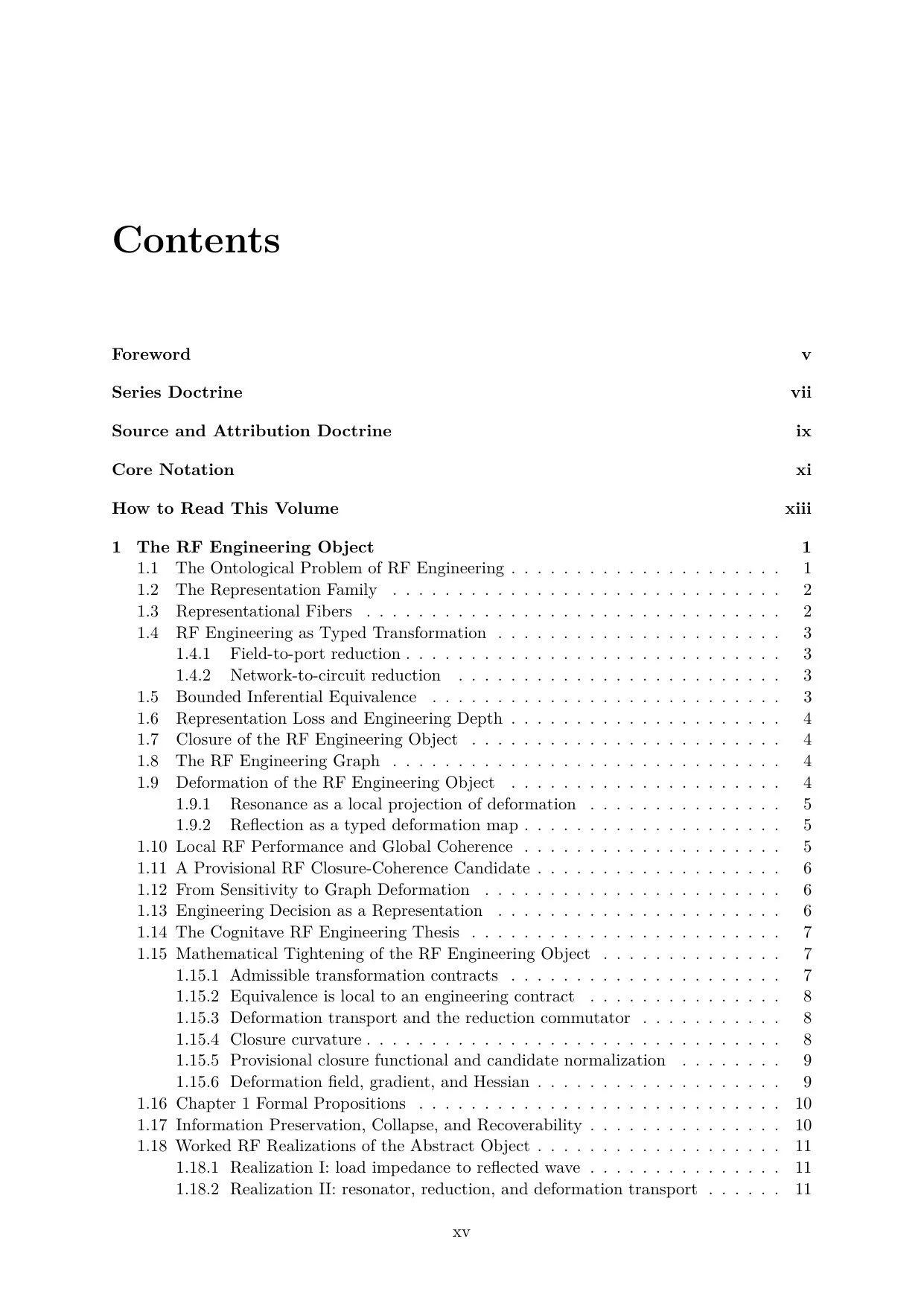 Image 4 of 10
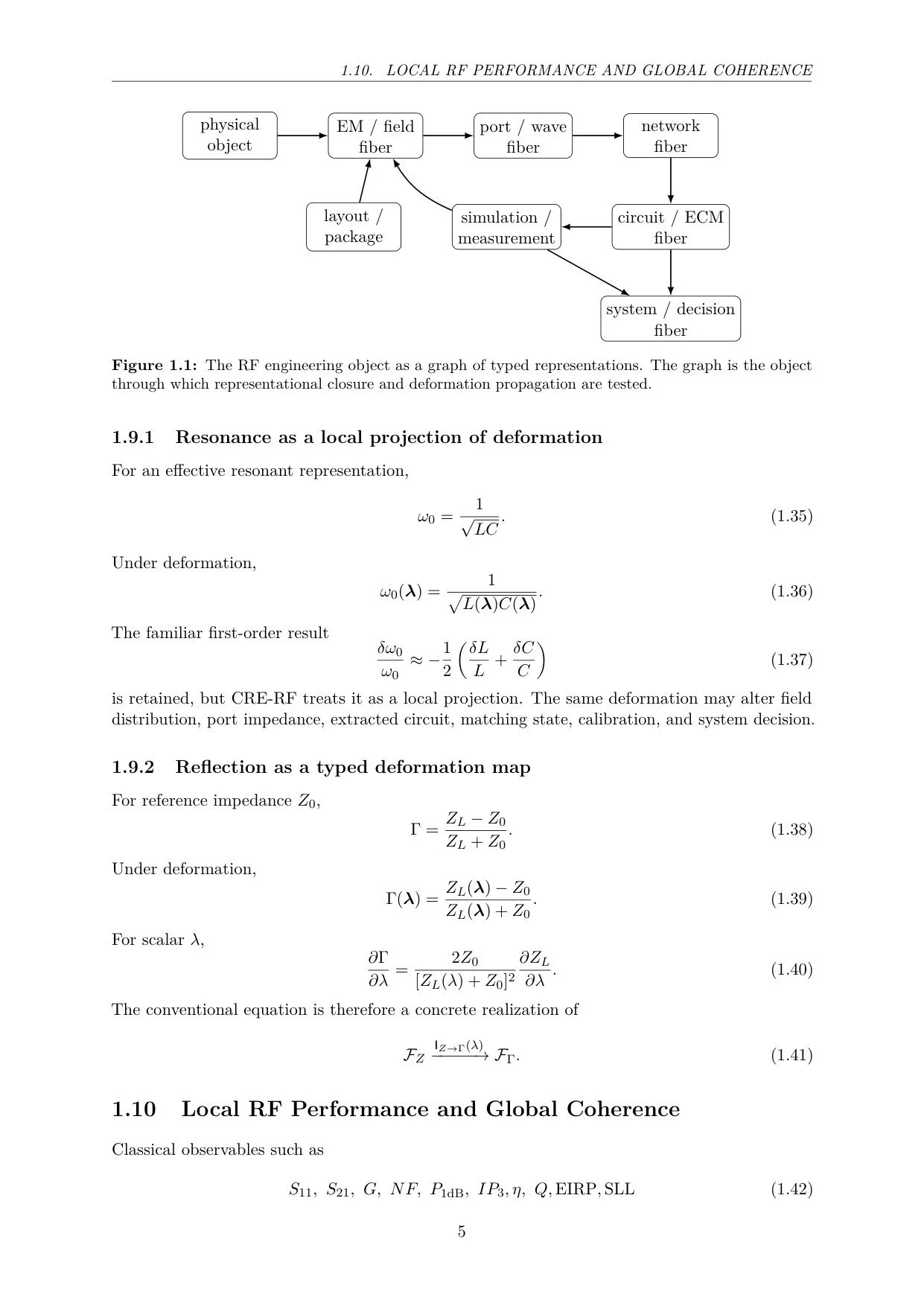 Image 5 of 10
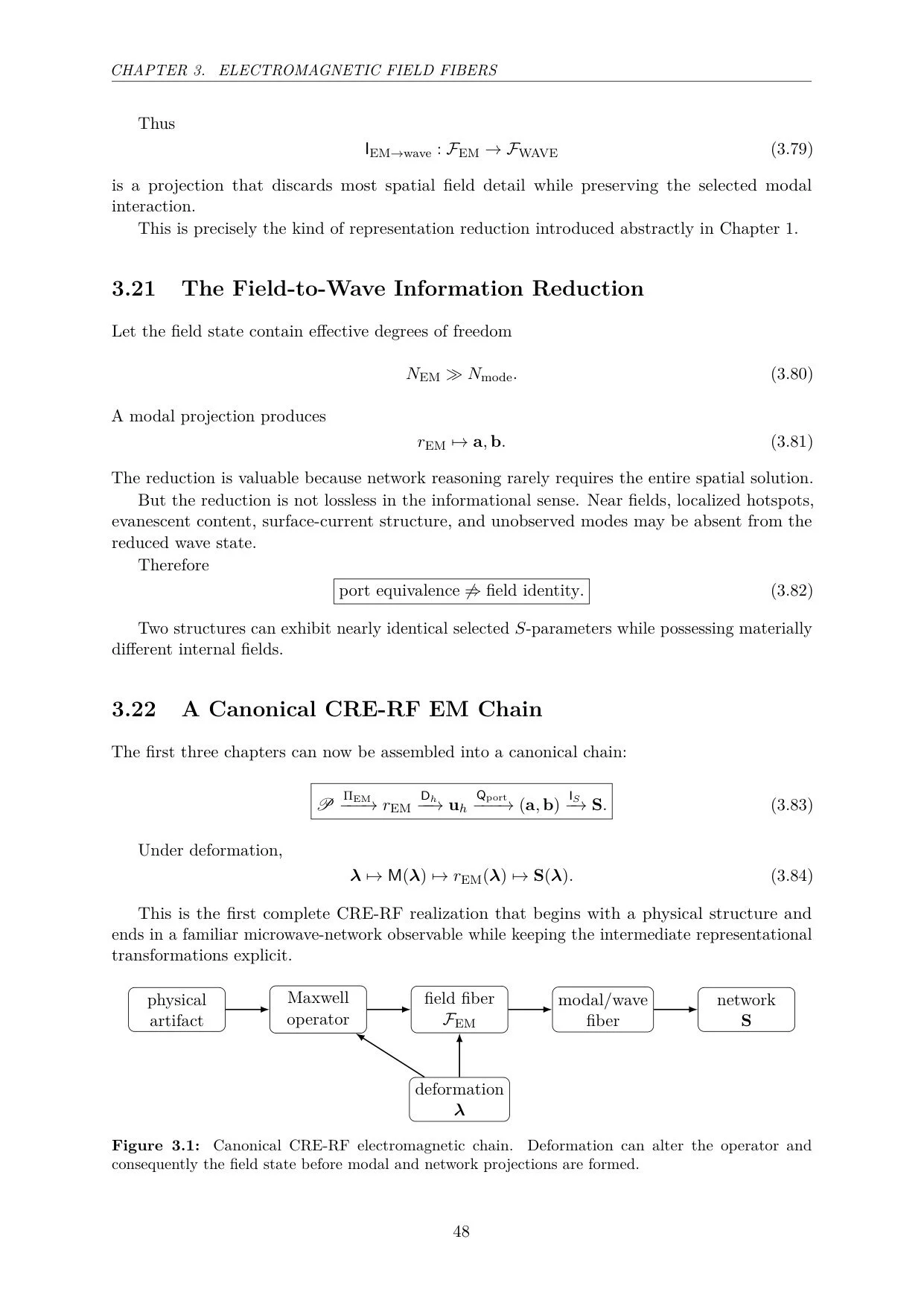 Image 6 of 10
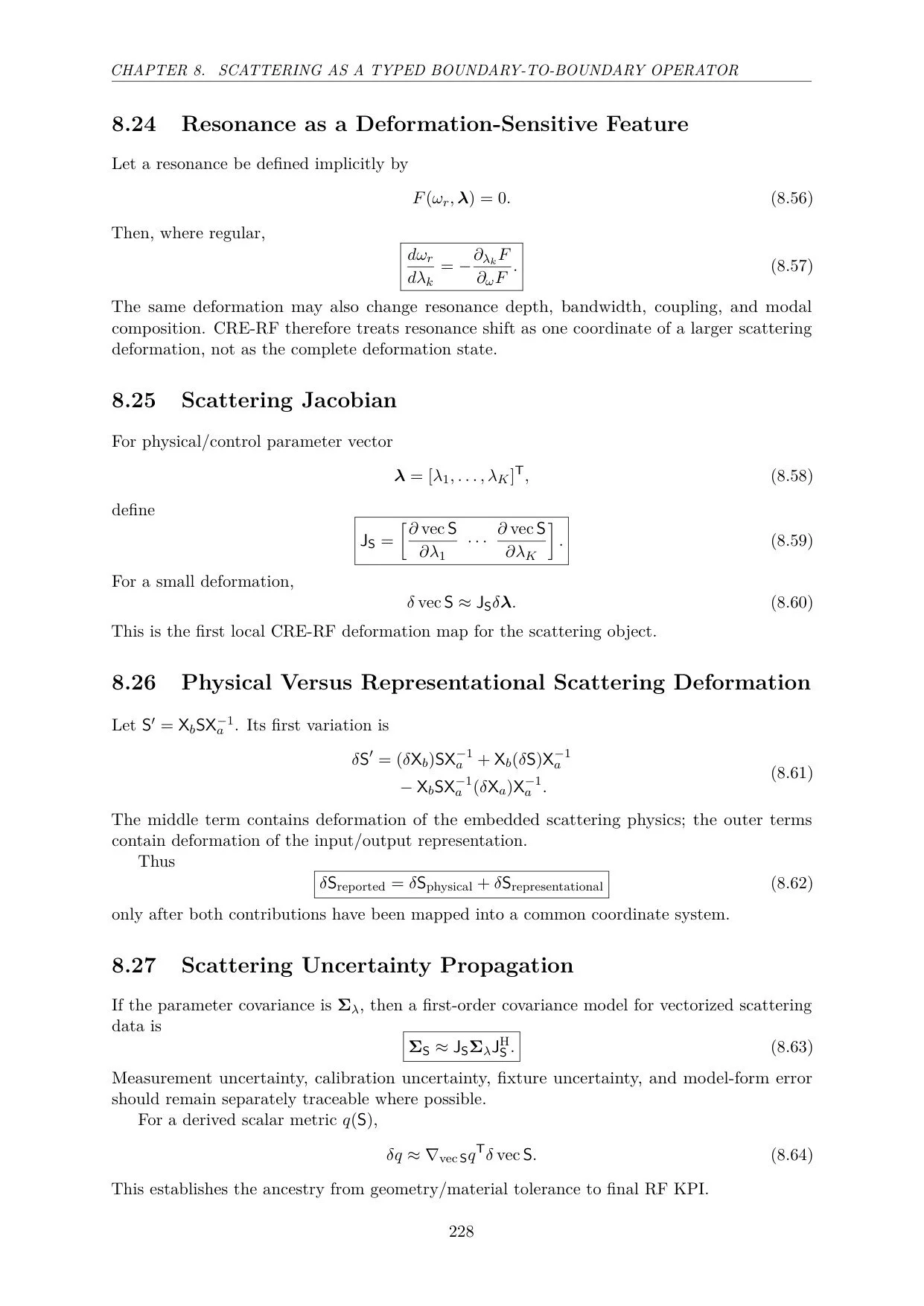 Image 7 of 10
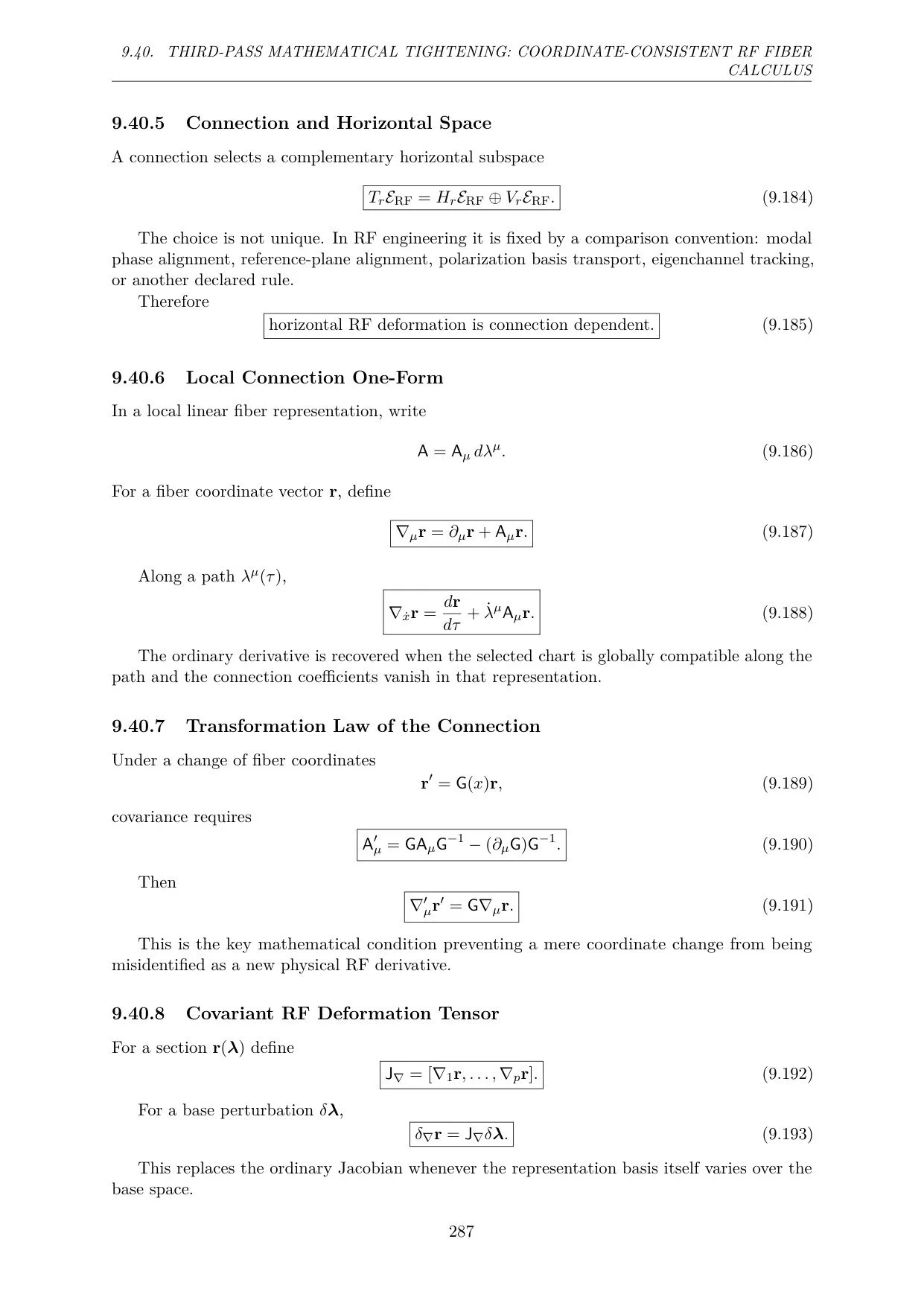 Image 8 of 10
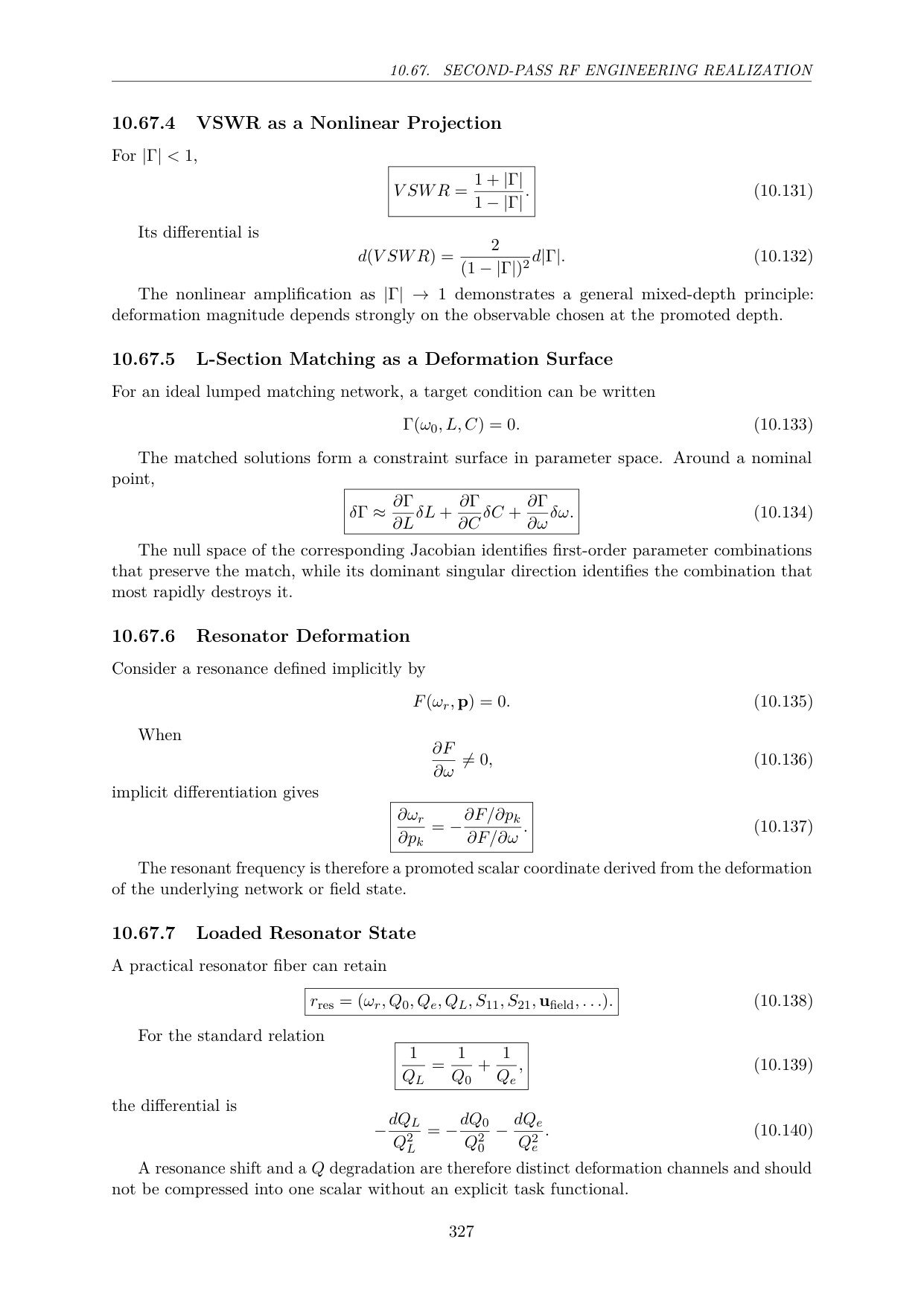 Image 9 of 10
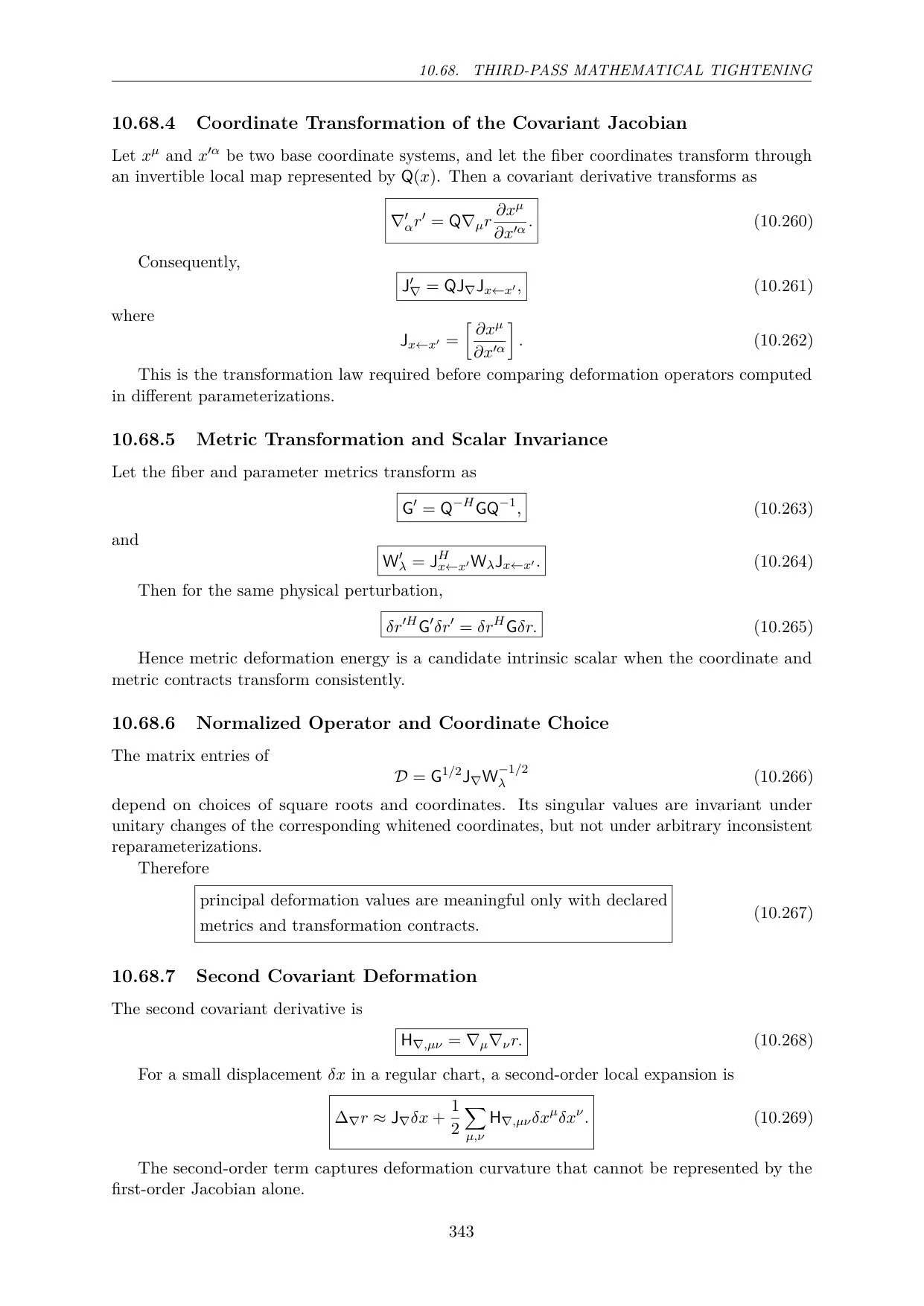 Image 10 of 10