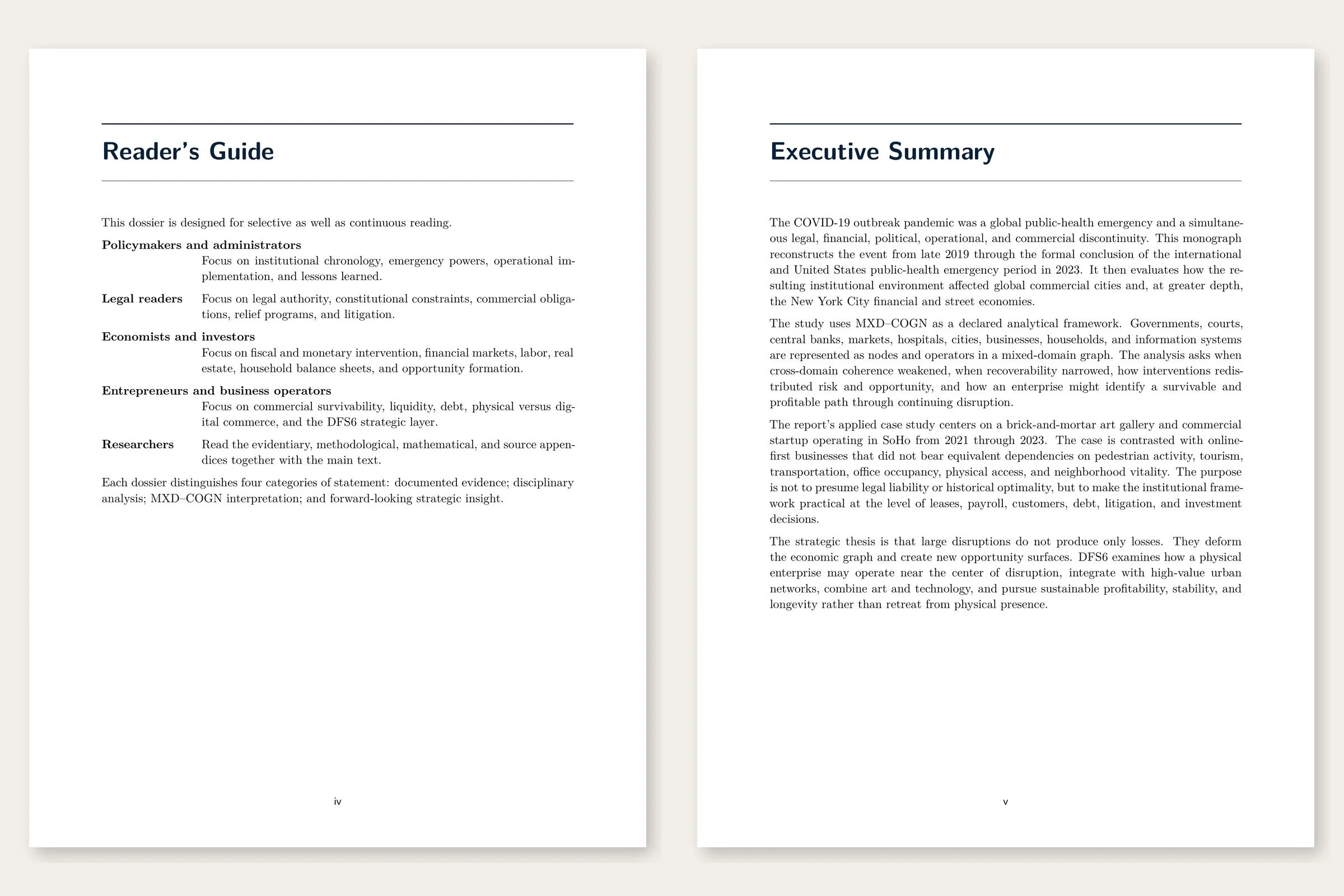
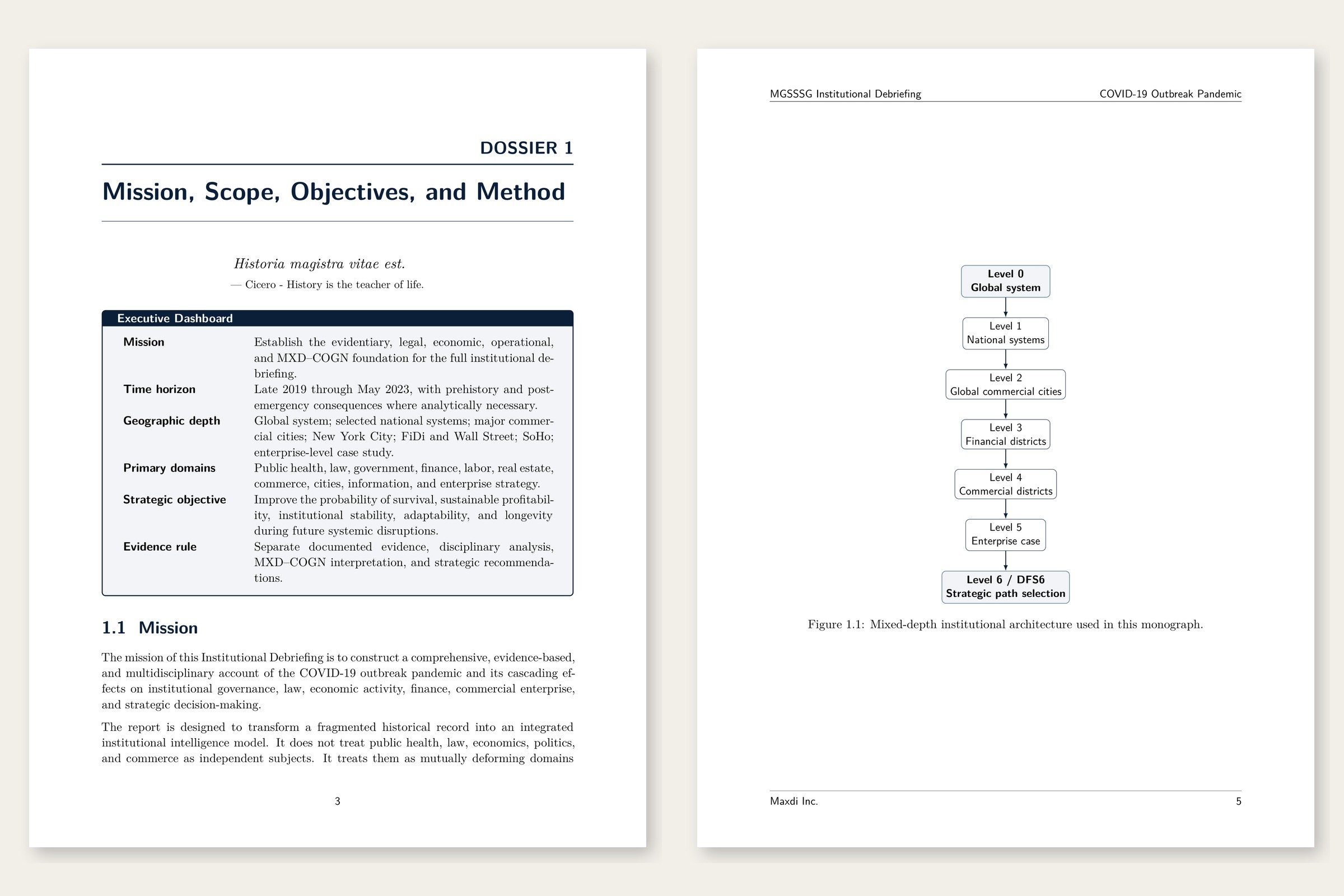
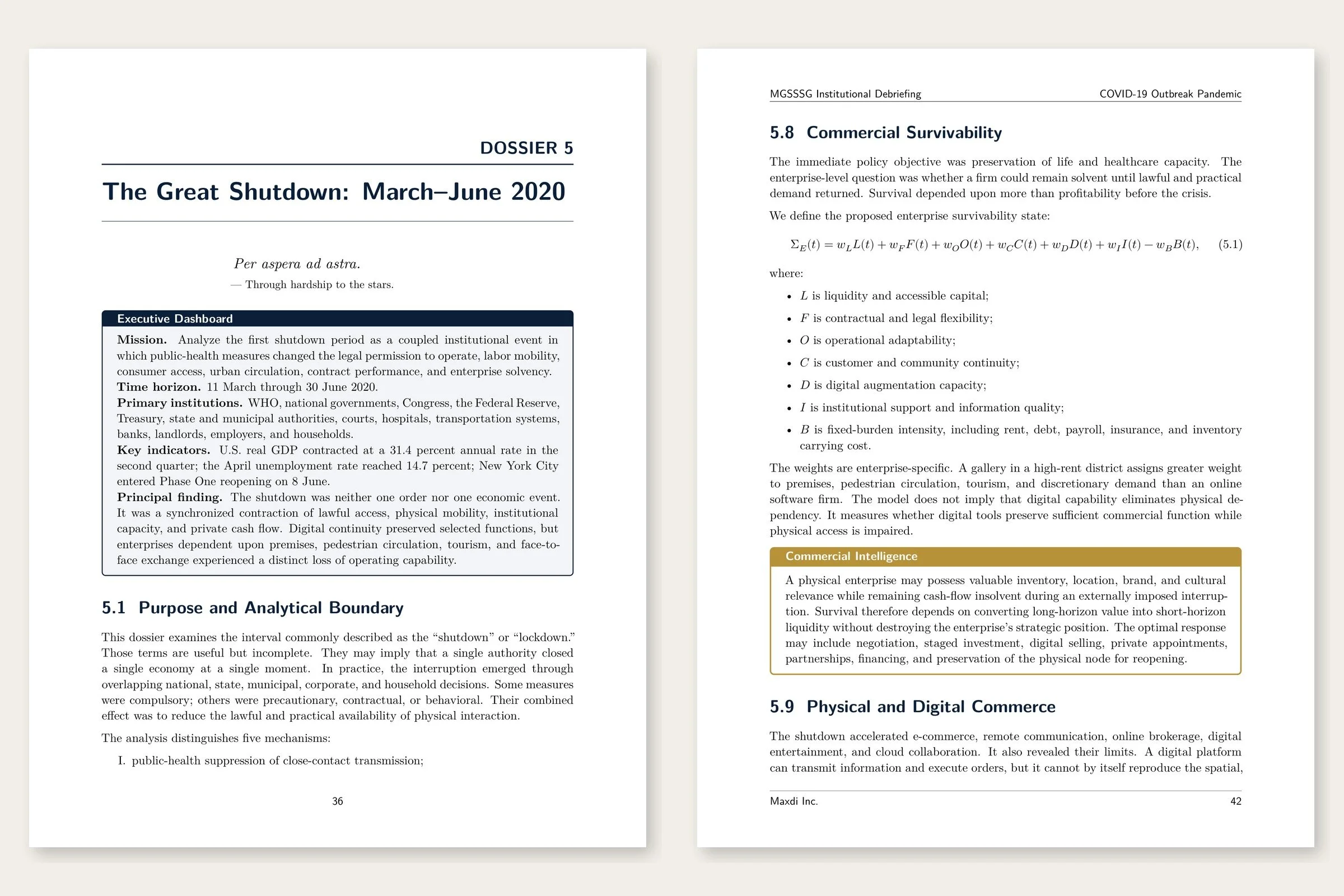
CHERNOBYL: Institutional Failure, Coherence Collapse, and Strategic Consequences is a comprehensive institutional debriefing applying MXD-COGN coherence analysis to one of the most consequential socio-technical failures of the modern era.
Rather than retelling events, this report examines how and why institutional recoverability was lost across physical, cognitive, procedural, and political layers. Chernobyl is treated not as an isolated technical accident, but as a coherence collapse in which observability degraded, action sets narrowed, escalation pathways failed, and institutional feedback was suppressed.
Using graph-native inference models, curvature-mapped timelines, and multi-domain failure taxonomies, the report reconstructs how locally rational decisions coexisted with global instability—and why recovery became impossible once critical boundaries were crossed.
What this report delivers
A graph-native MXD-COGN system model of Chernobyl
A timeline mapped to coherence curvature and recoverability windows
A multi-domain failure taxonomy (physical, cognitive, institutional, political)
An institutional lessons matrix with corrective controls
A long-horizon aftermath analysis (containment, remediation, metastability)
An appendix analyzing Chernobyl as a systemic stressor in Soviet state stability (non-monocausal)
Intended audience
Institutional risk and safety analysts
Strategic planners and regulators
Researchers studying systemic failure and resilience
Professionals in nuclear, energy, and high-reliability domains
Scope and limitations
This report is:
Non-prescriptive
Non-operational
Analytical in nature
It is designed for institutional understanding, not technical operation or policy advocacy.
Format: PDF
Length: ~50–60 pages
Methodology: MXD-COGN (Mixed-Domain, Mixed-Depth Coherence Analysis)
Use: Institutional, academic, and analytical
CHERNOBYL: Institutional Failure, Coherence Collapse, and Strategic Consequences is a comprehensive institutional debriefing applying MXD-COGN coherence analysis to one of the most consequential socio-technical failures of the modern era.
Rather than retelling events, this report examines how and why institutional recoverability was lost across physical, cognitive, procedural, and political layers. Chernobyl is treated not as an isolated technical accident, but as a coherence collapse in which observability degraded, action sets narrowed, escalation pathways failed, and institutional feedback was suppressed.
Using graph-native inference models, curvature-mapped timelines, and multi-domain failure taxonomies, the report reconstructs how locally rational decisions coexisted with global instability—and why recovery became impossible once critical boundaries were crossed.
What this report delivers
A graph-native MXD-COGN system model of Chernobyl
A timeline mapped to coherence curvature and recoverability windows
A multi-domain failure taxonomy (physical, cognitive, institutional, political)
An institutional lessons matrix with corrective controls
A long-horizon aftermath analysis (containment, remediation, metastability)
An appendix analyzing Chernobyl as a systemic stressor in Soviet state stability (non-monocausal)
Intended audience
Institutional risk and safety analysts
Strategic planners and regulators
Researchers studying systemic failure and resilience
Professionals in nuclear, energy, and high-reliability domains
Scope and limitations
This report is:
Non-prescriptive
Non-operational
Analytical in nature
It is designed for institutional understanding, not technical operation or policy advocacy.
Format: PDF
Length: ~50–60 pages
Methodology: MXD-COGN (Mixed-Domain, Mixed-Depth Coherence Analysis)
Use: Institutional, academic, and analytical

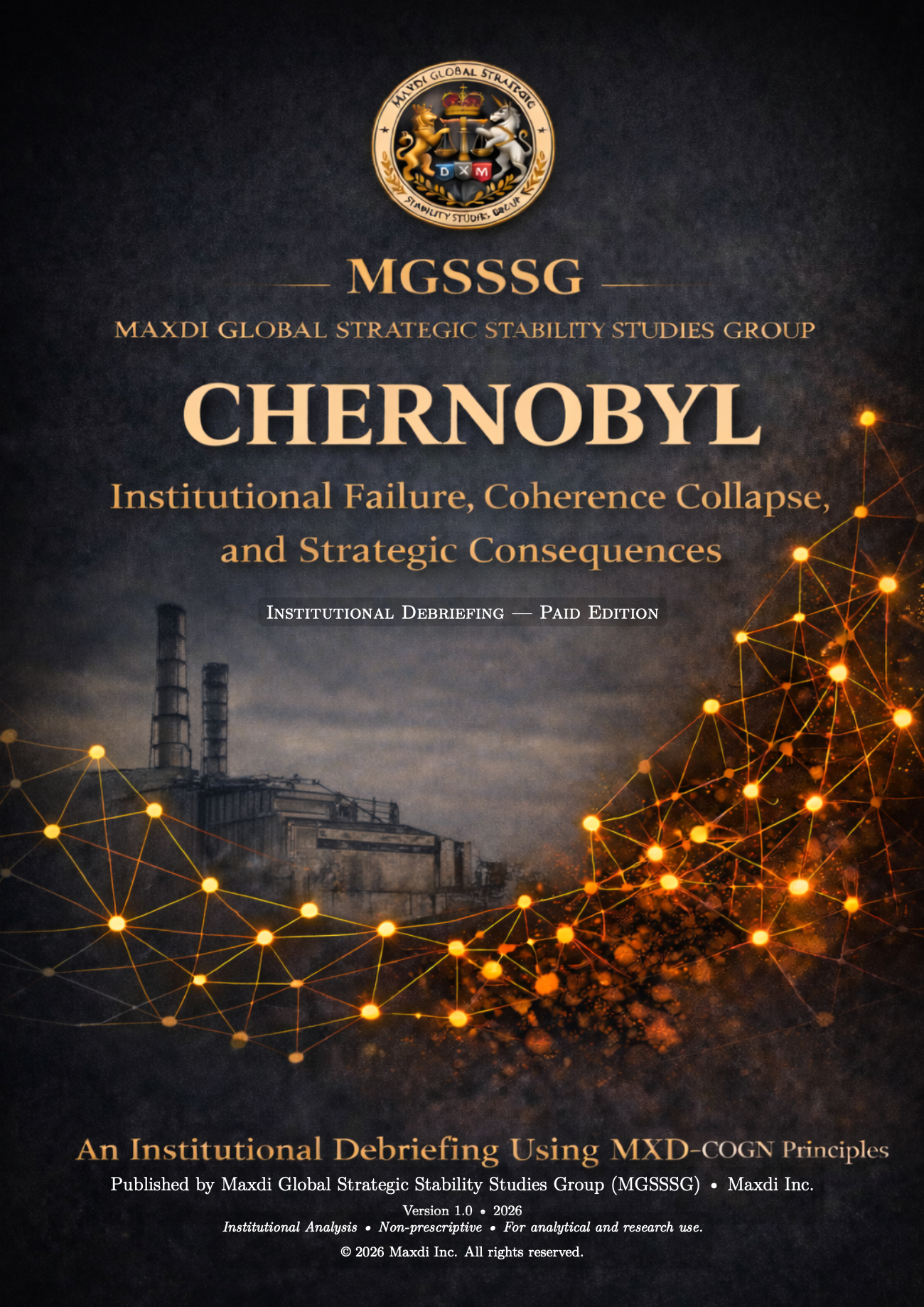 Image 1 of 10
 Image 2 of 10
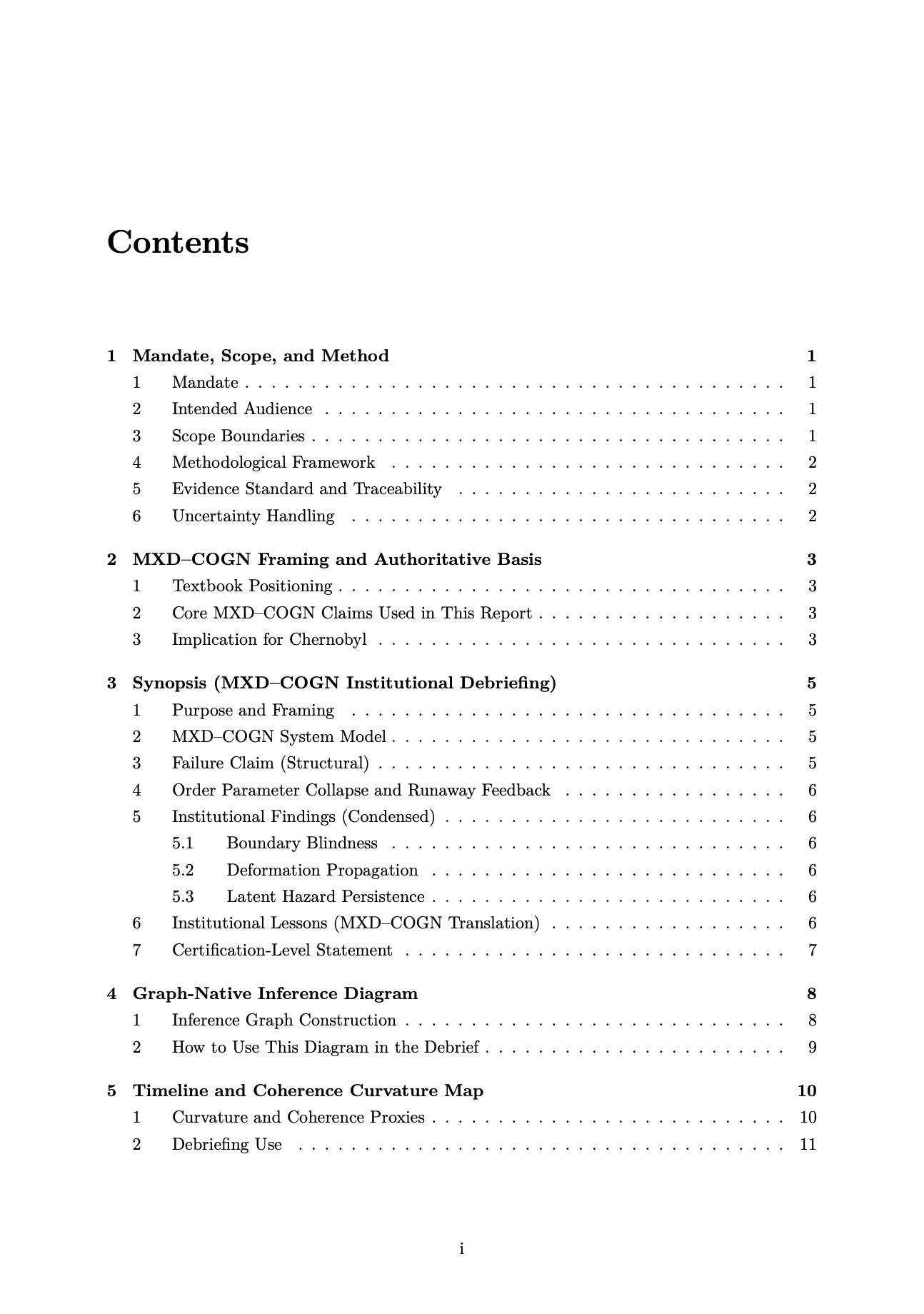 Image 3 of 10
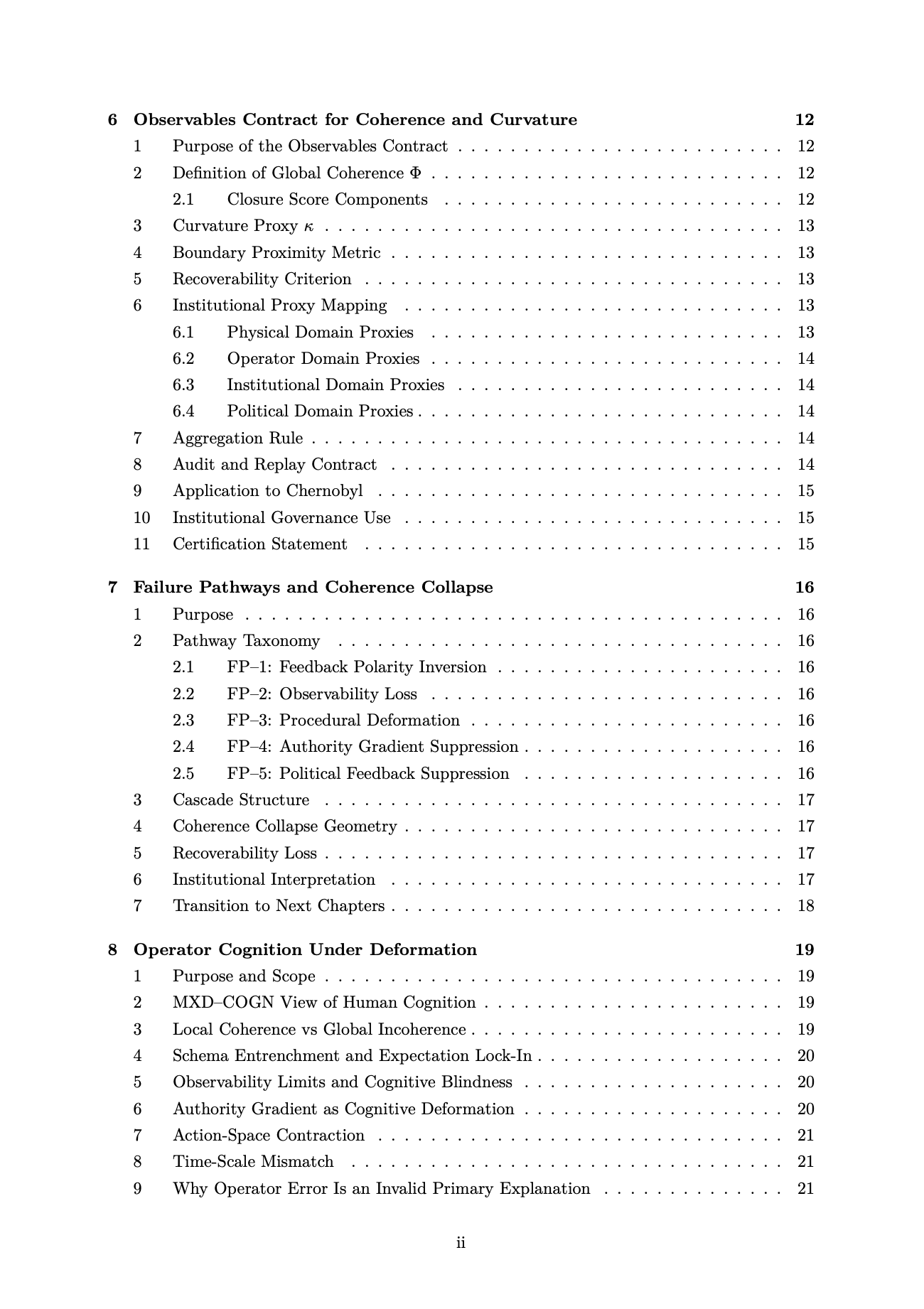 Image 4 of 10
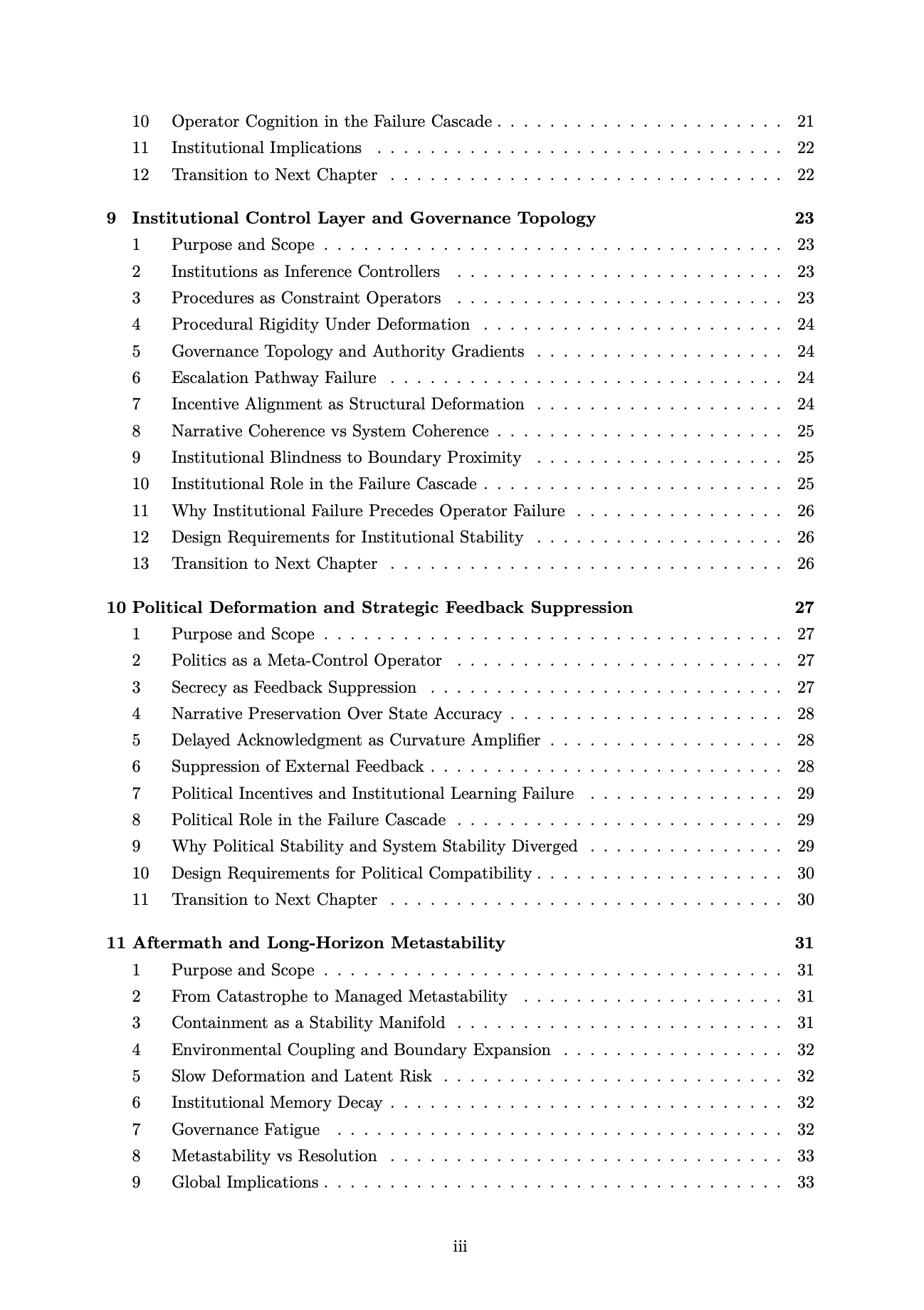 Image 5 of 10
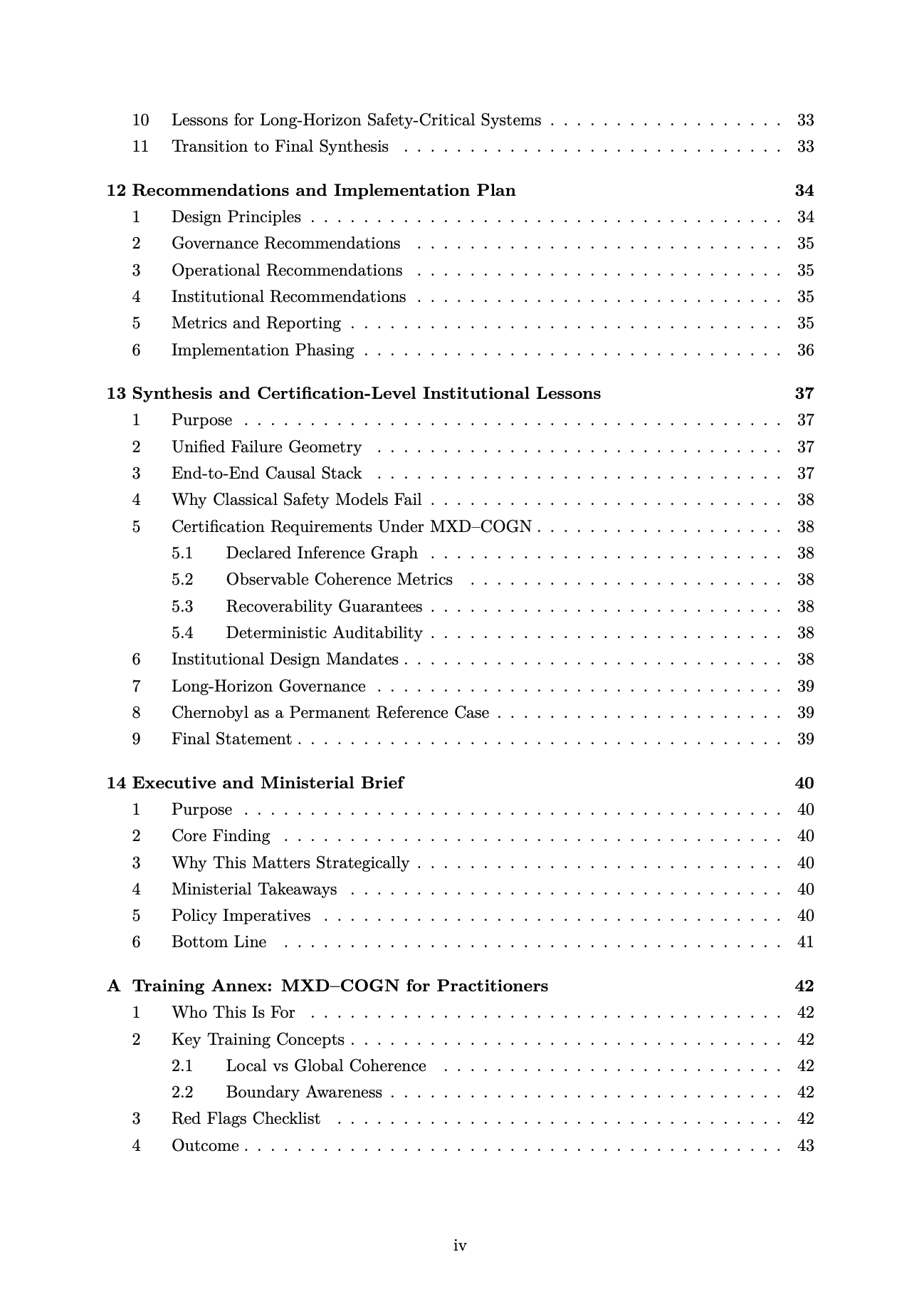 Image 6 of 10
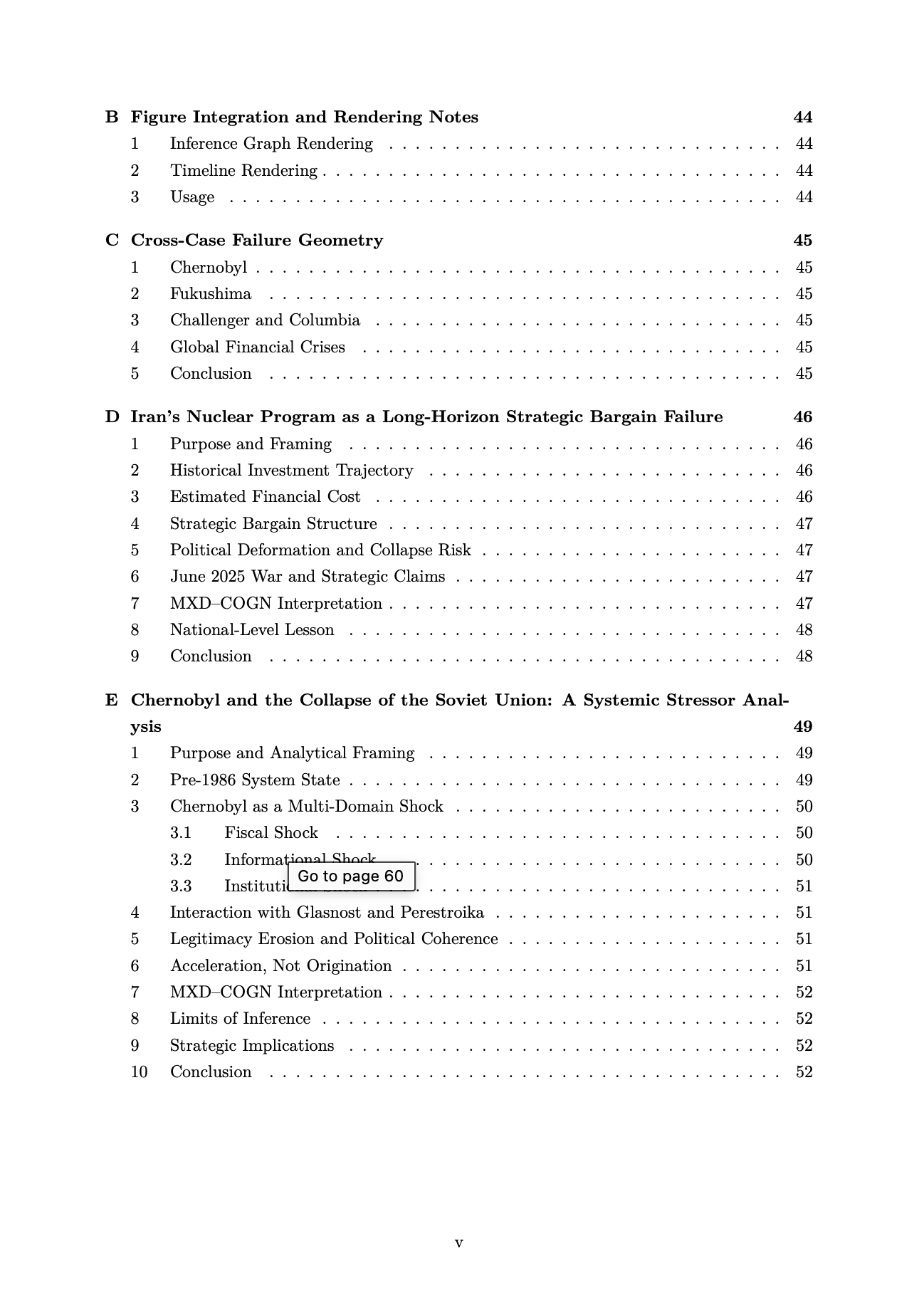 Image 7 of 10
 Image 8 of 10
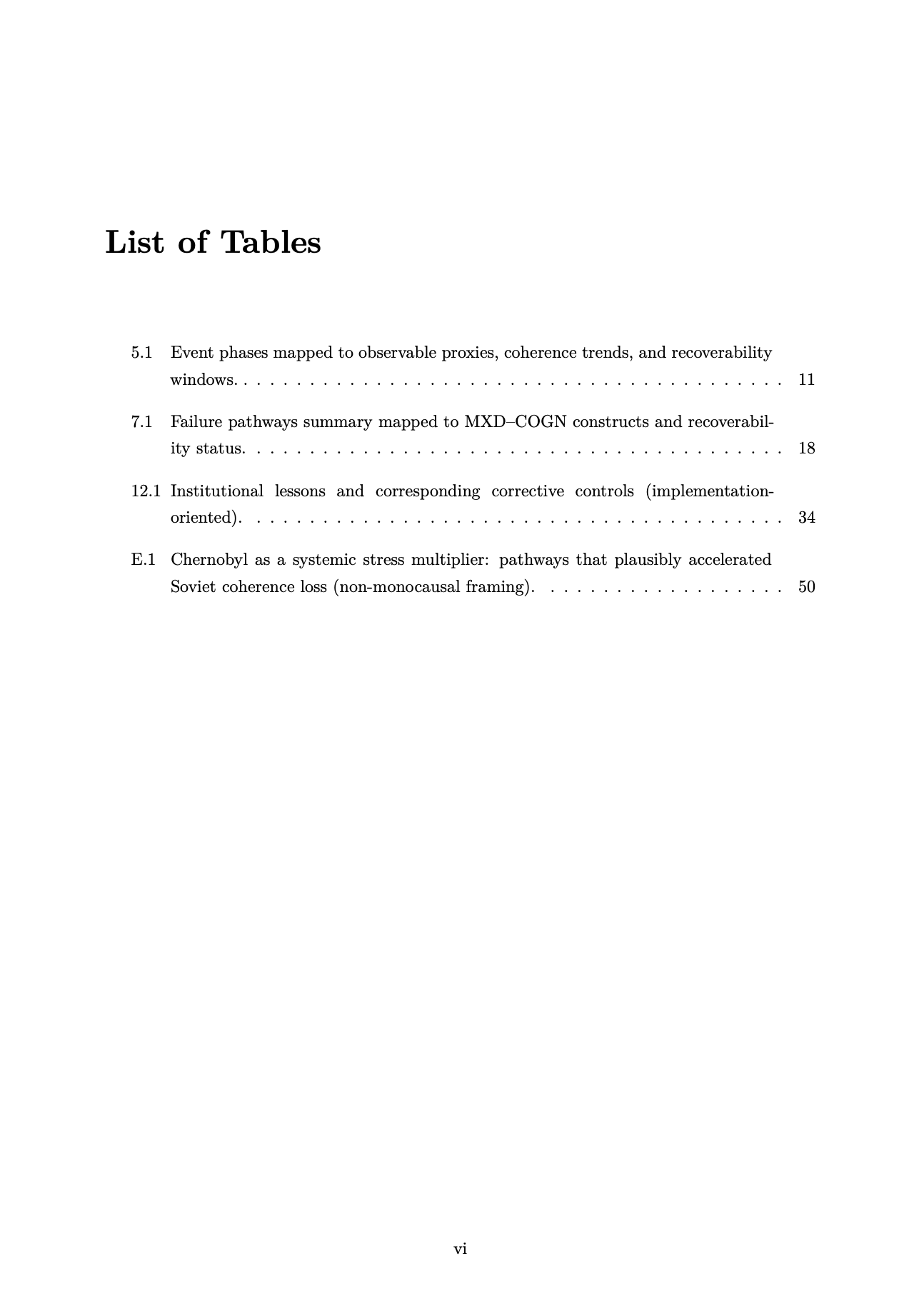 Image 9 of 10
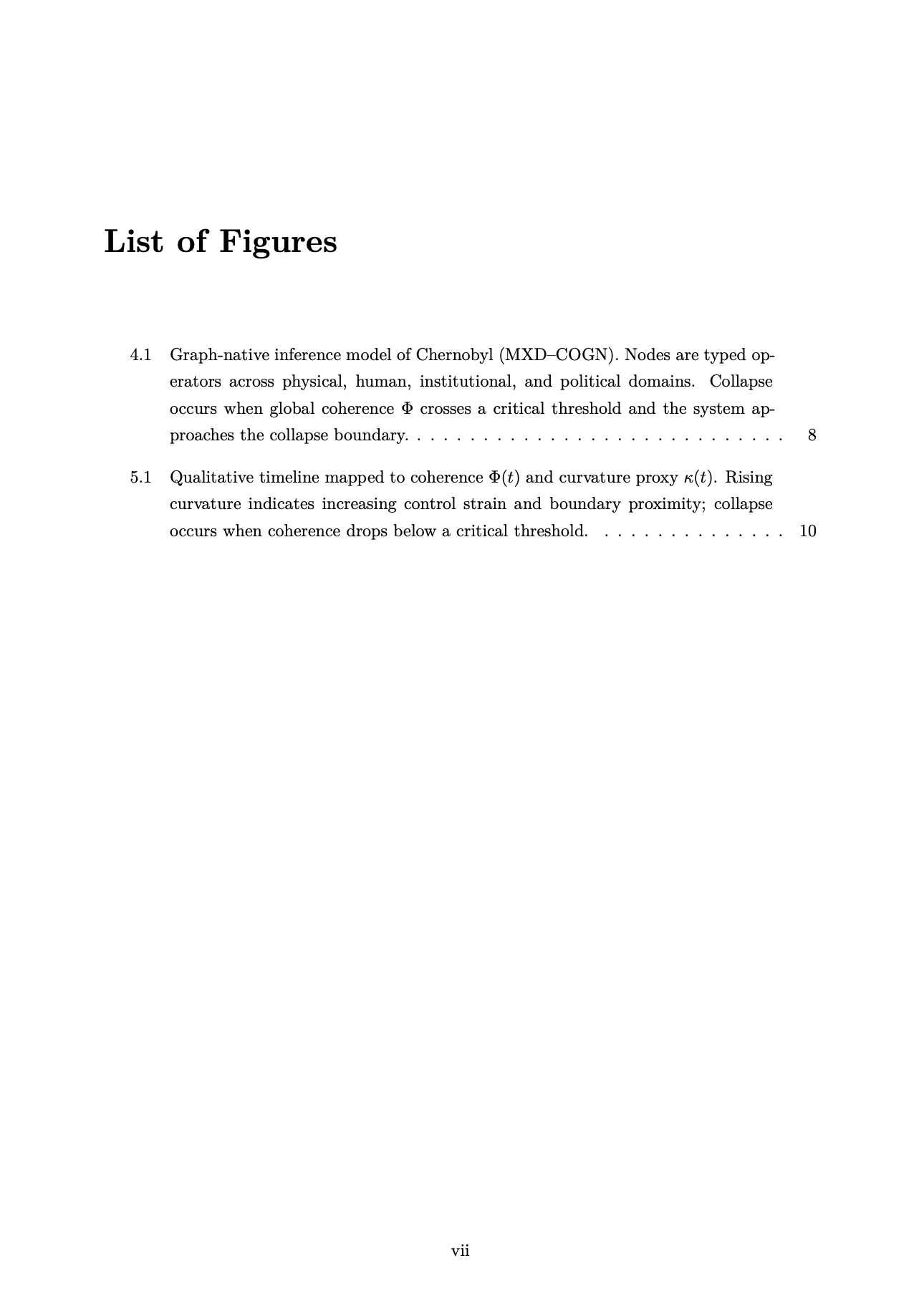 Image 10 of 10